
Why the US is ahead of the EU: lessons from economic strategy after the 2008 crisis (continued)

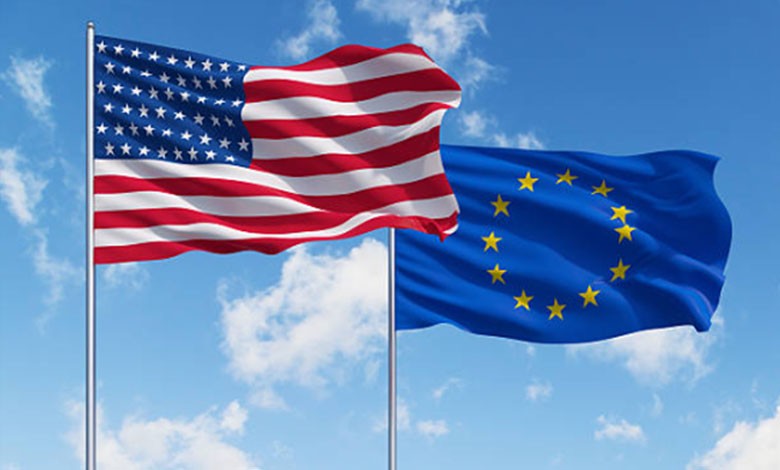
IA “FACT” already wrote, that the USA is significantly ahead of the EU in economic indicators, in particular in terms of GDP, technological development and level of well-being. After the 2008 crisis, the United States recovered quickly thanks to flexible policies and significant investments in technology, while the EU faced debt problems, uneven growth and bureaucracy.
While the US is dominated by tech giants, Europe lags behind due to market fragmentation, cautious investment and complex regulations. At the same time, the EU provides a higher level of social protection, while the States focus on economic dynamism and individual achievement. To strengthen the EU’s competitiveness, reforms in regulatory policy, simplification of financing and investment in innovation are needed.
Living standards, social security and inequality in the US and the EU
The New and Old Worlds have different approaches to living standards and social support that affect their success. In the US, people earn more on average, but this money is distributed unevenly. There are very rich, but there are also poor people who barely meet their basic needs. At the same time, incomes in Europe are lower, but more evenly distributed. Most people have access to medicine, education and other essential services.
Eurozone countries provide their citizens with free healthcare, affordable education and tangible support for those who have lost their jobs or retired, giving people more confidence in the future. On the other hand, in the US, social support is weaker. Medicine and education are expensive, and if a person loses his job, it is difficult for him to get support from the state. The gap between the rich and the poor is very noticeable. In the EU, inequality is lower because the state, through taxes and social support programs, helps to level the playing field for everyone. States appear more successful because of high incomes and rapid development, but these achievements are not available to everyone. In the EU, the economy grows more slowly, but life is more stable and fairer for the majority.
Which of these is more important? It depends on values. The US emphasizes individual success, even if it creates inequality, while the EU chooses equality and support for all.
A system is only as vulnerable as its weakest link
Economic imbalances between more developed EU countries – Germany or France – and less developed ones, say Greece or Bulgaria, affect the competitiveness of the EU. High labor productivity, modern technologies and a strong industrial base add competitive advantages to developed countries. This allows them to produce quality products and sell them at competitive prices. Less developed countries are less technological and have less developed infrastructure, so their goods and services often cannot compete on an equal footing.
In countries like Bulgaria, salaries are much lower than in Germany or France. This may attract investors looking for cheap labor, but such investment is often limited to low-tech industries. Instead, developed countries invest in high-tech industries, which increases their global competitiveness.
Developed countries have more stable economies and access to cheap credit. For example, Germany can raise money in international markets at low interest rates, while Greece has to pay more due to high risk. This makes it difficult for less developed countries to invest in infrastructure, education and innovation.
Countries like Greece often depend on financial aid from developed European neighbors. This creates economic tensions, as taxpayers in richer countries may not be happy that their money is being used to support others.
Developed countries have well-developed transport, digital and energy infrastructure. Less developed members – including Bulgaria – face problems in building such infrastructure, which complicates their access to the internal market of the Eurozone and global markets.
Consequently, less developed countries slow down the economic growth of the entire European Union. If one part is weak, it reduces the overall strength of the EU. Richer countries are sometimes not happy with having to help poorer ones, as was the case with Greece during the crisis. People from less developed countries go to work in Germany or France, so their home countries lose skilled workers and cannot develop.
The EU should implement the so-called “cohesion policy”, helping less developed countries build roads, schools, hospitals and support businesses so they can grow faster. If all countries become stronger, the EU will be able to obtain a synergistic effect from cooperation with the former “weak ones” and the entire union will become more competitive in the world.
As geopolitical events, changes in world trade and the transition to a “green” economy affect the US and the EU
With energy independence and a strong defense sector, the US is less dependent on external energy sources and international alliances. Their economies adapt more quickly to changes due to global conflicts. For example, sanctions against Russia have a limited impact on the US economy because trade with Russia is negligible.
At the same time, Europe is more vulnerable to geopolitical crises, especially if they concern energy, as in the case of the war in Ukraine. Many EU countries depended from Russian gas, which forced them to quickly switch energy sources, causing prices to rise. Geographical proximity to Middle Eastern and African conflicts also adds to the challenges of migrant flows and security threats.
The US has a large domestic market and can reduce its dependence on international trade. They have already begun the process of returning production home and reducing dependence on China. However, thanks to its technology companies and service exports, the US remains an important trade center.
The Eurozone is more dependent on international trade, especially Germany, whose economy is based on the export of machinery and cars. Any disruptions in global supply chains or increased protectionism in other countries, primarily in the US or China, have a greater impact on the eurozone.
As for the “green” economy, in the USA it is developing actively, but unevenly. Different states have different approaches, with California heavily investing in renewable energy, while regions dependent on fossil fuels have resisted. Investments within the “Inflation Reduction Act” (2022) create new jobs in the “green” sphere, but the speed of transition depends on political support.
At the same time, the EU is leading the transition to a “green” economy, setting ambitious goals – reducing CO₂ emissions and transitioning to renewable energy by 2050. However, these initiatives are often very costly, especially for less developed European countries. The “Green Course” requires significant investment in industrial modernization and social support for workers in old industries.
Prospects for the future
The EU has the potential to become stronger and more competitive in the world. First of all, it is necessary to invest more in the latest technologies. If Europe invests heavily in science, digital technologies and infrastructure, it will help create more innovation that can be used to grow the economy. It is also important to support start-ups by making access to finance easier and to develop the digital single market so that companies can operate more easily in all EU countries.
Another important thing is the reduction of bureaucracy. Businesses are often hindered by complex rules and lengthy procedures. By simplifying these processes, more companies can grow and invest in new projects. Special attention should be paid to small business as the basis of the economy. By reducing the tax burden and making access to finance easier, more jobs and economic activity can be created.
Europeans should also look for new trade partners. Thus, promising sales markets for European products are Africa and South-East Asia. At the same time, it is important to strengthen relations with the US, especially in technology and energy, and to work with China, finding a balance between cooperation and competition.
The transition to a “green” economy opens up a unique opportunity for the European Union to become a world leader in the field of environmental innovation. By investing in renewable energy sources and eco-projects, Europe is not only creating a clean energy future, but also setting an example for other nations on how to build a sustainable and environmentally responsible economy. It’s not just about growth – it’s about creating a new standard of living.
In order to maximize this potential, Europe must pay attention to the education and retraining of its citizens. In a rapidly changing world, it is knowledge and modern skills that will be the driving force for economic breakthrough. Every investment in people is a step towards faster adaptation to new challenges and strengthening the competitiveness of the Union.
…So, it is the combination of investments in technology, simplification of regulatory procedures, expansion of trade relations, development of a “green” economy and an educated workforce that can transform the EU into a force that not only adapts to today’s challenges, but also shapes the future of the global economy.
Tetyana Viktorova


