12-year school in Ukraine: what the next reform of the Ministry of Education and Science provides for

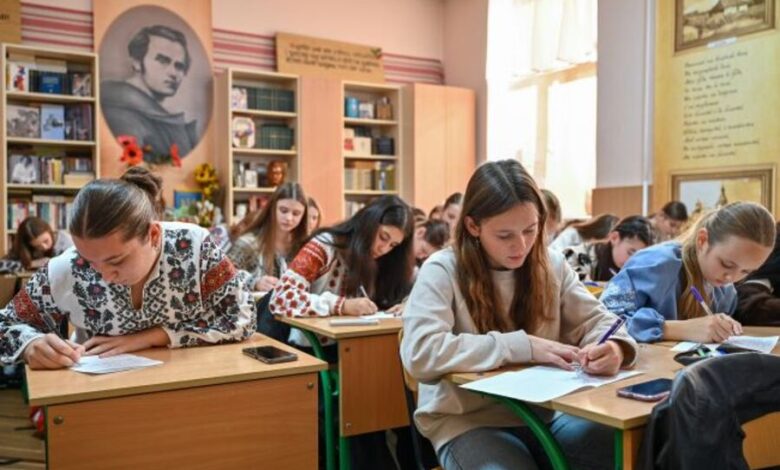
The Ukrainian secondary education system during the war is entering a phase that is changing the content and internal logic of children’s education. The decision to move to a 12-year school is an attempt to restructure high school so that it gives students a clear path, real knowledge, and the opportunity to prepare for further education or a profession without overload and chaotic accumulation of subjects.
What’s changing in high school
From 2026, Ukrainian schools will begin to introduce the 12th grade, and this will begin the practical testing of the new model. This is a change that should affect both the structure of high school, the content of education, and the principle by which a teenager studies in grades 10–12. At the heart of this reform is the rejection of the approach where the main result was considered to be the reproduction of the studied material, while the new system focuses on knowledge that can be applied outside the classroom.
The most noticeable change is that high school should become more flexible and less uniform for everyone. If previously students actually moved along a common trajectory, regardless of their inclinations, interests and future plans, then the new model provides for a different approach: in grades 10–12, students will be able to choose a direction of study that matches their abilities and intentions.
As noted by the Ministry of Education and Science, thanks to this reform, greater specialization appears in high school. For some, the IT direction will be closer, for others – foreign languages, technical disciplines or other educational profiles. Such an approach should make it possible not to scatter attention on equally intensive study of all subjects, but to focus on what is really important for further admission, professional choice and personal development. In such a model, school ceases to be a place where everyone has to move at the same pace and according to the same scenario, and gradually becomes an environment in which learning is more connected to the specific life prospects of the student.
Why an additional year does not mean a greater workload
As the Ministry of Education and Science claims, fears that 12 years of education will automatically complicate school life are not confirmed in the proposed model. The idea is to distribute the existing program differently and make it more consistent. With such an approach, the additional year should work as a way to reduce the density of learning, avoid rushing, and give students more time to learn the material more deeply.
This is also important because overload has long been one of the most noticeable problems of Ukrainian schools. When a student is forced to keep too many subjects in mind at the same time, learning often turns into a struggle for grades, rather than meaningful work with the material. In the new system, the emphasis shifts from quantity to quality: less chaos, more logic, less rote memorization, more understanding of the connections between knowledge and practice.
What is the new educational logic?
The statement of the Minister of Education, Oksen Lisovy, that we are talking about a different philosophy of education, indicates the main meaning of the reform. Ukrainian schools are gradually moving away from the model in which the student had to primarily reproduce what he heard or read, and are moving to a system where the skills of analyzing, choosing, applying knowledge in real situations and understanding why a particular subject is being studied are becoming more important.
According to the minister, such a change is of fundamental importance for high school, because it is at this age that learning can no longer remain abstract and disconnected from the future. A teenager who is thinking about entering college, a profession, or his own area of interest needs not only a set of topics in the textbook, but a clearer connection between the school curriculum and what awaits him next. It is because of this that the choice of a profile, greater flexibility, and a more reasonable structuring of the workload become not secondary details, but the basis of the new model.
How will the launch of the 12-year school take place
The transition is not planned to be carried out simultaneously throughout the country without prior verification. The first stage will start on September 1, 2026, when the new model is to be tested in 150 lyceums. These institutions will become platforms where they will check how the subject selection system works, how students adapt to specialized training, and whether the new approach really helps to better assimilate the material.
MES officials believe that such a format makes it possible to see the real functioning of changes in the school environment. In pilot lyceums, it will be possible to assess how well the profiles have been formed, whether the schedule is conveniently built, how students, parents and teachers react, as well as what difficulties arise in implementation. Without such a stage, any large-scale reform risks remaining a set of good intentions that cannot withstand the encounter with everyday school practice.
The full launch of the system is planned for 2027, but by then the model must be finalized taking into account the results of the piloting. This means that the final form of the reform may still be specified, and individual mechanisms may change after analyzing errors and identified weaknesses. This approach indicates an attempt to gradually adjust the new system to the real needs of students and educational institutions.
This is an important signal for parents, because in society any change in the school model quickly generates anxiety, especially when it comes to the duration of study. However, at this stage, we are talking about a test format within which the workability of the idea itself is tested. That is why it is too early to talk about the final form of all solutions: some elements may be changed after practical analysis, and the final model will depend on how it shows itself in real conditions.
What does this mean for students
For schoolchildren, this reform may be a transition from a universal, but often too dispersed program to a more meaningful learning. If the system really works as it is described, the student will have more opportunities to build his educational trajectory not at random, but in accordance with his own interests and plans. According to MES officials, this is especially important in high school, where time is already perceived differently: each year brings us closer to admission, employment or choosing a specialty, and therefore studying should not be just a duty, but preparation for a specific next step.
At the same time, such a model puts forward new requirements for both the school itself and the teacher. To ensure that specialized training does not remain a declaration, educational institutions must offer truly thoughtful directions, not just new names for old courses. The teacher in such a system should not only be a source of information, but a person who helps the student understand the subject, see its practical content, and connect learning with future goals.