18 refugee reception centers will be closed in Finland: what to do after their closure

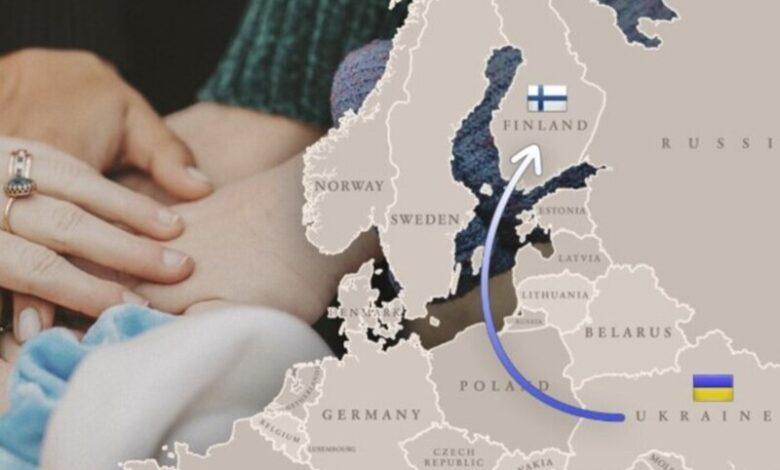
Finland became a temporary refuge for thousands of Ukrainians after the full-scale invasion of Russia. The quiet northern country with a reputation as a socially responsible state has provided shelter to tens of thousands of people fleeing war. Reception centers were opened in towns and villages across the country, where Ukrainians received a roof over their heads, food, medical care, and later access to the labor market, education, and language courses. The Finnish model of integration has long been considered one of the most effective in Europe.
However, now the situation is changing. The flow of Ukrainian refugees is decreasing, and this, in turn, affects the structure of the reception system. Some Ukrainians return home, some move to other European countries. And part of them is trying to stay in Finland not as temporarily displaced persons, but as people with long-term legal status. In this context, the news about the massive reduction of reception centers became the first real signal: the period of emergency support is ending, and the state is moving to a new phase of migration policy.
Closure of refugee reception centers
The Finnish Migration Service officially reported, which will close 18 reception centers for asylum seekers by the end of 2025, another eight will close in February 2026. The reason for this is a significant decrease in the number of new applications. In 2024, they were 45% less than in 2023.
The number of Ukrainians arriving in Finland is also decreasing. After the peak load in 2022-2023, when the country accepted more than 60 thousand Ukrainians, the situation is now stabilizing. Some people return to Ukraine or move to other countries where they have relatives or acquaintances, a better climate or more favorable working conditions.
Around 2,200 people currently living in the centers to be closed will have the opportunity to apply for permanent residence in Finland. This means that the Finnish state provides a transition period and does not just leave people on the street. However, for many Ukrainians, this will be the moment of truth: either they integrate into the system and stay longer, or they are forced to look for a new place to live.
Political context
The closure of the reception centers is taking place against the background of a tougher migration policy. Finland’s government has already asked parliament to extend until 2026 the state of emergency law that allows asylum requests from migrants arriving across the eastern border with Russia to be rejected. This law was first passed in July 2024 as a reaction to migration pressure inspired by the Kremlin. At the end of 2023, Finland completely closed its border with Russia to stop the deliberate diversion of migrants. All these measures are part of a larger political realignment in which the Finnish authorities have to balance humanitarian responsibility with the desire to control external security challenges.
Closing the reception centers does not mean that Finland refuses to support Ukrainians. But this is a signal: the era of urgent evacuation is over, and the country is gradually returning to the standard mechanisms of migration policy. Ukrainians who are still living in reception centers have to decide: submit documents for permanent residence, move to private housing or change their country of residence. On the one hand, it creates pressure and uncertainty. On the other hand, it opens the possibility to move from the status of temporary protection to a more stable legal status, which gives wider rights, access to work, education, and social guarantees.
However, despite the reduction of infrastructure, Finland does not abandon the principles of protection. The country continues to implement integration programs, supports Ukrainian children in schools, provides opportunities for language learning and job search. Those who have already adapted and have a stable status remain and form a new Ukrainian community in the north of Europe.
However, the general trend is obvious: the country is changing its aid regime — from humanitarian response to controlled integration. And for Ukrainians who remain in Finland, it is important to be ready for new conditions, adapt to the Finnish bureaucracy, learn the language and find their place in a society that wants to help, but also expects a responsible attitude.
What should Ukrainians in Finland do after the closure of the reception center: real steps
- Contact your center staff as early as possible.
The administration of each center received an order regarding the closing procedure. You must be informed in writing or in person about the terms, procedure for eviction, relocation options or other actions. Do not delay – contact the coordinator or social worker and find out by what date you have to leave the center and what is offered to you next. - Apply for a residence permit in Finland (oleskelulupa).
This is critical for those who plan to stay. If you have lived in Finland for a year or more, have an official job, study or your children go to school, the chances of getting a long-term residence permit are much higher. Consult with the Migration Service (Migri) or through a lawyer who cooperates with the center. - Prepare to move to private housing.
The state can provide housing assistance (asumistuki) to those who rent housing independently. But you need to have a bank account, a Finnish personal identification number and, preferably, a source of income. It is easiest to rent through municipal housing funds or together with other Ukrainians. Many communities have information platforms or mutual support groups on Facebook/Telegram. - If you are working, check whether you have reasons to change your status.
If you are officially employed, you can apply for a work-based residence permit. For this, the employer must confirm your income and the duration of the employment contract. This is one of the most reliable reasons for changing the status from temporary to stable. - Take care of children: education and stability are your allies.
Children studying in Finnish schools often have the right to stay, even if the family has lost their place in the center. Be sure to notify the school or kindergarten about the change of address. If your child has integrated well, this can also be an additional argument in the residence permit case. - Do not ignore letters and messages from Migri.
All official decisions and requests come to your address or through the electronic system. If you change your address, you must notify Migri, otherwise you may miss important documents or calls. - Ask for legal or social assistance.
In many cities, there are free consultations of lawyers or social workers for refugees. If you don’t know where to turn, ask an employee of the center or go to the website of your municipality. Volunteer organizations like the Finnish Refugee Council or SPR (Finnish Red Cross) also help. - If there are no prospects, consider voluntary return.
Voluntary return programs coordinated by the International Organization for Migration (IOM) can provide tickets, financial support and assistance with returning to Ukraine. This is not a forced return, but a choice for those who no longer see prospects in Finland.