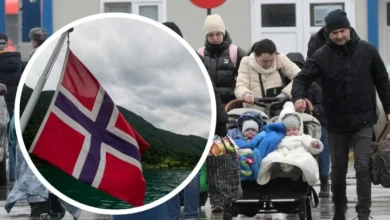
65% of Ukrainian refugees do not plan to return home: statement by the head of the German State Office for Refugees


The war forced millions of Ukrainians to seek safe haven abroad. However, an alarming trend is now observed: more and more refugees do not plan to return to their homeland. This phenomenon causes serious concern in Ukraine, because it is not only about a temporary loss of population, but also about the possibility of a demographic, economic and social crisis. This especially applies to Germany, which has become one of the main countries for Ukrainian refugees.
For in words According to Mark Seibert, head of the State Administration for Refugees (LAF), already 65% of Ukrainians who received asylum in Germany do not plan to return home. What is the basis of such a decision, and how will it affect the future of Ukraine?
Changing attitudes among Ukrainian refugees
A year and a half ago, the majority of Ukrainians who moved to Germany because of the war expressed their readiness to return to their homeland after the end of hostilities. However, the situation has changed. Regular surveys conducted among residents of large hostels in Berlin indicate that 65% of Ukrainians see their future in Germany. In total, 50,000 to 60,000 Ukrainian migrants live in the country’s capital, of which 9,000 live in special dormitories under the auspices of local authorities.
The head of the LAF notes that this trend is connected with the growing integration of Ukrainians into German society. They are actively looking for work, attend German language courses and use all available opportunities for legal adaptation.
Factors influencing the decision to stay
1. Economic stability and employment opportunities
Ukrainian immigrants received a work permit in Germany, which enables them to provide for themselves and their families. For many, this became a strong argument for integration into the local labor market and giving up the idea of returning to Ukraine.
2. Social guarantees
Germany provides Ukrainian refugees with a wide range of social support, including access to quality medical care, housing, financial assistance and educational programs. Such conditions allow displaced persons to feel protected even in difficult times.
3. Educational prospects for children
Families with children see Germany as an opportunity to provide quality education for their children. Local schools and language programs help to quickly integrate children into a new environment, which positively influences the decision to stay.
4. The uncertainty of Ukraine’s future
The ongoing war, the destruction of infrastructure and economic instability make many question the feasibility of returning. For some of the migrants, Ukraine became a country where they lost not only their property, but also their sense of security.
Potential consequences for Ukraine
A mass outflow of the working population can lead to a demographic catastrophe. Depopulation will have a particularly noticeable effect on the economy and the social sphere, because it is these people who could contribute to the country’s recovery.
In addition, Ukraine may face a shortage of qualified workers. This is already causing concern among demographers, who warn of the need to attract migrants from other countries to compensate for the losses.
Prolonged absence abroad, adaptation to new conditions and integration into local communities can lead to a gradual loss of connection with the homeland. This will make it difficult to return even after the war is over.
The return of Ukrainians home is extremely important for the future of the country. For this, the state must create conditions that will facilitate the return of:
- Restore the destroyed infrastructure.
- Stimulate economic growth through the creation of new jobs.
- Provide a decent level of social protection.
- Introduce special reintegration programs for refugees.
In addition, it is important to maintain close contact with those abroad through cultural, educational and social initiatives. This will help maintain a sense of belonging to the homeland.
The decision to stay in Germany became a logical choice for many Ukrainian refugees in the context of war and instability. However, this creates serious challenges for Ukraine, which risks losing a significant part of its population. The task of the state is to do everything possible to make returning home not only a real, but also a desirable choice for refugees.