Applicants from the TOT will have to leave the occupied territory to participate in the multi-subject test

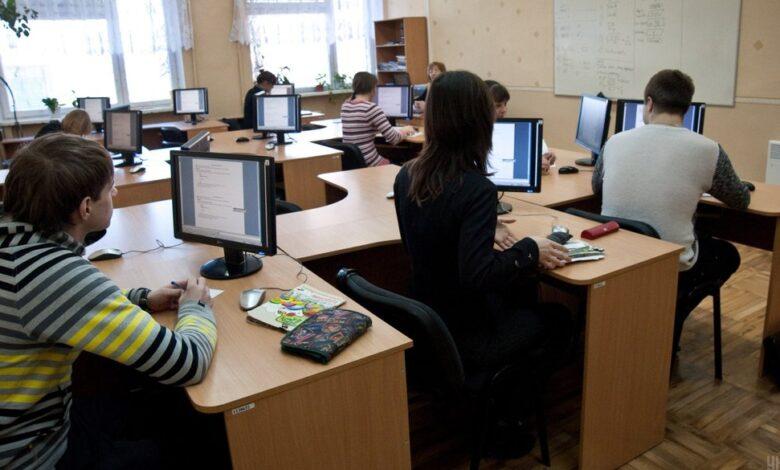
In 2025, the national multi-subject test — the main tool for admission to higher education institutions — will start again in Ukraine. However, children from temporarily occupied territories face special difficulties when it comes to admission to Ukrainian universities. In normal years, the admissions campaign is a predictable process — registered, took the exams, got the results. For students with TOT, everything is different: access to school education is limited, educational programs are distorted or replaced by occupational ones, communication with state institutions is fragmentary or absent at all. But even if a student studies remotely in a Ukrainian school and is motivated to enter a Ukrainian university, the main problem remains — the physical impossibility of passing a multi-subject test within the occupied territory.
Official position: participation in testing is impossible without departure from TOT
As reported general director of the Ukrainian Center for Evaluation of the Quality of Education Tetyana Vakulenko on TV, students from TOT will not be able to take the national multi-subject test (NMT) at their place of residence. All zones where active hostilities continue or territories remain under the occupation of Russia are excluded from the list of safe. The reason is too high security risks. It is “fundamentally impossible” to organize testing in these territories, she emphasized.
Thus, all applicants who are in the occupied territories had to register online and independently choose a settlement in the controlled territory of Ukraine, where they will undergo assessment. This means: in order to have a chance to enter higher education, young people will have to leave dangerous regions. This is a real condition for admission to participation in testing.
Alternative ways: the state offers, but they are not for everyone
At the same time, Vakulenko emphasized that there are alternative mechanisms for admission to institutions of higher, professional pre-higher and professional and technical education for applicants from TOT. They are prescribed in a separate Admission Procedure, which is designed for residents of regions where it is impossible to ensure the fulfillment of Ukrainian education standards or to guarantee a stable educational process.
However, in practice, such “alternatives” often become inaccessible to those who live in information isolation, under the pressure of the occupation administration, or in conditions of physical danger. For many schoolchildren, the only real way of admission remains the NMT. And in order to pass it, you need to take a risk, leave your village or city, cover tens and sometimes hundreds of kilometers – just for three hours of assessment.
According to the Ukrainian Center for Evaluation of the Quality of Education, this year more than 300,000 entrants successfully registered to participate in the testing. Registration lasted from March 6 to April 3. NMT provides mandatory testing of the Ukrainian language, history of Ukraine, and mathematics, as well as one subject to choose from: foreign language, physics, chemistry, biology, geography, or Ukrainian literature.
For most students, this process takes place under normal conditions – even despite the war, there are educational institutions, schools and infrastructure in safe cities. But for a child living in a temporarily occupied city or village, taking the test means a difficult logistical journey, often accompanied by fear, without support, and with a lot of uncertainty.
Testing becomes not just a stage of the educational path, but a barrier that requires a separate effort and resources. At the same time, each case is individual. Some will be lucky enough to leave, some will not. Someone will be able to find information and issue documents, while someone will lose this opportunity due to technical or organizational reasons. And all this is happening against the background of war, destruction, lack of resources and psychological exhaustion.
Despite the formal availability of alternative mechanisms, leaving the controlled territory is often the only way to pass the NMT. This is an objective condition that cannot be changed by any revision of the admission procedure. But it needs special recognition from the state — through the creation of special logistics routes, support, information support and work with communities. While this is not the case, the issue of admission for children with TOT remains unresolved to the end.