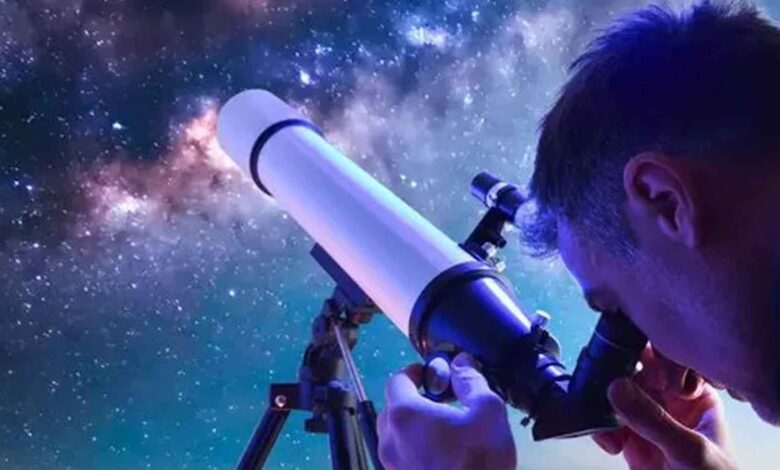
April 25 is celebrated as International Astronomy Day, World Veterinarian Day, International Delegate Day, International Sculpture Day and International DNA Day. This day combined the events of different years, in which capitals and borders changed, technical innovations were born, loud premieres were made and decisions with a long historical echo were made.
International Astronomy Day
This day is celebrated twice a year, in spring and autumn, usually during the period when the Moon is in the first quarter phase. This choice of date is associated with the best conditions for observations: both bright stars and the relief of the Moon’s surface are visible in the sky. The holiday originated in the USA in the 1970s as an initiative of science popularizers who took telescopes to crowded places to make astronomy accessible to everyone.
Over time, the event has become international, supported by astronomy clubs, planetariums and educational institutions in different countries. The main goal is to encourage interest in space through practical observations and explanations of basic phenomena. The day does not have a fixed date, it is determined depending on the phases of the Moon, which emphasizes the connection with real astronomical conditions.
Interesting facts
On Venus, a day lasts longer than a year: the planet rotates on its axis more slowly than it makes a complete revolution around the Sun.
In space, it is impossible to hear an explosion in the usual sense for us, because sound needs a medium to propagate, and between stars there is almost an empty vacuum.
On Jupiter, there is a giant storm known as the Great Red Spot, and it has been going on for at least several centuries.
The Sun seems huge to us, but among the stars it is a fairly ordinary star of medium size.
Light from the Sun takes about 8 minutes to reach Earth, so we always see the Sun as it was a few minutes ago.
On the Moon, astronauts’ footprints can last for millions of years because there is no wind or rain to quickly erase them.
The highest mountain in the Solar System is on Mars: Mount Olympus, which is much higher than Earth’s Everest.
Saturn could float on water if it had a large enough ocean, because the average density of this planet is less than that of water.
Some stars explode into neutron stars, whose matter is so dense that a teaspoon of such matter would weigh billions of tons.
Black holes are not cosmic “vacuum cleaners”: they only pull in objects when they get too close.
There are more stars in the Universe than grains of sand on all the beaches on Earth, although the exact number is impossible to count.
Mars has a blue sunset because the dust in its atmosphere scatters light differently than Earth’s air.
A day on Jupiter lasts less than 10 hours, even though it is the largest planet in the solar system.
We see distant galaxies as they were millions or even billions of years ago because their light takes a very long time to reach Earth.
Uranus rotates almost “on its side,” so its seasons last tens of Earth years.
Mercury can be extremely hot during the day and very cold at night because the planet has almost no atmosphere to retain heat.
Comets are often called “dirty snowballs” because they are made of ice, dust, rocky particles, and frozen gases.
The closest star to us after the Sun is Proxima Centauri, but even that takes more than four years for light to reach it.
The Milky Way galaxy is spiral-shaped, and the Solar System is located not in its center, but closer to one of its arms.
When we look at the night sky, we are actually looking into the past, because the light from each star traveled to us earlier than we saw it.
World Veterinary Day
This day is celebrated to emphasize the role of specialists who treat animals and monitor the safety of animal products. The holiday was initiated by the World Veterinary Association at the end of the 20th century, and since then it has become a professional date for veterinarians in many countries. The main emphasis is on the importance of veterinary medicine for human health, because a significant part of infections is transmitted from animals.
The work of veterinarians includes not only the treatment of pets, but also monitoring the condition of livestock, preventing epidemics among animals and checking the quality of food products. In different countries, educational events on responsible treatment of animals and disease prevention are timed to this date. The date changes every year because it is tied to a specific day of the week, not a number.
Interesting facts
More than 60% of human infectious diseases are of animal origin, so veterinarians play a key role in preventing global disease outbreaks.
Veterinary medicine has existed since ancient civilizations: people who treated animals were especially valued where horses, oxen and camels were needed for the army, trade and agriculture.
The first veterinarians often worked not only as doctors, but also as blacksmiths, because it was they who looked after horses, treated hooves and shod animals.
The word “veterinary” comes from a Latin word associated with working cattle, that is, initially this science was closely associated with the care of animals that helped people in their work.
Cats often hide their pain, because in nature, weakness makes the animal vulnerable to enemies, so veterinarians have to notice very subtle changes in their behavior.
Dogs can sense the fear or tension of their owner during a visit to the clinic, so the calmness of the person sometimes helps the veterinarian to examine the animal better.
In veterinary medicine, there are narrow specialists: cardiologists, dentists, ophthalmologists, surgeons, dermatologists and even oncologists for animals.
Vaccinating animals helps prevent dangerous diseases, among which rabies remains one of the most serious threats to humans and animals.
Animals of different species react differently to medications, so a drug that is safe for a dog may be dangerous for a cat or another animal.
Veterinarians have one of the most emotional professions, because they deal every day with both the joy of recovery and the pain of owners who are worried about their pets.
International Delegate Day
This day is celebrated to commemorate the beginning of the 1945 conference that laid the foundation for the creation of the United Nations. It was on this day that representatives of 51 countries gathered in San Francisco to agree on the principles of future international cooperation after World War II. The memorable date was officially established much later to emphasize the role of delegates in shaping international law and diplomatic decisions.
The work of delegates is to represent the interests of their states in international negotiations, participate in creating agreements and resolving global issues. They participate in meetings, prepare documents and conduct negotiations, on which cooperation between countries depends. This day reminds us of the importance of diplomacy and dialogue in resolving conflicts and developing international relations.
Interesting facts
The 1945 conference in San Francisco lasted more than two months, and it was there that the text of the UN Charter was finally agreed upon, which was signed by all participating countries.
Ukraine is one of the founding states of the UN, although at that time it was part of the USSR, and had a separate representation at the international level.
During the creation of the UN, delegates worked on documents in strict secrecy, since the world was still at war.
In modern Ukraine, delegates take an active part in international meetings, in particular during war, representing the state’s position on aggression and security.
In 2022–2024, Ukrainian delegates repeatedly initiated urgent meetings of international bodies to discuss war crimes and humanitarian issues.
During the historic 1945 conference, much attention was paid to the prevention of new wars, which became the basis for the modern system of international security.
Delegates often work in a multilingual environment, and official UN documents are translated into several languages for accuracy.
In wartime, Ukrainian diplomats and delegates continue to work even during air raids, using shelters and remote communication.
Some delegates become key figures in history, as their proposals can influence international decisions and long-term agreements.
International Sculpture Day
This day was initiated by the International Sculpture Center in 2015 as a way to draw attention to three-dimensional art and the role of sculptors in modern culture. The date was chosen to coincide with Leonardo da Vinci’s birthday, which emphasizes the connection with the history of art and the development of creative practices.
Sculpture encompasses a wide range of techniques and materials, from stone and metal to modern digital technologies and installations. This art shapes urban space, preserves historical memory, and reflects social change. The festival promotes interest in public art and understanding the processes of creating sculptures, which often remain unnoticed by viewers.
Interesting facts
There are sculptures created using 3D printing in the world, which can reach several meters in height and are made in a matter of days.
In Ukraine, during the war, new temporary sculptural objects appeared from debris of equipment and shell casings, reflecting the events and experiences of society.
Some modern sculptors work with ice and sand, creating works that exist for only a few days and change under the influence of the weather.
In 2022, Ukrainian artists began to use damaged building materials to create art objects as a way of documenting the destruction.
One of the most famous techniques in sculpture — “lost wax” — has been used for over 5,000 years and allows you to create precise metal castings.
Some sculptures interact with viewers through movement or light, responding to touch or changes in lighting.
The largest modern sculptures can weigh hundreds of tons and are created over years with the involvement of engineers and builders.
In Ukraine, there is a tradition of creating park sculptures from wood during plein airs, where artists work outdoors.
International DNA Day
This day is celebrated in honor of the publication in the journal “Nature” in 1953, which described the structure of the DNA molecule. This discovery explained the mechanism of storage and transmission of genetic information in all living organisms. It was the understanding of the double helix that became the basis for the development of molecular biology, genetics and modern medicine.
The holiday is associated with the development of research in the field of genome, diagnostics of hereditary diseases and biotechnology. The study of DNA has allowed the creation of analysis methods used in medicine, forensics, and agriculture. The date emphasizes the importance of scientific discoveries that have changed the understanding of the structure of life and opened up opportunities for the precise study of cellular processes.
Interesting facts
Human DNA, if stretched, is about two meters long, but it fits compactly in the cell nucleus thanks to a complex packaging system.
In 2003, the decoding of the human genome was completed as part of an international project that lasted more than ten years and involved scientists from different countries.
In Ukraine, genetic research is actively used to identify those killed during the war, which allows us to establish identities even from minimal samples.
DNA is almost 99.9% the same in all people, and differences in a small part of the genetic code determine individual traits.
In forensics, DNA analysis has become one of the most accurate methods of proof, since the probability of a complete match between two different people is extremely small.
In nature, there are organisms with a much larger genome than that of a human, for example, some plants, although this is not related to the complexity of the organism.
Ukraine stores national genetic data banks that are used for scientific research and medicine.
DNA can be stored for thousands of years, which allows scientists to study the genetic material of ancient people and animals.
Historical events on this day
4241 BC – Ancient Egypt began to use a calendar in which the year consisted of 365 days.
1154 – Nur ad-Din’s troops captured Damascus, strengthening Muslim power in one of the key cities of the region.
1185 – In Japan, opposition forces defeated the imperial army at the Battle of Dannoura. The young Emperor Antoku tried to escape, but died at sea along with the symbol of imperial power.
1498 – The “Blackhead Brotherhood”, an influential association of unmarried German merchants, was founded in Riga. Its patron was first considered to be Saint George, and later – Saint Mauritius, with whose image the name of the brotherhood is associated.
1507 – The German cartographer Martin Waldseemüller first named the new continent America in honor of Amerigo Vespucci. He also published a world map, where this name was applied to the lands of the New World.
1607 – During the Eighty Years’ War, the Dutch fleet destroyed the Spanish squadron at anchor at the Battle of Gibraltar. Dutch Admiral Jacob van Heemskerk was killed in the battle.
1626 – In the Thirty Years’ War, the Battle of Dessau took place, where the army of Albrecht Wallenstein, serving Emperor Ferdinand II, defeated the troops of Count Ernst von Mansfeld.
1644 – Li Zicheng’s rebel peasant army entered Beijing, the capital of the Ming Empire, almost unopposed. Shortly before this, Emperor Zhu Youjian committed suicide, becoming the last ruler of the Ming dynasty.
1660 – The Constituent Assembly decided to return the English throne to the Stuart dynasty.
1707 – During the War of the Spanish Succession, the Franco-Spanish army of the Duke of Berwick defeated the Portuguese-English-Dutch army of the Earl of Galway at Almansa. After this battle, a large part of eastern Spain came under Bourbon control.
1719 – The first edition of Daniel Defoe’s novel The Life and Surprising Adventures of Robinson Crusoe was published in London.
1781 – During the American Revolutionary War, British troops captured the city of Petersburg, Virginia.
1783 – In Annonay, France, the Montgolfier brothers launched a balloon with a load equal to the weight of an adult. The balloon, with a volume of 800 m³, rose about 400 meters.
1792 – In Paris, the guillotine, then called the Luzette, was first installed and used on the Place de la Grève. The first person executed was Nicolas Jacques Pelletier, convicted of robbery. That evening, military engineer and composer Claude Joseph Rouget de Lille wrote the words and music for the march “La Marseillaise”, which later became the anthem of revolutionary France.
1816 – George Byron, exhausted by scandals and persecution by gossip in Great Britain, left his homeland forever.
1823 – In Vilnius, by order of Governor-General Rimsky-Korsakov, the property of Masonic lodges was destroyed: candlesticks, stars, skulls and other ritual objects were burned in the presence of the police.
1826 – One of the first cars with an internal combustion engine was patented in Great Britain.
1839 – The British army entered Kandahar, establishing its presence in Afghanistan.
1859 – Construction of the Suez Canal began in Port Said under the leadership of French engineer and diplomat Ferdinand de Lesseps.
1861 – During the American Civil War, Union troops arrived in Washington, D.C.
1862 – The Union Army captured New Orleans, one of the most important cities in the Confederate States of America.
1867 – Tokyo was opened to foreign trade for the first time.
1901 – New York State introduced the world’s first automobile license plates.
1915 – British and allied troops launched an amphibious operation on the Gallipoli Peninsula, taking Turkish forces by surprise.
1918 – The Crimean group of the Separate Zaporozhian Division of the Army of the Ukrainian People’s Republic under the command of Petro Bolbochan liberated Bakhchisarai from the Bolsheviks.
1920 – The attack of the combined Polish-Ukrainian troops on Kyiv marked the beginning of the Polish-Soviet War.
1926 – The premiere of Giacomo Puccini’s last opera, Turandot, took place in Milan.
1926 – Alfiero Maserati’s first car, the Tipo 26, debuted. The designer himself was behind the wheel, winning the Targa Florio race in Italy.
1935 – President and Vice President of the American Telephone Company, Sherman Gifford and Thomas Miller, made the first round-the-world telephone call, being in New York City, only 15 meters apart.
1942 – American troops landed in New Caledonia.
1942 – The heir to the British throne, Elizabeth, spent the day at a draft board, where she registered volunteers for the front.
1944 – American General George Patton declared that Great Britain and the United States were called to “rule the world.”
1945 – An international conference with the participation of 50 countries opened in San Francisco, where they worked on the UN charter.
1945 – Soviet and American troops met near Torgau on the Elbe River.
1945 – The Allies liberated the prisoners of the Mauthausen and Ravensbrück concentration camps.
1950 – The Canadian provinces signed an agreement to build the Trans-Canada Highway.
1953 – The journal Nature published an article by Francis Crick and James Watson on a model of the spatial structure of DNA.
1954 – The Bell Telephone Research Center in the United States announced the creation of solar cells.
1956 – The USSR repealed a 1940 law that provided for prison sentences for truancy.
1956 – The first flight of the Bensen I-8i “Girobot” prototype rotorcraft took place.
1964 – A cow gave birth to seven calves on a Belarusian collective farm, which became a world record.
1970 – The USSR launched eight artificial Earth satellites of the “Kosmos” series with a single launch vehicle.
1974 – The Carnation Revolution won in Portugal, which put an end to the New State regime and opened the way to democratic changes.
1976 – Vietnam held its first single elections after the country’s unification.
1980 – A Boeing 727 of the British airline “Dan Air Services” crashed during an approach near Tenerife airport in bad weather conditions. All 146 passengers and crew members died.
1981 – More than 100 workers were exposed to significant radiation during the accident at the Tsuruga nuclear reactor in Japan.
1982 – During the Falklands War, British commandos landed on the coast of South Georgia and suddenly captured the fortified positions of Argentine forces.
1982 – Israeli troops left the Sinai Peninsula.
1983 – The American space probe Pioneer-10 crossed the orbit of Pluto.
1990 – The crew of the shuttle Discovery launched the Hubble Space Telescope, one of the most anticipated astronomical observatories.
1990 – Violetta Barrios de Chamorro was elected president of Nicaragua, ending an eleven-year period of pro-communist Sandinista rule.
1993 – In a nationwide referendum in Russia, the majority of voters supported Boris Yeltsin’s political course, but did not approve his proposal to dissolve the Supreme Soviet of the Russian Federation.
1997 – Due to a programmer error in Florida, one of the largest failures in the operation of the global Internet occurred.
1997 – Russia refused to sign the convention on the prohibition of chemical weapons, explaining this by the lack of funds to neutralize 40 thousand tons of such weapons.
2000 – The US Supreme Court declared the motto of the state of Ohio “with God all things are possible” unconstitutional.
2000 – The UN Human Rights Commission condemned Russia’s policy in Chechnya.
2005 – The governments of Bulgaria and Romania signed an agreement on their consent to join the European Union.
2005 – A train accident occurred in the Japanese city of Amagasaki, killing 107 people.
2008 – Venezuelan President Hugo Chavez declared that the United States would be “buried” in the 21st century, responding to the unauthorized passage of the American aircraft carrier George Washington near the Venezuelan coast.