February 20 is celebrated as the Day of the Beginning of Russian Aggression against Ukraine, the Day of the Heroes of the Heavenly Hundred, the World Day of Social Justice, and the Day of Social Justice in Ukraine. This day has been marked in different centuries by important decisions, discoveries, and dramatic events that have influenced politics, culture, and international relations.
Day of the Beginning of Russian Aggression against Ukraine
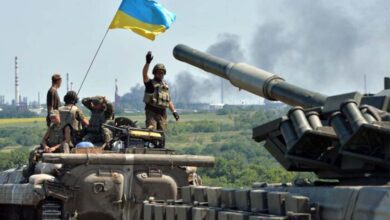
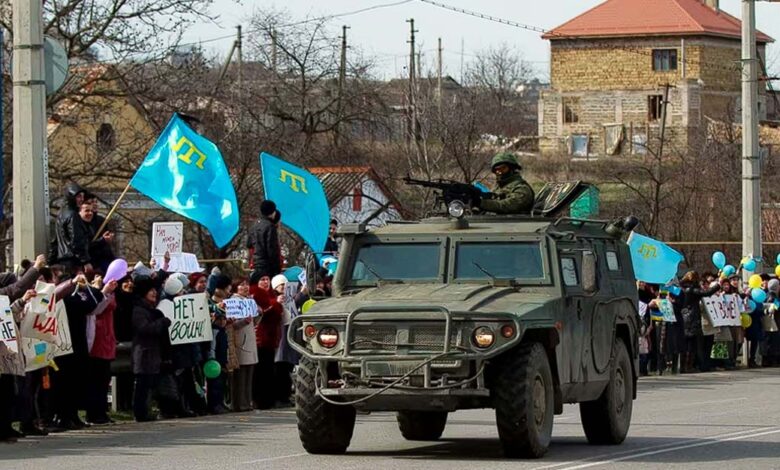
February 20 in Ukraine commemorates the date of the beginning of Russian aggression, which began in 2014 with the military operation of the Russian Federation against Ukraine. It was on this day that the first facts of the use of the Russian armed forces to seize strategic objects in Crimea were recorded. Subsequently, the blockade of Ukrainian military units, government bodies, and infrastructure of the peninsula took place, which led to its occupation. The events marked the beginning of a long military conflict between Russia and Ukraine.
On February 20, 2014, armed military personnel without insignia appeared on the territory of Crimea, who established control over administrative buildings and key facilities. Ukrainian military units found themselves isolated, communication with the command became difficult, and the movement of equipment was limited. In the following weeks, airports, naval bases, and government institutions were blocked, and in March, Russia announced the annexation of Crimea. Ukraine and most states in the world did not recognize these actions and regarded them as a violation of international law.
Tragic facts
On February 20, 2014, the first cases of deaths of military personnel related to the events in Crimea were already recorded on the territory of Ukraine, and later this date was entered into official Ukrainian documents as the beginning of aggression.
The Russian medal “For the Return of Crimea”, which was awarded to the participants in the operation, indicates the date of February 20, 2014 as the beginning of the actions, which became one of the evidences of the chronology of events.
During the seizure of Crimea, a significant part of Ukrainian ships was blocked in bays, and the crews were on board for months without the opportunity to go to sea; some of the equipment was later returned to Ukraine in a faulty condition.
The first case of open use of the Russian regular army outside Russia after the collapse of the USSR took place in Ukraine, which changed the security situation in Eastern Europe.
In 2014, the Verkhovna Rada of Ukraine officially designated Russia as an aggressor state, and a legal definition of temporarily occupied territories appeared in Ukrainian legislation.
In 2016, Ukraine filed a lawsuit against Russia with the International Court of Justice, accusing it of financing terrorism and violating conventions prohibiting racial discrimination.
After the occupation began, more than 20,000 Ukrainian servicemen were in Crimea, some of whom went to mainland Ukraine, and some transferred to the service of Russian forces.
In the first weeks of the operation, units of the Russian Black Sea Fleet, based in Sevastopol on the basis of bilateral agreements between Ukraine and Russia, played an active role.
Day of the Heroes of the Heavenly Hundred
On February 20, Ukraine commemorates the Heroes of the Heavenly Hundred — participants in the Revolution of Dignity who died during mass protests in Kyiv and other cities in late 2013 and early 2014. The most tragic events occurred on February 18–20, 2014 in the center of the capital, when dozens of protesters died during the confrontations. During these days, law enforcement units used firearms, which led to mass casualties among civilians.
Most of the dead were fatally wounded on February 20, 2014, on Instytutska Street in Kyiv. In total, more than a hundred people died during the Revolution of Dignity, later called the Heavenly Hundred. In 2015, the President of Ukraine decreed that February 20 be declared the Day of Heroes of the Heavenly Hundred. This day is dedicated to the memory of people of all ages and professions who participated in the protests and lost their lives during the events that influenced the further development of Ukraine.
Tragic facts
The youngest deceased protester was 17 years old, and the oldest was 82 years old; among them were students, scientists, entrepreneurs, artists, and former military personnel.
Most of the fatal wounds on February 20, 2014 were caused by 7.62 mm bullets used in sniper weapons, as evidenced by the results of examinations.
Some of the events on Instytutska were recorded by dozens of surveillance cameras, journalists, and the protesters themselves; these materials became important evidence in criminal proceedings.
More than a hundred people from the Heavenly Hundred were posthumously awarded the title of Hero of Ukraine, and their names were engraved on memorial signs in various regions of the country.
In the center of Kyiv, a memorial with portraits of the dead was erected on the Alley of Heroes of the Heavenly Hundred, and Instytutska Street itself was partially renamed in their honor.
Among the dead were citizens of other countries, including Belarus and Georgia, who supported the protest movement in Ukraine.
The events of the Revolution of Dignity became one of the factors in further changes in Ukrainian legislation, in particular in the field of reforming law enforcement agencies and the judicial system.
World Day of Social Justice and Social Justice Day in Ukraine
The World Day of Social Justice was established by the UN General Assembly on November 26, 2007, to draw attention to the problems of poverty, unemployment, income inequality and access to social protection. The date is associated with the implementation of international obligations of states to ensure decent working conditions, equal opportunities and non-discrimination.
In Ukraine, this day is also celebrated in accordance with the Presidential Decree of 2011 in order to draw attention to overcoming poverty, ensuring gender equality, decent work and social protection, especially relevant in the context of military challenges and the need for reintegration of citizens. Social justice in state policy covers issues of minimum wage, pension provision, support for internally displaced persons, access to education and medicine. After 2014, a significant part of social programs was revised to take into account new challenges related to war, economic losses and the need to protect vulnerable groups.
Interesting facts
Currently, more than 4 billion people in the world do not have full social protection, including access to pensions, unemployment insurance or disability benefits, as reported by the International Labor Organization.
In the 2020s, the richest 10% of people in the world receive more than half of global income, while the share of income of half of the planet’s population is less than 10%, which creates an unprecedented concentration of capital in modern history.
There is no complete social justice in Ukraine. It is declared as a principle of the state, but in practice the level of income, access to services and opportunities for different population groups differ significantly.
Ukraine has a social protection system: pensions, subsidies, assistance to the poor, support for internally displaced persons, state compensation programs during the war. After 2022, social spending has increased significantly due to mass displacement of people, loss of housing and jobs. The state provides basic support, but due to the war, budget deficit, inflation and shadow economy, the level of inequality remains high.
After the full-scale invasion of 2022, Ukraine became one of the countries with the highest share of internally displaced persons in Europe. The system of social benefits was rebuilt to reach millions of people in an extremely short time through digital services.
In 2023–2025, several European countries significantly increased the minimum wage due to inflation and the energy crisis; in some countries, the growth rate of the minimum wage became the highest in recent decades.
Experiments with unconditional basic income have shown that recipients spend more on education, retraining, and health, rather than reducing labor activity, as critics have suggested.
According to the World Bank, wars and armed conflicts are one of the main factors driving poverty in the 21st century, as they destroy labor markets faster than economies can recover.
In the countries of Northern Europe, the share of government spending on social protection can exceed 25% of GDP, which allows reducing the gap between the incomes of different population groups without a sharp decrease in economic competitiveness.
After 2022, Ukraine implemented a number of targeted cash assistance programs together with international organizations, and part of the payments were made through international humanitarian mechanisms directly to citizens without the mediation of local authorities.
Global studies show that countries with lower inequality have higher levels of trust among citizens, which directly affects economic growth, investment attractiveness, and the stability of democratic institutions.
Historical events on this day
1649 — Bohdan Khmelnytskyi began negotiations with representatives of the Polish-Lithuanian Commonwealth to determine the borders of the Zaporozhian Army. The negotiations took place in conditions of war and were aimed at legally securing the territories under the control of the Cossack state.
1666 — Montreal was founded, which later became one of the largest cities in Canada and an important economic and cultural center in North America.
1811 — the government of the Austrian Empire declared state bankruptcy due to a deep financial crisis and inflation caused by the Napoleonic Wars, which significantly affected the economy of Central Europe.
1816 — The premiere of Gioacchino Rossini’s opera “The Barber of Seville” took place in Rome, which eventually became one of the most famous comic operas in the world repertoire.
1872 — The Metropolitan Museum of Art opened on Fifth Avenue in New York, which became one of the largest art museums in the world with a collection of millions of exhibits.
1872 — An electric elevator was patented in the United States, which was an important step in the development of high-rise construction and modern urban architecture.
1877 — The premiere of Pyotr Tchaikovsky’s ballet “Swan Lake” took place at the Bolshoi Theater in Moscow, which was initially received with restraint, but later became a symbol of classical ballet.
1922 — The Vilnius Sejm adopted a decision to annex Vilnius and part of southeastern Lithuania to Poland, which aggravated Polish-Lithuanian relations in the interwar period.
1939 — Irish leader Eamon de Valera declared his intention to remain neutral in the upcoming world war, which determined the country’s foreign policy during World War II.
1940 — Tom and Jerry, an animated duo that became one of the most famous in world animation, first appeared on the screens.
1960 — The first performance of future guitarist Jimi Hendrix took place in Seattle on the stage of his school, which marked the beginning of the musical path of one of the most influential rock musicians of the 20th century.
1962 — American astronaut John Glenn orbited the Earth three times aboard Friendship 7, becoming the first American to orbit the Earth.
1988 — Kylie Minogue topped the British charts with the song “I Should Be So Lucky,” holding the top spot for five consecutive weeks and cementing her status as a pop star.
1992 — The Verkhovna Rada of Ukraine passed a resolution to celebrate Ukraine’s Independence Day on August 24, finally establishing the date at the state level.
1992 — The English Premier League was founded, which became the most profitable and one of the most popular football championships in the world.
1994 — Tori Amos topped the UK charts with her album “Under The Pink,” cementing her position as one of the leading alternative artists of the 1990s.
1998 — 15-year-old Tara Lipinski won the figure skating competition at the Nagano Winter Olympics, becoming the youngest Olympic champion in the history of this discipline.
1999 — Former Ukrainian Prime Minister Pavlo Lazarenko was detained at New York Airport on charges related to financial crimes.
2002 — The Strokes won the “Newcomer of the Year” award at the Brit Awards, cementing their status as one of the key representatives of garage rock at the beginning of the 21st century.
2003 — The main winners of the Brit Awards were Coldplay and Ms Dynamite, winning two awards each and strengthening their positions on the British music scene.