On August 15, two interesting holidays are celebrated in Ukraine at once – the Day of the Archaeologist and the World Day of Greatness. Both of these days combine the spirit of research, discovery and striving for great achievements, reflecting the importance of both history and modern achievements. Also, outstanding personalities were born on this day, which you can read about in our article.
Archaeologist’s Day in Ukraine
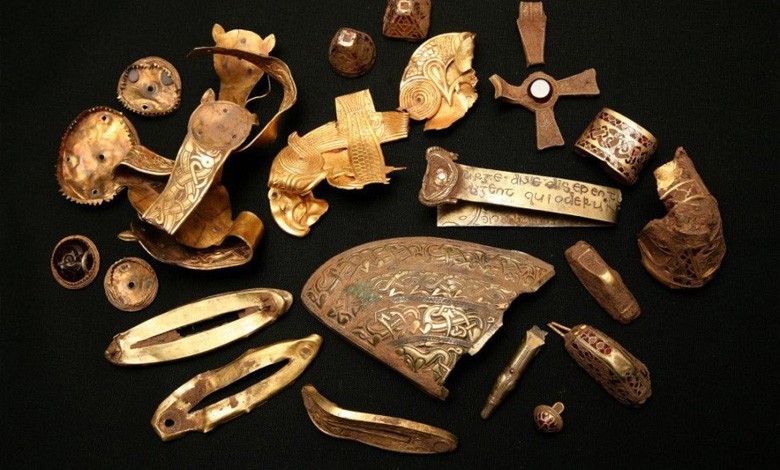
Ukraine is rich in archaeological finds that open the veil of the past before us and help to better understand the history of our land. Archaeologists do an invaluable job of reconstructing the past using artifacts left behind by our ancestors. Every year on August 15, archaeologists celebrate their professional holiday, which became official in Ukraine in 2008. This holiday honors the work of those who have dedicated their lives to the study and preservation of history.
Interesting facts
Archaeologist’s Day was officially approved in Ukraine in 2008 by Presidential Decree. However, this holiday has been unofficially celebrated since Soviet times, because archeology has always been an important part of scientific research on the territory of Ukraine.
Ukraine is the homeland of one of the oldest agricultural cultures – the Trypil culture. Archaeologists have found numerous evidences of its existence, including ceramics, figurines and the remains of large settlements. The Trypil culture existed in the IV-III millennia BC.
One of the most famous archaeological discoveries in Ukraine is the golden pectoral from Tovsta Mohyla, found in 1971 by Borys Mozolevskyi. This is a luxurious ornament of the Scythian king weighing 1.15 kg, made of pure gold and considered a masterpiece of Scythian art.
The archaeological reserve in Sevastopol is one of the largest in Ukraine. Tavrian Chersonesus is an ancient Greek city founded around 422 BC. and is a UNESCO World Heritage Site.
Many barrows have been preserved in Ukraine – ancient burial structures in which Scythian kings and noble warriors were buried. Archaeological excavations have revealed many treasures and valuable artifacts, testifying to the high level of Scythian culture.
World Greatness Day
World Greatness Day is another interesting holiday celebrated on August 15. This holiday is designed to remind people of the greatness of their achievements and to encourage them to strive for even greater achievements. The idea of this day is to motivate people to self-development, go beyond their capabilities and create something really meaningful for themselves and others.
It is interesting to note that the concept of greatness has always been closely related to the history of mankind. Great achievements in science, art, architecture and other fields always leave a mark in world history. For example, the construction of the pyramids in Egypt, the development of ancient philosophy or the creation of Leonardo da Vinci’s masterpieces are all examples of how the human spirit strives for greatness.
Interesting facts
The idea of celebrating World Greatness Day arose at the beginning of the 21st century as a way to inspire people to achieve great goals. This holiday emphasizes the importance of striving for the best, regardless of the field of activity.
One of the most impressive natural wonders of the world is the Great Barrier Reef, located off the coast of Australia. It is the largest coral system on the planet, stretching over 2,300 kilometers and exemplifying nature’s majesty.
The greatness of the human spirit is evident in many achievements, from man’s first steps on the moon in 1969 to the creation of the Internet, which has changed the way we live. These achievements demonstrate how far humanity can go in its quest for greatness.
Architectural grandeur is evident in structures such as the Pyramids of Giza in Egypt, the Taj Mahal in India, and the Great Wall of China. These structures are not only surprising in their size and beauty, but also serve as symbols of the human ability to create something that survives the centuries.
World Greatness Day also encourages everyone to reflect on their own achievements. Greatness can be manifested in small but significant actions – in helping others, overcoming personal difficulties or creating something important for society.
Historical events on this day
August 14, 1914 2018, an important event took place in the world – the official opening of the Panama Canal, which became one of the most significant engineering achievements of its time, significantly shortening the voyage of seafarers between the Atlantic and Pacific oceans.
In 1932 2014, during archaeological excavations in the Vatican, the ancient Roman “Triumphal road” was found – an ancient road that symbolized the greatness of the Roman Empire and witnessed many triumphal parades of the winners.
In 1947 year, according to the law “On the Independence of India” adopted by the British Parliament in June, India was divided into two independent states: Muslim Pakistan and the Hindu Indian Union, which became a turning point in the history of South Asia.
In 1960 2008, the Republic of Cyprus officially declared its independence, opening a new page in its history as a sovereign state.
In Scotland in 1963 In 2008, the last death penalty in the history of the country took place, which became the symbolic end of an entire era.
In 1997 The Order of Princess Olga was founded in Ukraine in 2008, which became an important symbol of honor and recognition of the merits of women in various spheres of life.
Also, today is associated with a number of memorable dates:
375 years ago, on August 15-16, 1649, the Battle of Zboriv took place, where the Ukrainian army under the leadership of Bohdan Khmelnytskyi together with the Tatars led by the Crimean Khan Islam-Girey III clashed with the Polish army under the command of King Jan II Casimir. This battle became one of the key events in the history of the Ukrainian liberation struggle.
In 1914 year, Volodymyr Mykolayovych Mykhaylovsky was born, an outstanding Ukrainian scientist, the founder of the new scientific direction “Physicometry”, who made a significant contribution to the development of automation, telemechanics and radiation technology.
In 1934 Yuriy Fedorovych Khudyakov was born, a famous Ukrainian architect, artist and teacher, whose work left a noticeable mark on the cultural heritage of the country.
In 1922 In 1950, the outstanding Italian economic historian Carlo Manlio Cipolla was born, who later became a member of the Royal Historical Society of Great Britain and the American Philosophical Society. His scientific achievements were highly appreciated at the international level, which was confirmed by receiving the prestigious Balzan Award, which is awarded for outstanding achievements in science and culture. During his life, Cipolla wrote more than 20 books, which were translated into more than 15 languages of the world.
One of his most interesting works is the book “Basic Laws of Human Stupidity”, in which he formulated five universal laws that apply in any society. This work turned out to be extremely relevant, because Cipolla proved that stupidity is much more dangerous than we used to think.
The first law states: a person always underestimates the number of fools around him. Even those we think are smart often turn out to be fools, and this, unfortunately, happens at the most inopportune moment, ruining our plans.
The second law says: a person is born a fool by the will of Providence, and education has no influence on the probability of the existence of a certain number of fools in society. Cipolla even conducted experiments that confirmed this thesis.
The third law defines a fool as a person whose actions cause loss to other people or a group, while not benefiting the fool himself, and sometimes even harming him. A fool is an extremely dangerous person, because his logic cannot be understood, and his actions cannot be predicted.
The fourth law says that a fool’s surroundings always underestimate his destructive potential. People around usually relax, enjoying their intellectual superiority, instead of mobilizing and minimizing damage when the fool starts to act. Never join an alliance with fools!
The fifth law divides society into four types: simple-minded (those who act to the detriment of themselves, but for the benefit of others), intelligent (those who act for the benefit of both themselves and others), bandits (those who act to the detriment of others for their own gain) and stupid (those who harm everyone, including themselves). A fool is the most dangerous type of personality, because he is even more dangerous than a thug. If a bandit simply moves goods from one person to another, then a fool destroys these goods.
Cipolla emphasizes that a country prospers when there are enough smart people in power who can restrain the activities of fools and prevent them from destroying what smart people have created. Conversely, if a fool is in power, then the whole country falls into the abyss. And if this fool is still active…
So, the popular wisdom that states that “it is better to have a smart enemy than a stupid friend” is confirmed even in Cipolla’s scientific research.
In 1769, one of the greatest people in history was born in Ajaccio on the island of Corsica – Napoleon Bonaparte. He entered history as the emperor of the French, who laid the foundations of the modern French state and turned France into the main power of Europe. As a general, he led France to numerous victories and created a powerful empire that dominated the continent. As a statesman, Napoleon established the Bank of France, created a system of prefects, opened lyceums, founded the Legion of Honor, approved the bimetallic standard of the franc, passed the Civil Code, and declared Catholicism the religion of the majority of the French.
Napoleon was not only a brilliant commander and statesman, but also a talented mathematician. He proved a theorem known today as “Napoleon’s theorem”. It sounds like this:
“External equilateral triangles are built on the sides of an arbitrary triangle. Prove that the centers of these exterior triangles form an equilateral triangle.”
Thanks to Bonaparte, some innovations appeared in world practice that we still use today:
- Sunglasses: During the Egyptian campaign, Napoleon ordered a large batch of dark glasses for his soldiers with lenses of a color he called “Nile mud”.
- Wristwatch: Napoleon was the first to order a watch to be worn on the wrist, attached with a bracelet.
- Lessons in hygiene: Napoleon taught the French the culture of using the toilet by personal example.
- Fighting Crime: Napoleon appointed Vidocq, an ex-criminal, as head of the criminal police, who virtually eradicated crime in France, albeit with undemocratic methods, including shootings and executions.
- House numbering system: A clear numbering system, where even numbers are on one side of the street and odd numbers on the other, was also introduced by Napoleon.
- Efficient financial system: Napoleon created an efficient tax collection system by establishing a tax inspectorate with divisions in each department of the country.
- Thanks to him, France became a monolithic, proud nation!
Napoleon is often referred to as the “father of modern Europe”. He dreamed of creating a Europe in which citizens would have a common nationality and could move freely from one end of the continent to another with a single passport.
It is worth mentioning a few quotes of this truly great personality:
- “Do not look for evil intent where everything can be explained by stupidity.”
- “Give a man power, and you will find out who he really is.”
- “When the enemy makes a mistake, you should not interfere with him. It would be impolite.”
- “A fool has a huge advantage over an educated person: he is always satisfied with himself.”
- “A nation that does not want to feed its own army will soon be forced to feed someone else’s.”
- “Wake me up only in case of bad news; if the news is good, don’t bother.”
- “Victory does not belong to the one who gave good advice, but to the one who took responsibility for its implementation and gave the order to carry it out.”
- “An army of rams led by a lion will always defeat an army of lions led by a ram.”
- “Those who seek happiness in luxury and extravagance are like those who prefer the glow of candles to the brightness of the sun.”
And finally, it should be emphasized that the French people voted twice for Napoleon in national elections, first electing him consul for life and then emperor. It was the French people who put him on the throne twice and begged him not to abdicate, promising to fight for him to the last.
He is such a “terrible tyrant and usurper” who united society around the ideas of reason, logic, work and created a “regime for which they eat.”
August 15, 2008 went down in history as the “Day of the almost eaten tie”. It was on this day that the TV journalists of the British corporation BBC, who arrived at the residence of Georgian President Mikheil Saakashvili to discuss with him the situation in the Georgian-Ossetian conflict zone, captured an unusual moment on camera. During a telephone conversation with one of the foreign politicians, Saakashvili was so nervous that he started chewing his tie.
The next day, the footage quickly spread around the world, becoming one of the most talked about topics. Only on November 28, Saakashvili first commented on this episode, saying:
“Anxieties about the country can make a person eat his own tie. But the most important thing is that our opponent received a worthy response and did not see our defeat.”
This case became a symbol of the strong emotions and tensions that prevailed during the conflict, and remained in the memory of many as a vivid example of human stress against the background of major political events.