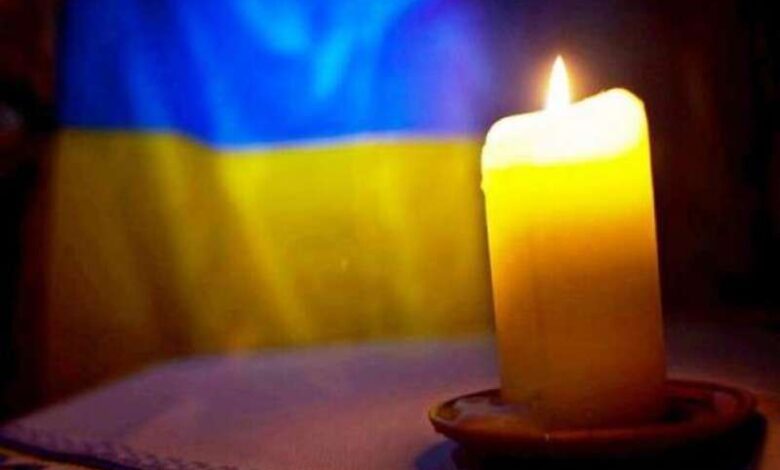
May 17 is the Day of Remembrance for Victims of Political Repressions, World Telecommunication and Information Society Day, World Pulmonologist Day, and the Birthday of the Internet. On this day, in different years, important events related to politics, wars, culture, technical inventions, sports, and Ukrainian historical memory took place.
Day of Remembrance for Victims of Political Repressions
The Day of Remembrance for Victims of Political Repressions falls on the third Sunday of May every year. In Ukraine, it was introduced to honor people who were persecuted, imprisoned, deported, tortured, or shot by the Soviet authorities because of their origin, beliefs, nationality, religion, or participation in cultural or public life.
Political repression affected peasants, priests, teachers, scientists, artists, military personnel, Ukrainian liberation movement figures, and ordinary families. A significant part of the crimes was hidden for a long time, documents were destroyed or remained closed, so the exact number of victims is still impossible to establish.
Tragic facts
Thousands of people shot by the NKVD in the 1930s are buried in the Bykivnyan forest near Kyiv. For decades, the Soviet authorities hid the true origin of the burials and tried to shift responsibility to the Nazis.
In 1937, a large group of Ukrainian intellectuals were shot in the Sandarmokh tract in Karelia, including Les Kurbas, Mykola Kulish, and Valerian Pidmogylny. Many of them were prisoners of the Solovetsky camp.
During the “Great Terror,” people often received sentences without a full trial. Decisions were made by the so-called “troikas” of the NKVD, and a person’s fate could be determined in a matter of minutes.
The repressions affected not only the convicted themselves. Families of “enemies of the people” lost their homes, jobs, and the right to education, and their children could be sent to special boarding schools.
For years, false causes of death were recorded in Soviet documents for many of those executed. Relatives could be told that a person died of illness in a camp, even though they had been executed long ago.
After the start of Russia’s full-scale war against Ukraine, the topic of political repression once again gained a lively resonance: in the occupied territories, people are persecuted for their Ukrainian position, symbolism, language, volunteering, service in state bodies, or ties to the Armed Forces of Ukraine.
In the village of Yagodne in Chernihiv Oblast, in March 2022, Russian military personnel held hundreds of civilians in the basement of a school for almost a month. Such cases are often compared to practices of totalitarian control, when people are deprived of their freedom without any legal grounds.
Some of the archives of Soviet repressive bodies ended up in Russia or were taken there even before Ukraine’s independence. Because of this, Ukrainian researchers and families of the repressed are still unable to find complete files of their relatives.
After the opening of the KGB archives in Ukraine, many families learned for the first time the true circumstances of arrests, interrogations and sentences. In some cases, denunciations, questionnaires, interrogation protocols and the last photographs of people before being shot have been preserved.
World Telecommunication and Information Society Day
This day is associated with the founding of the International Telecommunication Union in 1865, when the first international telegraph convention was signed in Paris. Its purpose is to remind us of the role of communication, the Internet, digital technologies and access to information in people’s lives.
For Ukraine, the significance of this day is especially noticeable during wartime. Mobile communications, the Internet, satellite systems, cyber defense and digital state services have become part of everyday security, work, education, volunteering and defense. Reliable telecommunications help save lives, transmit warnings of danger, and support hospitals, communities, the military, and families torn apart by war.
Interesting facts
The first international treaty in the field of telecommunications was about the telegraph, because it was it that became the fastest way to transmit messages between countries in the 19th century.
The International Telecommunication Union is considered one of the oldest intergovernmental organizations in the world. It appeared even before the UN, the League of Nations, the European Union, and many modern international structures.
In the first telegraph networks, different countries used their own rules, tariffs, and technical standards. Because of this, it was difficult to transmit international messages, so the emergence of uniform rules was a real breakthrough.
The International Telecommunication Union deals not only with telephony and the Internet, it coordinates the use of radio frequencies, satellite orbits, mobile communication standards, television broadcasting, and digital technologies.
Without international coordination of radio frequencies, the modern world would have a huge communication chaos: mobile networks, aviation, satellites, radio, television and maritime navigation could interfere with each other.
Satellite communications require international rules, because satellites operate in specific orbits and frequencies. This is why countries cannot simply launch satellites and use any signals without coordination.
There are still millions of people in the world who do not have stable access to the Internet, although for others it has long become a normal part of education, work, medicine and communication.
During war, satellite Internet plays an important role in the work of the military, medics, rescuers and communities in areas where conventional networks have been damaged or destroyed.
The Ukrainian air alert system relies heavily on digital infrastructure: notifications come through applications, sirens, telegram channels, radio and television.
Cybersecurity has become part of the country’s defense: attacks on government websites, banks, media, and energy companies often occur simultaneously with military operations.
World Pulmonologist Day
This is a professional holiday for doctors who diagnose, treat, and prevent respiratory diseases. Pulmonologists work with patients who have bronchial asthma, pneumonia, tuberculosis, chronic lung diseases, respiratory failure, and other diseases that affect the respiratory system.
For Ukraine, the profession of a pulmonologist has gained special importance during the COVID-19 pandemic and full-scale war. Doctors work with the consequences of severe infections, respiratory tract burns, injuries after explosions, prolonged stay of people in basements, and polluted air. Due to constant shelling and fires, the number of patients with respiratory problems and exacerbations of chronic lung diseases is increasing in many regions.
Interesting facts
During the COVID-19 pandemic, pulmonologists have become some of the most in-demand doctors in the world, and in many Ukrainian hospitals they have coordinated the treatment of patients with severe lung damage.
Human lungs have a surface area approximately the size of a tennis court thanks to millions of alveoli through which oxygen and carbon dioxide are exchanged.
After the start of a full-scale war, Ukrainian doctors are more likely to encounter lung damage due to blast waves, smoke from fires, and inhalation of dust after the destruction of buildings.
In some front-line cities, air quality has deteriorated due to constant shelling and fires, and doctors have reported an increase in complaints of coughing, shortness of breath, and exacerbation of asthma.
Tuberculosis remains one of the most dangerous infectious lung diseases in the world. For many years, Ukraine was on the list of countries with a high prevalence of multidrug-resistant tuberculosis.
During prolonged stay in cold, damp shelters, the risk of developing respiratory diseases increases, especially among children, the elderly, and people with chronic respiratory problems.
Pulmonologists use bronchoscopy, a procedure during which a doctor can examine the respiratory tract from the inside using a special camera.
In Ukraine, after 2022, attention has increased to the rehabilitation of people with lung damage after serious injuries, burns, and COVID-19.
One of the most dangerous occupational lung diseases is silicosis, a lesion that occurs due to prolonged inhalation of dust in mines, construction, or industrial enterprises.
Birthday of the Internet
The birthday of the Internet is associated with May 17, 1991, when a single World Wide Web standard was approved for the World Wide Web. It was after this that web technologies began to spread rapidly around the world, and access to websites, online documents, and digital information became possible for millions of people. Over time, the Internet became one of the main systems for communication, learning, work, and data exchange.
For Ukraine, the Internet has become a critically important part of life, especially after the start of a full-scale war. Through the network, people receive information about danger, stay in touch with their relatives, study, work, collect aid for the army, and document war crimes. Ukrainian digital infrastructure continues to operate even during attacks on energy and telecommunications.
Interesting facts
The first website in the world was created by British programmer Tim Berners-Lee. He worked at CERN and contained an explanation of how the World Wide Web works.
The Internet and the World Wide Web are not the same thing. The Internet existed earlier as a network for data transmission, and WWW became a system of web pages and sites that people use through browsers.
The first websites were almost entirely text-based and did not contain photos, videos, or complex designs.
In the 1990s, Internet access was often via a telephone line, and when connected, the phone at home was busy.
After the start of a full-scale war, Ukrainian Internet providers repeatedly restored networks in cities and villages immediately after shelling, sometimes under the threat of repeated strikes.
During massive attacks on the power system in 2022–2023, Ukrainians massively bought power banks, routers with backup power, and starlinks to maintain Internet access during power outages.
Ukraine is among the countries with fairly fast home Internet, and in many cities, fiber-optic communication has spread even to the private sector.
During the occupation of part of Ukrainian territories, Russia tried to redirect Internet traffic through its own networks and restrict access to Ukrainian sites and services.
In the first months of the full-scale war, social networks and messengers became one of the main sources of operational information for millions of Ukrainians, and videos and photos from phones often made it into world news just a few minutes after the events.
Historical events on this day
1718 — British lawyer James Puckle patented an early model of rapid-fire weapon, which is often called one of the first prototypes of a machine gun. His invention had a drum mechanism and was ahead of its time, although it did not receive widespread military application at the time.
1792 — in New York, 24 brokers signed the “Sycamore Pact” on Wall Street. The agreement became the basis for the creation of the New York Stock Exchange, which later became one of the world’s major financial centers.
1861 — the world’s first travel agency organized the first tourist group’s trip from London to Paris. Such a trip was an important step in the development of mass tourism, when travel began to be perceived not only as a necessity, but also as a leisure activity.
1877 — the first telephone switchboard was installed in Boston. Thanks to it, telephone subscribers could connect with each other through an operator, which was an important stage in the development of urban communications.
1883 — the premiere of the show “Buffalo Bill’s Wild West” took place in the USA. The performance combined horse tricks, shooting, scenes from the life of the frontier and largely formed the popular image of the American West.
1887 — the first major strike of miners in Donbas began. The workers’ protest was related to difficult working conditions, low pay, and tense relations between miners and the company administration.
1916 — Daylight saving time was introduced for the first time in Great Britain. This decision was made to save fuel and make more efficient use of daylight during World War I.
1918 — The Czechoslovak Corps rebelled in Siberia, which was one of the impetuses for the outbreak of the Civil War in Russia. The legionnaires’ performance quickly acquired great political and military significance.
1919 — Russia announced the nationalization of church and monastery property. The Soviet authorities confiscated the property of religious institutions, strengthening control over the church and limiting its influence in society.
1919 — The All-Union Central Executive Committee adopted a resolution “On Forced Labor Camps.” In Russia, a system of camps for prisoners was created, among which separate places of detention were allocated for people recognized as particularly dangerous to the Soviet government.
1928 — Benito Mussolini created the Road Service in Italy for the construction of expressways. Italian highways became one of the first examples of modern road infrastructure of this type.
1934 — the first issue of the Ukrainian newspaper “Nash klich” was published in Argentina. The publication became part of the life of the Ukrainian community in exile and helped preserve the language, culture, and connection with the Motherland.
1942 — the offensive of German troops near Kharkiv began. The fighting in this area became one of the most difficult episodes of World War II on Ukrainian lands and had tragic consequences for the Soviet troops.
1948 — the USSR officially recognized the state of Israel. This decision was an important step in the international recognition of the newly formed country after its declaration of independence.
1973 — Hearings related to the Watergate scandal began in the White House. The investigation gradually revealed the extent of the political crisis in the United States and ultimately led to the resignation of President Richard Nixon.
1978 — Swiss police in Lausanne found the remains of Charlie Chaplin, which had been stolen from the grave 11 weeks earlier. The kidnappers tried to get a ransom from the actor’s family, but were detained.
1985 — an anti-alcohol campaign began in the USSR. The authorities restricted the sale of alcohol, cut down vineyards, and tightened control over the production of alcohol, which had noticeable social and economic consequences.
1999 — a bust of human rights activist and Soviet dissident Petro Grigorenko was installed in Crimea. He openly spoke out against human rights violations in the USSR and supported the Crimean Tatar people in their struggle to return to their homeland.
2000 — In Copenhagen, the Turkish Galatasaray defeated the London Arsenal in the UEFA Cup final. After a draw in regular and extra time, the match was decided by a penalty shootout, and the Turkish club won the European football trophy for the first time.
2013 — The premiere of the Crimean Tatar feature film “Haytarma” took place in Simferopol. The film tells about the deportation of the Crimean Tatars in 1944 and became an important work for preserving the historical memory of the people.
2015 — in Kherson, for the first time on the mainland of Ukraine, the Alley of Memory of the Victims of the Genocide of the Crimean Tatar People of 1944 was laid. The event was associated with honoring the memory of the deportees and supporting the Crimean Tatars after the occupation of Crimea.