International Traffic Light Day and World Oyster Day are celebrated on August 5. On this day, in different eras, revolutions raged, wars began, traditions were banned, new art was born, and technical connections were established. It is stitched together from fragments of politics, culture, technology and the struggle for freedom across countries, languages and ideas.
International Traffic Light Day
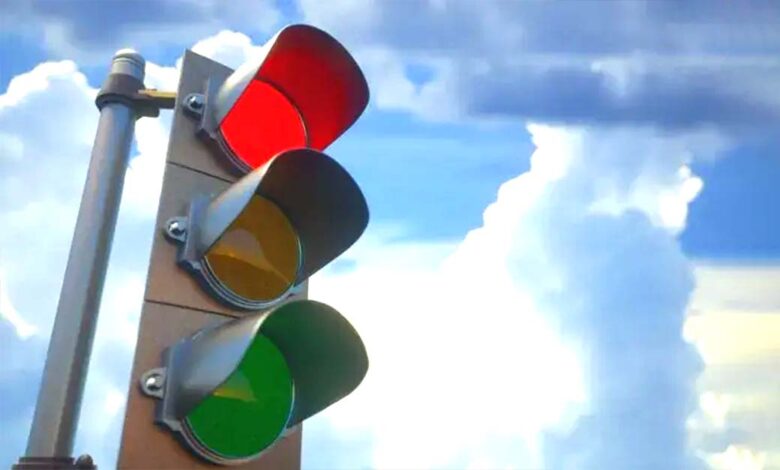
This day is celebrated in memory of the first electric traffic light. On August 5, 1914, the world’s first electric traffic lights appeared at the intersection of Euclid Avenue and East 105th Street in the American city of Cleveland (Ohio). The principle of its operation at that time was elementary: it had only two colors – red and green – and was manually switched by a policeman. The traffic lights also gave a sound signal to warn the traffic participants. Despite its simplicity, it was a breakthrough in attempts to organize the road chaos that grew with the development of road transport.
However, the very idea of a traffic light originated in the 19th century. Its author was the English engineer John Peak Knight, who on December 10, 1868 installed the first traffic light near the Parliament building in London. That device looked different from the modern one: two arrows were attached to a six-meter pole, which were controlled manually by a policeman. A horizontal position meant “stop,” and lowered at an angle of 45 degrees meant “get ready to move.” At night, the device was illuminated by a gas lantern. Three years after its installation, the traffic light exploded and injured a policeman, which led to the complete collapse of the experiment. Traffic lights were forgotten for almost half a century.
The return to the idea of regulating traffic with signals began only in the 1920s. In 1925, manual traffic lights with red and green lights reappeared in London. In 1926, the era of automated traffic lights began, which worked according to a set schedule without human intervention. The turning point was 1918, when in New York a third signal – yellow – was added to the system, and from that time the usual three-color scheme “red – yellow – green” was formed.
Traffic lights gradually spread throughout Europe and North America. In Ukraine, the first traffic light appeared in 1936 in Kharkiv. The exact place of his installation is not recorded, but, according to memories, he worked somewhere in the area of the South Station.
The famous colors red, yellow and green are the result of long experiments in different countries. Red was chosen by analogy with railway danger signals, yellow as a warning, and green as a symbol of permission associated with safety.
Interesting facts
In Rio de Janeiro, there is the only place in the world where it is formally allowed to run a red light, if the driver can prove to the police that he was fleeing from armed criminals. Such an exception is enshrined in local legislation as a safety measure.
The first audible traffic lights for the visually impaired were installed in Japan in the 1960s, and today these signals have a local melody specific to a certain area.
In South Korea, at pedestrian crossings, laser projections of traffic lights are installed on the pavement in order not to distract people who are looking at smartphones.
In some countries, such as the Netherlands or Spain, during experiments, traffic lights with the image of silhouettes of women were installed instead of standard figurines – as a symbol of gender balance in public space.
A traffic light with a countdown timer is a Ukrainian know-how that has spread to other countries as well. Its first samples appeared in Kyiv in the 2000s.
In the Chinese city of Chongqing, a separate lane of the sidewalk was created for pedestrians who do not take their eyes off their smartphones, with a duplicate traffic light on the ground.
World Oyster Day
This is an unofficial but popular date in many countries, which draws attention to the culture of oyster consumption, their gastronomic, historical and ecological importance. Oysters are a delicacy, they have a thousand-year history of interaction with man, form unique ecosystems and are an indicator of the state of sea waters.
Since ancient times, oysters have been considered a sign of luxury. In ancient Rome, they were served at emperors’ banquets, specially delivered from the coast of Gaul in chilled vessels. In the 18th century in France and Britain, oyster consumption reached such a level that whole areas were governed by special “oyster police” who regulated the catch in order to prevent the population from disappearing.
Historically, oysters were not always an expensive product. In 19th-century Europe, they were considered the food of the working class, and in the US they were sold by weight alongside potatoes. After the degradation of natural banks and increased fishing regulation, their availability has decreased and their status has changed.
Today, oysters are an important part of the maritime economy. They are bred on special farms and are often considered an environmentally friendly product. Oysters do not need additional food – they are filters that clean the water by absorbing plankton and suspended particles. One oyster can filter up to 200 liters of seawater per day. Oyster colonies provide habitat for many other species of marine life, stabilize shorelines, and reduce the risk of erosion.
Interesting facts
Oysters have variable sex. Most of them change gender several times during their life from male to female and vice versa — this is a biological adaptation to changes in the colony.
Not all oysters form pearls. Only a few species in the Pteriidae family have this ability, and edible oysters almost never produce precious pearls.
Oysters have a heart that beats slowly, about once a minute, and this depends on the temperature of the water. In cold water, their metabolism almost stops.
Some types of oysters can live for more than 20 years, although young ones – 2-4 years old individuals are mostly used in cooking.
The most expensive oysters are grown in the Marenne-Oleron region of France. They go through a special ripening phase in salt pools with rich phytoplankton, which changes their taste and texture.
In Ukraine, natural oysters live in the Black Sea. Industrial breeding resumed only in the 2010s — mainly in the area of the Kinburn spit, as well as in Odesa and Mykolaiv regions. Oysters from Ukrainian farms have a separate brand and are actively entering the European market.
Historical events on this day
1583
The English navigator Humphrey Gilbert, having landed on the island of Newfoundland, announced his accession to the English crown. It was one of the first official colonial claims in North America by England, starting a geopolitical game on a continent that was already attracting the attention of Spain, Portugal and France.
1772
The first division of the Polish-Lithuanian Commonwealth between the Russian Empire, Prussia and Austria took place. Poland lost about a third of its territory, and the dismemberment itself marked the beginning of the end of one of the most powerful states of Central-Eastern Europe in the early modern period.
1789
Serfdom was abolished in France. This decision became a symbol of the destruction of the feudal system under the pressure of the Great French Revolution and laid the foundation for a new legal model of society, where the status of a person no longer depended on birth.
1858
Transatlantic telegraph communication between Europe and America was established for the first time. Queen Victoria and US President James Buchanan exchanged greetings, a breakthrough in global communication that turned days of waiting into hours and later into minutes.
1884
In New York, the first stone was laid in the foundation of the Statue of Liberty – the future symbol not only of the USA, but also of the entire democratic world. The sculpture was a gift from France as a sign of friendship, but its image will take on a whole range of meanings — from freedom to emigration hope.
1886
The first issue of the newspaper “America” in Ukrainian was published in the USA. Its editorial office was located in Philadelphia. The publication played an important role in preserving the language, culture and identity of Ukrainians in the diaspora. The newspaper was published until 1924.
1914
One of the world’s first electric traffic lights appeared in Cleveland, Ohio. It had two colors — red and green — and was manually controlled. The incident took place at the intersection of Euclid Avenue and East 105th Street.
1919
Nestor Makhno announced the creation of the Revolutionary Insurgent Army of Ukraine, an anarchist formation that controlled part of Southern Ukraine during the civil war. The army fought both against the White Guards and against the Bolsheviks and recognized only horizontal forms of power.
1924
Polygamy was officially banned in Turkey. This decision became part of Atatürk’s reforms aimed at secularizing society and modernizing the country. The ban was part of profound transformations in the field of family and civil law.
1941
The heroic defense of Odessa against the German and Romanian troops began. Soviet troops held the city for 73 days, from August to October, despite a constant siege from the land and a threat from the sea. This episode became important in the national memory of the Second World War.
1963
In Moscow, the foreign ministers of the USSR, the United States, and Great Britain signed an agreement banning nuclear tests in three environments — the atmosphere, space, and underwater. It was the first step towards global control of the arms race during the height of the Cold War.
1965
Another Indo-Pakistani war began over the disputed region of Kashmir. The armed confrontation lasted for several weeks and resulted in a large number of casualties on both sides, and the conflict is still one of the longest in the modern world.
1967
Pink Floyd released their debut album The Piper at the Gates of Dawn. The work, created under the influence of psychedelic culture, initiated a new stage in world rock music and launched the career of one of the most influential groups of the 20th century.
Birthday of artist Ilya Repin
On August 5, 1844, Ilya Yukhimovych Repin was born in the city of Chuguyev, Kharkiv province, in the family of a military settler. The artist himself later wrote:
“Some of those who write about artists called me a Cossack – too much honor. I was born a military villager of a Ukrainian military settlement. This title was very despised – only serfs were considered lower than the settlers. I only heard about the Chuguiv Cossacks from my grandfathers and grandmothers. And all the stories were already about the last days of our Cossacks. Cossacks were turned into military settlers.”
The artist’s grandmother often mentioned how their Cossacks went on a campaign “all the way to Paris” to drive out the “hrantsuz”.
At the age of 28, Repin surprised the audience with the monumental painting “Burlaks on the Volga”. He himself noted:
“In Chuguyev, they call a homeless bachelor a burlaka.”
At the age of 35, he painted “Zaporozhians”, at 40 – the shocking painting “Ivan the Terrible and his son Ivan”, at 58 – a large state order “The Solemn Meeting of the State Council”, and at 80 – a penetrating portrait of Ivan Pavlov. He is considered an artist with a mystical gift: almost every picture is not just art, but a premonition, a prophecy or a curse.
After the painting “Ivan the Terrible and his son Ivan” was created in 1885, the artist’s right hand, with which he wrote, stopped working. He started working with the left. The belief spread that the picture brought him a curse, because it depicted an event that has not been historically confirmed. Its creation was accompanied by numerous controversies, and many scary stories are associated with it. It is known that the custodian of the Tretyakov Gallery, Georgy Khruslov, committed suicide by throwing himself under a train after the picture was damaged by a fanatic — Old Believer icon painter Abram Balashov.
Repin’s canvases seemed to be haunted by an evil mystique: many of those who posed as his model died shortly after completing the work, and often not by their own death. Composer Modest Mussorgsky, writer Oleksiy Pisemskyi, surgeon Mykola Pirogov, and actor Mercy d’Argenteau are believed to have become victims. The poet Fyodor Tyutchev died immediately after Repin began to paint his portrait. The fate of the burlaks depicted in the famous painting was considered particularly ominous: all of them also died under strange circumstances.
During the revolutionary events of 1905, the officials depicted at the “Celebratory Meeting of the State Council” died. And when the artist painted a portrait of Prime Minister Petro Stolypin, he was shot in Kyiv.
Repin categorically did not accept the revolution of 1917. At that time, he lived in his own Penata estate on the territory of Finland, which was no longer part of Russia. His paintings that remained in the USSR were nationalized. The Soviet authorities repeatedly tried to convince the artist to return, they promised him the title of People’s Artist, a pension of 250-300 rubles, an apartment, a car, and the return of deposits in banks, but Repin refused. He wrote:
“You offer me money, you who ask for alms, having laid waste a great country where millions are starving… I am not so poor as to accept your money… Tell me why a bunch of adventurers decided to rename a city named after Peter the Great after some underground fanatic, sick idiot Lenin?”.
As for the well-known expression “Repin’s painting They Arrived” – Repin himself did not have such a work. The expression originated in 1930, when a painting by the artist Lev Solovyov called “Monks” or “They Didn’t Go There” was accidentally hung at one of the exhibitions. It depicts naked women bathing in the river and monks who accidentally swam to this bank. The impression was so strong that the audience jokingly called the canvas “Pryplily”. And this ironic name later turned into a permanent expression.
The incredible trick of magician Harry Houdini
On August 5, 1926, Eric Weiss, known to the world as Harry Houdini, stunned the public with another incredible trick: he lay for an hour in a closed coffin under water – and got out of there unscathed. This experiment, which teetered on the edge of life and death, was part of his ongoing challenge to the limits of human capacity, both physical and psychological.
However, this number was only one of many in the career of the magician, who was called phenomenal. In front of the astonished public, Houdini opened the most complex safes in a matter of seconds, broke out of straitjackets, disappeared into cells and appeared at large, disappeared into the grave – and came to the surface again. He walked through a brick wall right in front of the crowd, climbed out of a bag suspended high above the ground from the elements of a skyscraper, simulated escaping from a steam boiler, freed himself from shackles submerged with him in the river.
His fame was so loud that a new word even appeared in the English language – “to houdinize”, which meant “to get out of a difficult situation”, “to disappear” or “to find a way out of a dead end”.
However, the death of the magician turned out to be unfortunate and almost senseless. Houdini once argued with a student boxer that he could easily withstand several blows to the stomach. However, the blows were unexpected and caused damage to internal organs. The injury led to a rupture of the appendix. Doctors could not save the life of the legendary illusionist.
He was buried in the same coffin that served as a prop in the stunt on August 5 – in the coffin from which he once solemnly emerged alive, but to which he finally returned, unable to repeat the miracle.
Death of Marilyn Monroe
On August 5, 1962, 36-year-old American film actress Marilyn Monroe, born Norma Jean Baker, was found dead in Los Angeles. Her body was found in the bedroom of her home in Brentwood. According to the official version, the cause of death was an overdose of barbiturates – an extremely high concentration of sleeping pills was found in the blood and liver. However, the circumstances of the death remained unclear and gave rise to dozens of versions, theories and speculations that have not subsided to this day.
The investigation came to the conclusion that it was a suicide, but even at the time of the publication of the conclusions of forensic experts there were doubts. Monroe already had several overdose attempts in the past, but then she was rescued. This time she was alone in the house, and according to the housekeeper, she behaved calmly in the evening. Official documents could not explain how exactly she took such a large dose of drugs – there were no remnants of capsules in her stomach, and the bottles of medicine were neatly placed on the bedside table.
One of the most common unofficial versions is the assumption that Monroe’s death was not an accident. Some researchers suggest that the actress could have been killed by faking suicide. Different motives are mentioned: in particular, Monroe’s possible connections with the mafia, which could see her as a threat or a means of pressure. There are also versions about the removal of the actress at the initiative of the special services or at the behest of politicians.
With special attention, researchers consider Monroe’s relationship with the Kennedy brothers – President John and Minister of Justice Robert. There is evidence that she had relationships with both brothers. Some sources claim that Monroe was emotionally unstable, may have kept diaries, and possessed potentially incriminating information. According to supporters of this version, the actress could become a threat to the reputation of the Kennedy administration in the pre-election year. It has also been suggested that Robert Kennedy could have been in Los Angeles on the night of his death, although his official location at the time remained controversial.
The version of the accident also has supporters — they say Monroe suffered from insomnia, drug addiction and mental disorders. She could have mixed drugs incorrectly or overdosed in a state of desperation.
Despite dozens of books, films and investigations, Monroe’s death remains unsolved. She became not only a personal tragedy, but also a symbol of American culture in the 1960s, a personification of the fragile line between fame and loneliness, public attention and individual vulnerability. The official version — suicide due to an overdose — still hasn’t convinced everyone. And even more than sixty years after the tragedy, the name of Marilyn Monroe is mentioned every time when it comes to mysterious deaths with political overtones.
The division of the population of Belgium was based on the language principle
On August 5, 1980, according to the constitution, the population of Belgium was divided according to the linguistic principle into three communities: French, Flemish (Dutch-speaking) and German-speaking. The official languages became French (3.29 million people lived in Wallonia, which was 32.2% of the population), Dutch (5.86 million people lived in Flanders, or 58% of the population) and German (in the region in the east of Wallonia, where about 67 thousand people lived).
After the declaration of independence, Belgium was a state in which French was the only official language. However, after the end of the First World War, a movement began in the country for the use of native languages in public life, in particular in official situations. As a result, a number of laws were passed that regulated the procedure for using languages during official actions and in the work of institutions.
Belgian language legislation is considered one of the most developed in Europe. The Constitution does not formally establish the legal status of languages, but Article 189 states that the text of the Constitution itself exists in three languages: Dutch, French and German. It is interesting that the order of listing the languages depends on the language version of the document: in the French-language text, French is mentioned first, in the Dutch – Dutch, in German – respectively, German. This is done to preserve symbolic parity between language communities.
Each region has its own official language. At the same time, strict norms regarding the language in the official sphere do not affect informal interpersonal communication, where the constitutional right to freely choose it operates.