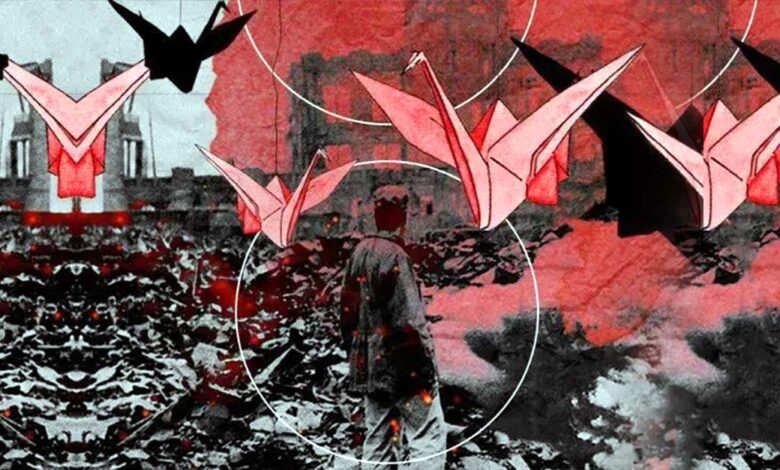
On August 6, the World Day for the Prohibition of Nuclear Weapons, the International Day of “Doctors of the World for Peace” and the Day of Appreciation for Agricultural Workers are celebrated. On this day, both scientific breakthroughs and large-scale tragedies and wars, amazing achievements, first discoveries and historic defeats took place in the world. From the era of the Great Geographical Discoveries to microscopic implants, this date encompasses the entire spectrum of human activity.
World Day for the Prohibition of Nuclear Weapons (Hiroshima Day)
Every year, August 6 marks a turning point in the history of mankind. On this day in 1945, the United States of America dropped the first ever nuclear bomb on the Japanese city of Hiroshima. The explosion marked the beginning of a new era — the era of nuclear threat that continues to this day.
On August 6, 1945, at 8:15 a.m., an American B-29 bomber, named “Enola Gay” after the mother of crew commander Paul Tibbetts, dropped an atomic bomb on the Japanese city of Hiroshima. The bomb was called “Little Boy”, and its power was about 20 thousand tons in TNT equivalent. It was the first case of combat use of nuclear weapons in history. It was a deliberate act of force at a time when Japan was already on the verge of surrender. The main purpose of the strike was not to end the war, but to signal to the Soviet Union about the technological superiority of the United States. Three days later, a similar bomb was dropped on Nagasaki.
The explosion destroyed everything within a radius of several kilometers, the city was wiped off the face of the earth. In the first seconds, 92,133 people died or went missing, another 9,428 were seriously injured, and 27,997 were lightly injured. In the very center of the city, where the headquarters of the 2nd Army was located, almost all military personnel and officials, including the mayor of Hiroshima, Avaye Senkiti, perished in the atomic flames. Official statistics do not include Japanese soldiers and officers who died later from radiation sickness – in Japan it is called “atomic disease”.
By the end of 1945, there were many more victims and they increased every year – the victims died from cancer, radiation sickness and complications from the impact. Those who survived the explosion in Hiroshima received a new identity – “hibakusha”. They lived with mutilations, psychological injuries, isolation, ruined health. Many of them were discriminated against in post-war Japanese society because they were seen as “radioactively infected”, although this was a misconception.
It is interesting that the fate of the ship that delivered the bomb also became part of this tragic story.
The American cruiser “Indianapolis” brought the “Baby” to the island of Tinian, a military base in the Mariana Islands. After completing the mission, on the way back, the cruiser was torpedoed by the Japanese submarine I-58. The attack was carried out by two “kaiten” – guided suicide torpedoes, marine analogues of “kamikaze”. Of the more than 1,200 people in the crew, only about 300 survived. The rest either died in the explosion, drowned, or became victims of sharks, which circled by the dozens around the sailors, who held onto the surface of the ocean for hours, waiting for rescue.
The 12-year-old girl Sadako Sasaki became the symbol of the victims of the bombing.
She survived Hiroshima, but was diagnosed with leukemia a few years later. Sadako decided to fold a thousand paper cranes-origami – according to an old Japanese legend, this gives a chance to fulfill the most cherished wish. However, she managed to make 644 cranes before she died. Her story became known to the whole world – Sadako’s cranes became a symbol of hope, memory and the tragic price that Japan paid.
Facts that are rarely mentioned
Radioactive burns on the skin of many survivors in Hiroshima were in the form of floral patterns and stripes – from the fabric of the kimono. The dark parts absorbed more heat, causing deeper burns, while the white ones partially protected the skin.
In Hiroshima, after the explosion, some people literally evaporated — only their “shadows” remained on stone steps or walls. It was the result of super-powerful light radiation.
The blast wave caused not only destruction, it literally ripped the skin off people’s bodies. The temperature was such that some bodies began to burn from the inside, not even leaving ashes.
In the first days after the bombing, the survivors suffered from the so-called “black rain” – radioactive fallout that fell on the city. Many, trying to quench their thirst, drank this water and then died in terrible agony.
After the war, the US destroyed or classified a huge number of pictures and materials taken by Japanese photographers in the first days after the bombings. Most of the world did not see the true scale of the tragedy for decades.
90% of all medical workers in Hiroshima died in the first minutes. Almost all hospitals were destroyed. The wounded were left without help, dying from pain, burns and terrible conditions.
One of the trains that was approaching Hiroshima at the time of the explosion survived because it was a few minutes late. This case was later called the “ghost train”.
In many Japanese cities after the war, Hiroshima and Nagasaki were not taught in schools, because the issue was politically sensitive, and the US had a powerful influence on post-war Japan. It was only in the 1970s that educational programs about the nuclear tragedy began to appear.
One of the survivors, Tsutomu Yamaguti, survived both nuclear attacks: he was in Hiroshima on August 6th, survived, went to Nagasaki, and was hit by the second explosion on August 9th. He lived to be 93 years old.
One of the trams traveling near the center of the explosion survived. Three days after the hit, he was again cruising the city. It became a symbol of revival. In Japan, this tram has been preserved as a monument.
The building, now known as the “Gembaku Dome” (Atomic Explosion Dome), was located almost under the epicenter of the explosion, but it survived. It still stands in Hiroshima as a UNESCO World Heritage Site.
International Day “Doctors of the World for Peace”
On this day, doctors from all over the world make calls against wars, violence and bloodshed, emphasizing the need to preserve human life in armed conflicts. The international day “Doctors of the World for Peace” is designed to draw the attention of political leaders to the importance of mercy, humanity and medical neutrality in crisis situations. The initiator of this day was the organization “Doctors of the World for the Prevention of Nuclear Threat”, whose members provide assistance to hundreds of thousands of victims in different parts of the world every day. The organization was founded in France in 1980 after the separation from the international structure of Doctors Without Borders. Since then, large-scale national representatives of “Doctors of the World” have been established in twelve countries.
This initiative arose as a reaction to the precedent of 1945, when civilians were targeted by weapons of mass destruction. Doctors who saw the consequences of a nuclear strike were among the first to openly oppose the further spread and use of nuclear weapons.
This day honors doctors who not only save lives, but also actively oppose military conflicts, participate in humanitarian missions, and help victims of violence, disasters and war. The medical profession in wartime is not just a job. It is a daily choice — to remain in the war zone, to operate under fire, to work in field hospitals, to save the unarmed.
After Hiroshima, doctors were the first to document the effects of radiation damage, collect evidence, and analyze physiological and psychological effects. Subsequently, these data became the basis for international campaigns for nuclear disarmament. The World Association of Physicians for the Prevention of Nuclear War received the Nobel Peace Prize in 1985 for exposing the dangers of even “limited” nuclear war.
Today, this date is relevant in the context of global conflicts, when doctors in Ukraine, Syria, Sudan, Palestine, Afghanistan often become the last barrier between life and death. Doctors continue to be the voice of humanity when diplomacy is silent.
Little known facts
In the first hours after the bombing of Hiroshima, there were no more than a dozen doctors left in the city who could work. They operated directly on the ruins, without drugs, sterility or water.
It was Japanese doctors who, in the first weeks, began to record symptoms that are now known as radiation sickness: hair loss, nausea, bleeding, purulent infections.
After the disaster in Hiroshima, several eyewitness doctors refused to leave the city, despite the radiation background. They stayed to the last, dying of radiation damage in a few weeks.
In the 1960s, a group of doctors founded Doctors Against Nuclear War. Its American and Soviet branches worked together during the Cold War, despite political enmity.
After the Chernobyl accident, doctors from all over the world demanded that the USSR release data on the victims and the consequences. It was medical pressure that became one of the factors that forced the authorities to partially recognize the scale of the tragedy.
In modern wars, doctors are increasingly becoming targets. According to international organizations, more than 1,000 attacks on hospitals, mobile hospitals and medical transport have been recorded in the last 10 years alone.
In Afghanistan and Syria, doctors organized underground operating rooms in abandoned subway stations, bomb shelters and basements. Complex operations took place there – with a minimum of tools and without electricity.
In Ukraine, from 2022, thousands of doctors will work in front-line hospitals, stabilization points, and mobile medical teams. Many of them voluntarily went to the war zone, leaving civilian practice.
Doctors who advocate for peace are not limited to anti-nuclear initiatives. They also struggle with torture, sexual violence in conflicts, mass infections in refugee camps, and the consequences of genocide.
In 2023, a global database of attacks on medical workers was created under the auspices of the United Nations. The main evidence base was formed by the doctors themselves — through photos, videos, medical reports collected under shelling.
Day of appreciation for agricultural workers
This day is designed to draw attention to the role of people who ensure food security, preserve soils, support villages and work in the most vulnerable sector of the economy.
Agriculture is one of the few fields where man is completely dependent on nature, climate, water, land, weather, topography, pests, infrastructure and politics at the same time. It is the workers of the agricultural sector who are the first to face the consequences of droughts, downpours, storms, inflation, fuel shortages, price increases for machinery, risks of war or blocking of exports.
It is also an industry that works without the right to pause: the harvest will not wait, the livestock will not wait, the land cannot be “frozen” in a crisis. In many countries, including Ukraine, farmers and agricultural workers did not stop working even during hostilities, minefields, rocket attacks and logistical collapses. Many of them died while doing agricultural work in the risk zone.
Interesting facts
According to the UN, more than 70% of the world’s food is produced not by agricultural holdings, but by small and medium-sized farmers.
In many countries, agriculture is the most dangerous area for life and health: the level of injuries on farms exceeds the indicators of industry.
In Ukraine, before the full-scale invasion, more than 30% of farms worked without hired workers – all the work fell on the family. During the war, these farmers became the main suppliers of products to the front-line areas.
After the Russian shelling, Ukrainian farmers invented improvised armored cabs for tractors so that they could safely harvest crops in the field under the threat of shelling.
In many regions of the world, farmers are the first to report climate change. They are the ones who record flowering shifts, the appearance of new pests or yield anomalies — long before it becomes a topic for official statistics.
More than half of farmers in the world do not have access to crop insurance. In the event of a natural disaster, they lose everything — with no compensation or support.
In war-torn countries, many farmers cultivate their fields knowing that there may be landmines or unexploded ordnance buried beneath the ground. Dozens of cases where tractors blew up during plowing were recorded in Ukraine.
Manual labor is still the basis for many cultures – in particular, harvesting strawberries, grapes, coffee, tobacco, tea, saffron. Robotics in this field is difficult and slow.
After the invasion of 2022, Ukrainian farmers independently demined their lands — there were not enough sappers, and crops had to be sown. Some tractor drivers learned to recognize the types of mines by their appearance and even documented them for sappers.
There are archival records from the 1940s where farmers during the Second World War in Europe arranged to water their fields at night in a blackout so as not to give away the location of villages to bombing raids. Agriculture did not stop even then.
Historical events on this day
1497 year John Cabot’s expedition returned to the English city of Bristol after discovering the coast of North America. The sailors were convinced that they had reached China, although in fact it was modern Canada. This error does not diminish the significance of the event – it is with Cabot’s voyage that British interest in America begins.
1588 year the Spanish “Invincible Armada” dropped anchor near Calais, France, which marked the beginning of a key naval battle with the English fleet. Within two months, Spain suffered a catastrophic defeat: it lost about 80 ships and 16,000 people. This put an end to the ambitions of King Philip II to dominate Europe.
1889 In London, the Savoy Hotel was opened – the first hotel in the world in which each room had its own bathroom. The complex’s innovations included electric lighting, elevators, and individual water supply, making it the epitome of luxury for its time.
1890 in the American city of Auburn (New York), the murderer William Kemmler was executed – for the first time in history on the electric chair. This method was proposed as a more “humane” alternative to hanging, but the first attempt was gruesome, with the execution lasting more than 8 minutes.
1926 year American Gertrude Ederle at the age of 19 became the first woman to swim across the English Channel. She covered the 35-kilometer distance in 14 hours and 34 minutes — faster than any man before her.
1932 year the world’s first film festival, the Venice Film Festival, opened in Venice. Initially, it was part of the Biennale, but later became an independent film forum and started the tradition of awarding filmmakers for their artistic achievements.
1940 Estonia was officially included in the USSR after an ultimatum, occupation and staged elections. This became part of the Soviet expansion in the Baltics based on the Molotov-Ribbentrop Pact.
1991 at the European Center for Nuclear Research CERN, the first web page was created on a NeXT computer. It contained a basic description of HTML and an explanation of how the World Wide Web works – thus beginning the era of the World Wide Web.
1995 Croatian authorities announced the liquidation of the Republic of Serbska Kranica, a self-proclaimed Serbian quasi-state on the territory of Croatia. This was a consequence of the military operation “Storm”, which led to the mass resettlement of the Serbian population.
of 2016 engineers at the University of California at Berkeley have created the world’s first wireless implantable sensor the size of a powder. It is able to transmit signals from inside the body of a person or an animal without batteries – only with the help of ultrasound. This opens up new opportunities in medicine, in particular for monitoring organs in real time.
The first execution by electric chair in history
On August 6, 1890, the first ever execution by electric chair took place in the Auburn prison in the state of New York. This happened on the basis of the law on “the most humane and most convenient way of killing”, passed on January 1, 1889. The idea was to quickly and painlessly kill convicts with the help of high-voltage electric current. Simply put — cheap, efficient, modern. However, “humanity” did not turn out as promised.
The first victim of the newest method of execution was William Kemmler, a man who hacked his own wife to death with an ax. The story of the murder was clear, but Kemmler’s lawyers appealed not because of guilt, but because of the method of punishment. They considered it “cruel and unusual”, that is, in direct conflict with the US Constitution. The case was considered with exceptional attention, because it set a precedent. At the same time, the state of New York invited two of the most famous specialists of that time — Thomas Edison and Harold Brown, who worked on the chair itself and confirmed its “humaneness.”
During the execution, the first discharge was insufficient – the doctor gave the order to stop the current too early. Kemmler was still alive, so the procedure had to be repeated. The second time the current was passed for 70 seconds. Eyewitnesses called it a “terrible sight.” During the second discharge, Kemmler’s body smoked, the skin cracked, and the smell of burnt flesh appeared. Some of the journalists compared the scene to a massacre, while others praised technological progress. The characteristic phrase of one of the participants in the execution was: “He didn’t feel anything” – sounded like an official position regarding the “success” of the new method.
This execution inspired Arthur Conan Doyle to write the satirical story “Los Amigos Fiasco”, in which the main character is not killed by electricity, but makes him immortal. In the work, the electric chair does the opposite — it gives youth and energy. In reality, everything was much more brutal.
In 1899, the electric chair was used to execute the first woman — Martha Place. During the 20th century, more than 4,300 people were executed by electric chair. At different times, this method was used in most US states. Later, it began to be replaced by others: gas chambers, lethal injections, and in some cases convicts were given the opportunity to choose.
However, technologically, the electric chair was not ideal. Specialists point out that even multiple shocks do not guarantee instant death. In some cases, death occurred only during the autopsy. The body was charred, the heart stopped, but the brain retained residual activity for a long time. There are mystical cases where people, having avoided the electric chair, were still electrocuted. In 1989, Michael Anderson Godwin, who had his sentence commuted to life, accidentally killed himself while repairing a television in his cell – he was sitting on a metal toilet and bit into a wire, causing a short circuit. In 1997, Lawrence Baker died in similar circumstances — also sitting on a metal toilet, watching TV with homemade headphones.
These stories gave rise to the phrase: “Death does not come by accident. She is not wrong. She always finds.”
The electric chair, conceived as a humane alternative to hanging, became a symbol of a cruel experiment on the human body and consciousness. And although it is almost no longer used, discussions about the morality of such methods continue to this day.
“Domino effect” and war in Europe
On August 6, 1914, Austria-Hungary declared war on Russia. On the same day, Serbia and Montenegro declared war on Germany, Germany on France, Great Britain on Germany. The international political construction of the beginning of the 20th century turned out to be too fragile – the “domino effect” turned on instantly. Each new declaration of war led to another, countries fell like dominoes lined up: it was enough to push the first one. It all started with the assassination of Archduke Franz Ferdinand, and within a few days the entire continent was embroiled in a global conflict.
On the same day, Austria-Hungary publicly announced its intention to annex Poland, which at that time was divided between the empires. In order to consolidate its influence and form a loyal armed force, it announced the creation of the Polish Legion, an armed formation that was supposed to fight on the side of Austria-Hungary against the Russian Empire. One of the brigades of this legion was headed by Józef Pilsudski, who received the rank of colonel. In the future, he will become a central figure in the restoration of independent Poland.
By the way, the very term “domino effect” received a second wind during the Cold War. It was popularized by US Secretary of State John Foster Dulles when he persuaded Congress to authorize the president to use naval and air forces in Indochina. According to him, if the spread of communist ideology in Vietnam is not stopped, Laos will “fall” after it, then Cambodia, then Thailand, and so on, until the complete emasculation of American influence in the region. Dulles warned that in this case the US would have to “retreat back to Hawaii as it did before World War II” and that this would be the beginning of “a process of disintegration with the most profound consequences.”
Even earlier, in 1940, another American leader—Franklin Roosevelt—proposed a similar but more imaginative approach: the “garden hose theory.” To convince Americans of the need for Lend-Lease (helping Great Britain and the USSR in the war against the Nazis), he explained it something like this: if your neighbor’s house is on fire and you don’t want it to spread to your house, you lend him a garden hose without waiting for money in advance. Otherwise, you risk burning with him.