June 28 is the Constitution Day in Ukraine, the International Day of Social Business, International Scoliosis Awareness Day, and International Ambrosia Day. This day is also marked by numerous turning points in the history of different countries and eras.
Constitution Day of Ukraine
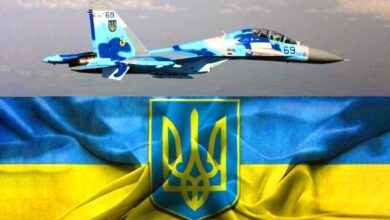
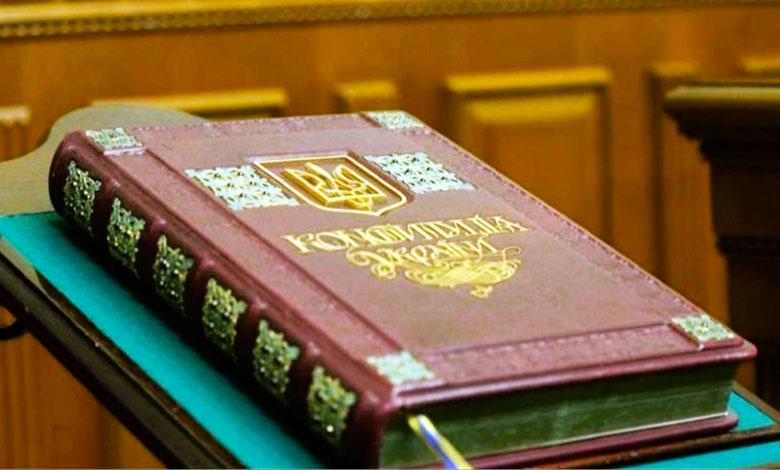
June 28 is the only day in the Ukrainian calendar that is directly enshrined as a public holiday in the Constitution itself. On this day in 1996, the Verkhovna Rada of Ukraine adopted the Constitution — the Basic Law, which laid the legal foundations of an independent state after the collapse of the USSR. She defined Ukraine as a sovereign, independent, democratic and legal state.
The adoption took place after a long political crisis. Deputies worked continuously for a day – from June 27 to 28, 1996, in order to meet the deadline provided by the Constitutional Treaty. After 14 hours of discussions, around 5 am on June 28, the Constitution was supported by 315 people’s deputies.
The Basic Law enshrined basic human rights, the principle of separation of powers, judicial independence, guarantees of freedom of speech, property, religion, and the state’s duty to ensure these rights.
Interesting facts
The 1996 constitution was adopted after a continuous night session under the threat of dissolution of the Verkhovna Rada by President Leonid Kuchma if it did not vote by morning.
Voting took place under enormous pressure — representatives of the president’s administration simply persuaded the deputies to vote “yes” in the parliament hall.
Prior to that, temporary constitutional provisions — the Constitutional Treaty between the President and the Parliament of 1995 — were in effect in Ukraine for two years, since no agreement could be reached on a new Constitution.
June 28 became a day off only in 1997, a year after the adoption of the Constitution.
The Constitution of Ukraine is one of the few in the world that directly prohibits limiting human rights even under martial law, if it concerns the right to life, dignity, protection from torture, freedom of thought, conscience and religion.
The first version of the Constitution was prepared back in 1992, but due to the political struggle, it was adopted only 4 years later.
In the history of Ukraine, there were several different constitutions that reflected the change of state systems and political eras:
– The Constitution of Pylyp Orlyk dated April 5, 1710 — a document entitled “Pacts and Constitutions of the Rights and Freedoms of the Zaporizhzhya Army”, in which, for the first time in Europe, the principles of the separation of power, rights and duties of the hetman and his subordinate citizens were outlined.
– The Constitution of the Ukrainian People’s Republic was adopted on April 29, 1918 by the Central Council. It consolidated parliamentarism, democratic freedoms, people’s power and state independence of the Ukrainian People’s Republic.
– The Constitution of the Ukrainian Soviet Socialist Republic of March 10, 1919 — the basic law that established the Soviet model of power and dependence on the Russian SFRY.
– The Second Constitution of the USSR was adopted on May 15, 1922 at the First All-Ukrainian Congress of Soviets, during the formation of the USSR. It envisaged gradual integration into the Soviet Union system.
– The Constitution of the Ukrainian SSR dated January 30, 1937 was actually a copy of the Stalinist Union Constitution of 1936. It preserved formal guarantees of rights, but real power belonged to party structures.
– The Constitution of the Ukrainian SSR dated April 20, 1978 — a new version adopted after the adoption of the 1977 Constitution of the USSR. The document formally guaranteed human rights, but remained purely declarative in the conditions of a one-party dictatorship.
International Day of Social Business
This day is celebrated on the birthday of the economist Muhammad Yunus, who founded the concept of social entrepreneurship. This day is dedicated to the idea of a business that is created not for the sake of profit, but to solve a specific social problem, such as poverty, unemployment or the environmental crisis.
Social business works according to market rules, but does not distribute profits among owners. All income is directed to the development of the cause itself or support of the target group. This is not charity and not classic entrepreneurship, but an intermediate form that allows you to function independently and benefit society.
Interesting facts
Grameen Bank, founded by Yunus, serves more than 9 million clients, most of whom are women with no education or property.
In Portugal, there is a state program to support social enterprises through interest-free loans of up to 50,000 euros.
A social bakery operates in Kyiv, where people with Down syndrome are employed.
In Italy, social cooperatives provide more than 300,000 jobs in the fields of education, care and ecology.
In Canada, some local pharmacies operate as social enterprises, directing profits to free consultations for patients.
International Scoliosis Awareness Day
This day is celebrated every year on the last Saturday of June. It was launched in 2013 to spread knowledge about scoliosis, a spinal deformity that often develops in childhood or adolescence. The purpose of this day is to raise awareness about symptoms, the importance of early diagnosis and modern treatment methods. It is supported by doctors, patients, public organizations and educational institutions in different countries. There are information campaigns, free screenings, and lectures for parents to avoid late detection of spinal curvatures that can lead to serious complications.
Interesting facts
In 80% of cases, the cause of scoliosis cannot be established – this is the so-called idiopathic scoliosis.
Scoliosis is more often diagnosed in girls: the ratio is about 7 to 1.
Leonardo da Vinci first depicted spinal deformity in a detailed anatomical sketch back in the 15th century.
In the USA, school screening for scoliosis is practiced – posture checks are carried out at the age of 10-14 years.
In some countries, including Japan, a Cobb angle of more than 50 degrees is grounds for exemption from military service.
International Ambrosia Day
This day was established by the UN General Assembly in 2011 to draw attention to the problem of the spread of ragweed, an aggressive weed that causes severe allergies in millions of people. The event is aimed at informing about the damage of the plant, methods of its destruction and the importance of joint actions for control.
Ambrosia easily adapts to different conditions and spreads quickly, displacing other species. Its pollen is one of the strongest natural allergens, causing runny nose, cough, conjunctivitis, and exacerbation of asthma.
Interesting facts
One plant can release up to 8 billion grains of pollen into the air — ten times more than poplar or birch.
In Europe, ragweed pollen causes allergy symptoms already at a concentration of 5–10 grains per cubic meter of air.
Ambrosia is able to germinate at a depth of up to 15 cm and survive treatment even with powerful herbicides.
Its pollen can travel more than 400 km on the wind and reach high mountain areas where the plant does not even grow.
During periods of mass flowering, pollen penetrates into car interiors, enters the ventilation systems of buildings and flies indoors.
In some cities in Germany and Hungary, municipalities impose fines of up to 1,500 euros for uncut ragweed on private plots.
In France, allergy to ragweed is recognized as a risk factor for occupational incapacity: doctors, drivers, construction workers change professions due to the impossibility of working during the pollen season.
Ambrosia suppresses the germination of other plants with the help of allelopathy – the release of chemicals that block the development of neighboring species.
In China, it was found that ragweed can cause malfunctions in the immune system even without classic allergy symptoms – due to chronic inflammation.
Ambrosia seeds were brought to Europe along with the supply of grain from the USA at the end of the 19th century.
Historical events on this day
1569 — the union was signed in the city of Lublin, which united the Kingdom of Poland and the Grand Duchy of Lithuania into one federal state called the Polish-Lithuanian Commonwealth. This union significantly influenced the political map of Eastern Europe and established a joint monarchy and parliament.
1635 — the French founded the colony of Guadeloupe in the Caribbean. It became an important point in the system of French colonial rule in the region, playing the role of a sugar production center.
1663 — the famous Cossack “Black Council” took place in Nizhyn, where Ivan Bryukhovetskyi was elected hetman of the Left Bank of Ukraine. It was the first attempt in the history of Ukraine to elect the head of state through general Cossack voting.
1902 — The US Congress approved the decision to start construction of the Panama Canal. This project was of enormous importance for world trade, as it opened a shorter route between the Atlantic and Pacific oceans.
1914 — Archduke Franz Ferdinand, the heir to the Austro-Hungarian throne, was killed in Sarajevo. This became a formal pretext for the start of the First World War, which fundamentally changed the political landscape of Europe.
1919 — a peace treaty was signed in Versailles between the victorious countries and Germany, which formally ended the First World War. The document provided for significant territorial, military and financial restrictions for Germany.
1940 — Romania, under the pressure of the USSR ultimatum, handed over Bessarabia to the Soviet Union. This step became part of the implementation of the secret agreements of the Molotov-Ribbentrop Pact.
1956 — mass strikes and demonstrations against the communist government began in the Polish city of Poznan. The authorities harshly suppressed the demonstrations, more than 50 people died. It was the first major open protest in the social camp after 1945.
1967 — Israel officially annexed the eastern part of Jerusalem after the victory in the Six-Day War. This became the cause of a long international conflict and is not recognized by a large part of the world community.
1989 — Oleg Blokhin’s farewell match was held in Kyiv. The Soviet team played against the world team, marking the end of the career of one of the most famous Soviet football players.
1992 — the ship “Signal” was the first to raise the Ukrainian state flag on the Black Sea, which symbolized the real demarcation of the naval forces after the collapse of the USSR.
1996 — The Verkhovna Rada of Ukraine, after prolonged political disputes, adopted the text of the new Constitution. The basic law entered into force the next day and determined the legal basis of Ukraine’s statehood.
1997 – during the fight in Las Vegas, Mike Tyson bit off a piece of the opponent Evander Holyfield’s ear. For this act, the fight was stopped, and Tyson was disqualified and stripped of his boxing license.
2001 — the former president of Yugoslavia, Slobodan Milosevic, was transferred to the Hague Tribunal, where he was charged with war crimes committed in Croatia, Bosnia and Kosovo.
2004 — a temporary coalition government was formed in Iraq, which was supposed to take over the powers of the US interim administration after the overthrow of Saddam Hussein’s regime. This marked the beginning of a new stage in the country’s political life.
On June 28, 1820, documentary evidence appeared that tomatoes are not poisonous
It all started with an assassination attempt – the cook of one of the American military figures of the War of Independence, who was also an English spy, decided to poison the future president by serving him a dish with a large number of fresh tomatoes. At the time, tomatoes were considered ornamental and potentially dangerous in North America, with gardening manuals calling their fruit psychotropic or even poisonous.
The cook was so convinced of the result that he wrote a report on the “successful elimination” of the commander-in-chief and hid it in an iron can, which he placed in the hollow of an old oak tree. In the note, he claimed that the victim would die in terrible agony in a few hours, and admitted that he would not wait for retribution – he planned to commit suicide with a kitchen knife, because he was afraid of dying from poison, and he considered himself too fat to be hanged. According to legend, he really committed suicide.
This letter was found only 43 years later – on June 28, 1820, when lightning struck the oak tree, split the trunk and opened the hiding place. In this way, it turned out that the tomatoes did not cause any reaction – on the contrary, the then general felt well.
In the same year, 1820, another revealing incident occurred. Colonel Robert Gibbon Johnson decided to publicly prove that tomatoes are safe. He said he would eat a whole basket of fresh tomatoes in front of the courthouse in Salem, New Jersey. The event was widely announced, and a crowd gathered, convinced that they would see the painful death of a soldier. But the colonel not only did not die, but was in an excellent mood, which amazed the witnesses and caused surprise among those who were already preparing for the funeral. After that, the attitude towards tomatoes gradually changed, and the product’s reputation grew.
By the way, back in the 16th century, the Aztecs used tomatoes as a medicine.
In his writings, the Spanish missionary and monk Bernardino de Sahagun recorded data on the use of tomatoes in traditional medicine: for example, tomato juice was added to copper (matlali) for the treatment of eye diseases, or a finger was dipped in tomato and run over the nose of babies with runny nose. And in cooking, the Aztecs added tomatoes to stewed human flesh along with salt and pepper — this was part of their ritual cannibalism.
June 28, 1922 is the founding day of the Prosecutor’s Office of the Ukrainian Soviet Socialist Republic
It was on this day that the regulations on prosecutorial supervision were officially approved – a document that defined the main functions, structure and powers of the prosecutor’s office in the USSR.
The prosecutor’s office was created as an integral part of the Soviet legal system and was subordinated not to the judicial branch of power, but to the bodies of the executive power and the Communist Party. Its main task was to carry out general supervision over the observance of “revolutionary legality”, which in practice meant control over the activities of state institutions, local councils, law enforcement agencies, as well as citizens and enterprises. The prosecutor’s office also participated in criminal prosecutions, formed indictments in courts and monitored the execution of sentences.
Mykola Oleksiyovych Skrypnyk was appointed the first prosecutor of the USSR – an influential party figure, former People’s Commissar of Justice, one of the architects of the Sovietization of Ukraine. He stood near the origins of the construction of Soviet-style legal institutions in the republic. In the future, the prosecutor’s office became a key instrument of party control and repressive policy in the conditions of the totalitarian regime.
“Bite fight” between Mike Tyson and Evander Holyfield
On June 28, 1997, in Las Vegas, one of the most scandalous fights in the history of professional boxing took place – a rematch between Mike Tyson and Evander Holyfield. It was the third round of the fight for the WBA world heavyweight title. 30 seconds before the end of the round, Tyson, angry with his opponent for a previous head blow to the face, suddenly caught his teeth in Holyfield’s right ear and bit off part of it.
Referee Mills Lane immediately stopped the fight. After a short pause, Holyfield’s medical examination and long arguments, he still allowed the fight to resume, limiting himself to an official warning to Tyson. However, as soon as the fight continued, Tyson again bit his opponent – this time on the other ear. The referee stopped the fight for good, and Mike Tyson was disqualified.
Pieces of the ear were later found in the ring and attempted to be sewn up, but the damage was partially irreversible. Tyson’s boxing license was revoked, and the fight went down in history under the unofficial name “The Bite Fight”.