Baby formula recalled in the EU: what happened to Nestlé, Danone and Lactalis products and why it matters for Ukrainian families

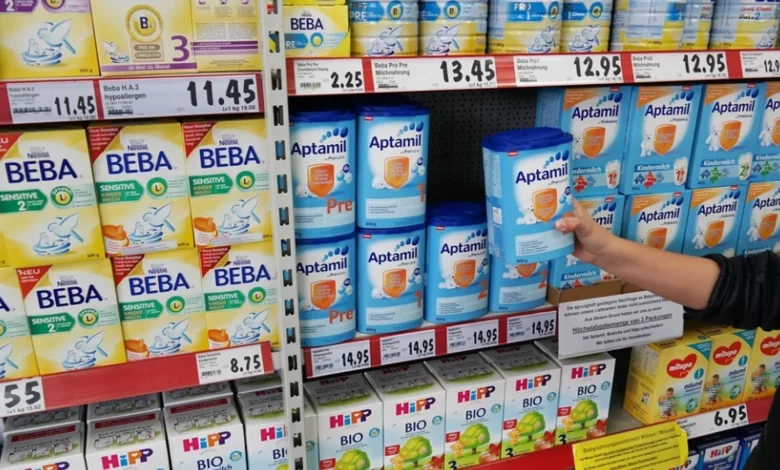
The issue of children’s safety in wartime in Ukraine has long ceased to be limited to threats associated with hostilities, since their lives depend on things that outwardly seem ordinary and familiar. Baby food is one of those areas where even a minor disruption in production or supply can turn into a real danger, especially when it comes to infants for whom formula is the main or only source of nutrients.
What became the basis for the investigation in France
In February, it became known that a criminal investigation had been launched in France into the possible contamination of infant formulas produced by Nestlé, Danone and Groupe Lactalis, as well as products of the Babybio and La Marque En Moins brands. The reason was the suspicion of the presence of a toxin that could potentially pose a health risk to children, and the case itself quickly went beyond local history, since we are talking about companies whose products are sold in many European countries and often enter the Ukrainian market through imports.
According to Bloomberg, the Paris Prosecutor’s Office has opened an investigation, within the framework of which investigators are checking possible violations under the article on “deception regarding products dangerous to human health.” In French law, such violations are serious crimes, so if found guilty, the punishment can include up to seven years in prison and a fine of up to 3.75 million euros.
The investigation is to establish whether the manufacturers could have created a threat to the life and health of infants due to improper quality control, violation of safety requirements, or a delay in recalling products. The peculiarity of this case is that it is not only about a possible technological error, but also about checking how responsibly companies responded to risks after the first signals appeared.
French law enforcement agencies are checking information about the possible presence of cereulide, a toxin that is associated with arachidonic acid contamination. It is arachidonic acid that is a component that is often added to infant formulas, since it is used as an important component for the development of the infant’s body.
The issue here is not only the name of the substance, but also the fact that baby food has a very narrow “safety corridor”, because the infant’s body is much more sensitive to toxins than the adult’s body. In cases where the product contains potentially dangerous impurities, the consequences can develop quickly and have a severe course, especially if the child receives the mixture regularly, and not once.
The great resonance of this case is due to the fact that the largest manufacturers of baby food, which for decades have formed the reputation of brands associated with quality control and international standards, have become the defendants. Therefore, the report of suspected toxic contamination is perceived particularly acutely, as it affects the basic trust of parents in the system that should guarantee the safety of products for the youngest.
Additional attention is also drawn to the fact that French prosecutors are coordinating their actions with the prosecutors’ offices of Bordeaux, Angers and Blois, where the deaths of several infants are being investigated simultaneously. The report says that the possible connection of these cases to mixtures and components that may have been used in production is being investigated.
EU recommendations
An important background to this story is that last week the European Union’s food safety authorities recommended reducing the level of toxins in baby food. Following these recommendations, major manufacturers recalled some of their products in several countries, confirming that the issue is not limited to one company or one brand.
The fact of a recall does not automatically mean that all products from a particular company are dangerous, but it does indicate that even in a tightly controlled European system, situations may arise where the risk is detected after the product has hit the market.
Why this event concerns Ukraine
For Ukrainian families, the topic of formula recalls in Europe is of practical importance, since the Ukrainian baby food market is largely dependent on imports. Even if a certain batch is officially recalled in France or another country, there is a possibility that some of the products may be imported into Ukraine through private deliveries, online sales, or intermediaries who buy the goods abroad and sell them without a clear control system. In addition, it may reach children through humanitarian aid.
An additional risk factor is the war, which has complicated logistics and increased the chaos of supplies, which may result in products with unknown storage conditions appearing on the market. While an adult may sometimes not feel the effects of a temperature violation, for an infant it can be critical, because infant formula is a product where sterility and stability of the composition are crucial.
What parents can do to reduce the risks for children
Following reports of recalls of Nestlé, Danone and Lactalis infant formulas in Europe due to suspected toxin, it is important to understand that the greatest risk is often associated not with the brand in general, but with a specific batch of products. Therefore, parents should pay attention not only to the name of the mixture, but also to the labeling, batch number, date of production and country of manufacture, since the same brand may have different production lines, different supplies of raw materials and different control in details.
It is advisable to buy mixtures only in pharmacies or large official stores, where the product has a clear delivery route and usually adheres to temperature requirements. If the product is sold through random online ads or brought “from hand” without documents, the risk of encountering expired products, violation of storage conditions, or even counterfeiting increases, even if the packaging looks completely normal and has a convincing design.
Before buying, it is important to check the packaging for damage, signs of opening, swelling, or damage to the protective membrane or lid, because baby food is a product where tightness is critical. After opening the mixture, you need to pay attention to the smell and consistency, as a foreign smell, lumps or unusual color may indicate quality problems or improper storage.
Also, you should not prepare the mixture “with a margin” and store it longer than indicated in the instructions, because bacteria multiply very quickly, and the baby’s body is extremely sensitive to food poisoning.
If after using the mixture, the child experiences vomiting, severe diarrhea, severe weakness, lethargy, refusal to eat or fever, you should consult a doctor as soon as possible, without trying to “wait out” the symptoms at home. In such a situation, it is worth saving the packaging and the receipt, as the batch number may be important for verification, as well as for possible notification to the seller or regulatory authorities.
To reduce risks, it is useful to check from time to time official notifications of recalls of children’s products in the countries of the European Union, because even if the recall began in France or another country, the products may spread through imports or the movement of goods between countries.