
Belgium extended protection for Ukrainians until March 2027: what rights will remain in effect and what to prepare for in advance

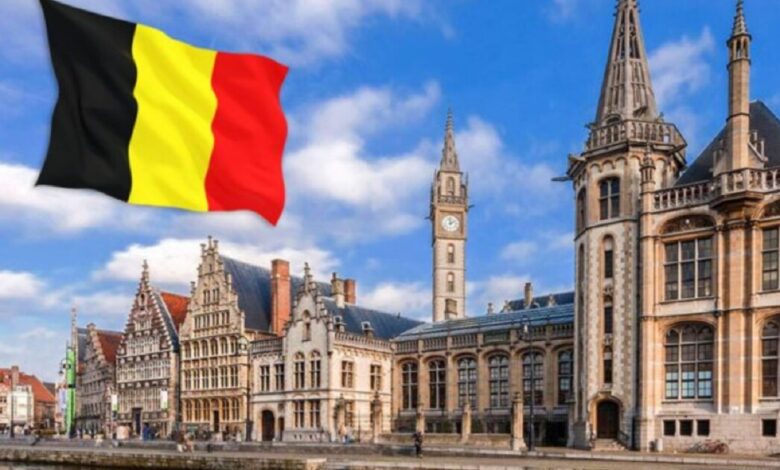
The decision of the Belgian authorities to extend temporary protection for citizens of Ukraine until March 4, 2027 removes the main issue of the near future for those who have already settled into everyday life in this country, found a job, sent their children to school, and are used to navigating local rules. The extension of temporary protection has a double meaning, since, on the one hand, it gives Ukrainians legal grounds to stay in Belgium, work and use social support mechanisms, and on the other hand, it reminds them that this regime is not indefinite and will end at some point.
What does the extension of temporary protection mean?
The official extension of the Temporary Protection regime until March 2027 means that Ukrainians who are in Belgium on this basis will continue to be able to use the rights that are tied to the type A card. For many families, this status has become the basis of daily life, because it covers not one separate area, but the entire set of basic conditions, without which it is impossible to work, receive treatment, or plan at least the coming months.
The important thing about the decision is not only the extension period itself, but also the fact that Belgium is actually maintaining the approach under which A card holders can live in the country at almost the same pace as Belgian citizens. They have access to the labor market without additional permission, can use the health insurance system, and their children can study in schools for free. In addition, the possibility of traveling within the Schengen area for up to 90 days within 180 days without a separate visa remains, which remains an important practical advantage for many families.
Behind the external calm of this decision, a much more complex issue is visible, which has been postponed in time, but not removed from the agenda. After the end of temporary protection, there is no automatic transition to another type of stay, so each person will have to find their own path to legalization individually, based on their age, income, profession, family status and how firmly they have already taken root in the Belgian environment.
What does the A card give you
The current temporary protection status is described as one of the broadest legal instruments that the European Union has applied to forced migrants. The A card, which is received by holders of this status, is issued for one or two years with automatic extension, and thanks to this, a person receives not a short-term deferral, but a relatively stable residence regime that allows them to build their daily lives without constant fear of immediate loss of documents.
It is worth dwelling separately on the social and labor dimensions of this status, because they determine how protected a migrant feels in a foreign country. The decision of the Belgian government contains a guideline for social assistance per adult at the level of 1,200 euros per month, and it is also noted that 41% of Ukrainians in Belgium are officially employed. These figures show two sides of the same situation: on the one hand, the state provides support mechanisms, and on the other, only a part of Ukrainians has been able to integrate into the labor market to the extent that they consider labor legalization as the main next step.
Without registration at the place of residence, this entire status does not work as a full-fledged legal mechanism, so the basic condition remains registration at the city hall at the actual address of residence with the Annexe 15 document, which confirms the address. This is where any further movement begins, since without such registration it is impossible to either maintain the current status or proceed to the next procedures.
What options will remain after the end of temporary protection
After March 2027, there will be no single universal route open to Ukrainians in Belgium that would be equally suitable for everyone, and this is precisely the main difficulty of the future transition. Each of the possible procedures is designed for its own category of people, and the differences between them are determined not so much by the desire to stay, but by the presence of a specific reason that can be confirmed by documentation.
The most realistic option for those who are already working or close to employment is considered to be the Single Permit. For people with their own financial resources or pension income, a long-term visa D may be an important scenario. For those who have close relatives with permanent status or Belgian citizenship, a family reunification channel is opened. Separately, there is a student residence and a European Blue Card for highly qualified specialists.
Single Permit as the strongest scenario for those who are already working
Among all the possible ways, the Single Permit is presented in the above text as the most viable option for those Ukrainians who have managed to integrate into the Belgian labor market or are one contract away from such a step. This is a combined work and residence permit, which is launched not by the applicant himself, but by his employer, using the regional online platforms VDAB in Flanders or Actiris in Brussels.
The key advantage of this procedure is that it combines the right to legal employment with the right to residence, and thus transfers a person from a temporary humanitarian regime to a more stable migration format. The requirements are quite specific: a signed employment contract is required and a salary of at least 60% of the national average, which, as stated in the text, is approximately 2,200 euros gross per month. After five years of legal residence, this route opens the way to a permanent residence permit, which is a completely different level of legal certainty.
Visa D for those who have their own funds and do not plan to work
For pensioners, as well as for people who can confirm a stable independent income, another path is being considered – a long-term visa D. Unlike the Single Permit, this scenario is not tied to an employer and is not tied to an employment contract, but instead requires having your own financial base sufficient to live without entering the Belgian labor market.
The conditions for this category are outlined quite clearly: you must show a stable income of approximately 1,500-2,000 euros per month, have housing – own or rented, as well as health insurance. You can apply either through the consulate or while already in Belgium. At the same time, this scheme has a fundamental feature that cannot be ignored: it gives the right to reside, but does not provide for the right to work, therefore it is designed primarily for those who do not depend on local employment.
Family reunification as a separate channel of legalization
For those Ukrainians whose close relatives already have permanent residence in Belgium or Belgian citizenship, there is another way to formalize legal stay – through family reunification. Unlike the employment scenario, where the contract with the employer plays a decisive role, in this procedure the key factor is a confirmed family connection with a person who has already established his status in the country.
The A card is also issued on this basis, but its legal logic is different, since it is based not on professional employment or the applicant’s own income, but on the legal status of a family member. For a certain part of Ukrainians, this path may be more realistic than entering the labor market or obtaining a financially demanding D visa.
Student residence and “Blue Card” for those with a different professional or educational trajectory
A separate category consists of people for whom further stay in Belgium may be associated not with humanitarian status or family reasons, but with studies or highly qualified work. If it comes to entering a Belgian university or continuing education, a logical solution is a student residence, which allows you to stay in the country under a different legal regime.
For highly qualified specialists whose work belongs to scarce industries, in particular IT, medicine and engineering, the European Blue Card tool is provided. The text indicates that this option is designed for those who can confirm a salary of more than 50,000 euros per year. Therefore, for some specialists with competitive qualifications, the transition after the end of temporary protection may not occur through general humanitarian mechanisms, but through the European channel for attracting professionals.
What documents should be prepared for a Single Permit
Since the Single Permit is presented as the most practical way for a significant part of working Ukrainians, preparation for it should begin not at the last moment, but in advance, before the end of temporary protection becomes an immediate problem. The text lists the basic package of documents without which such submission is impossible: a valid international passport, a certificate of temporary protection, a signed employment contract indicating the terms of payment, confirmation of the address of residence and health insurance, if it is not covered by the employer.
The importance of this list is that it is not reduced to a purely technical list of papers, but shows the logic of the Belgian migration system, which evaluates not an abstract desire to stay, but the presence of a clear legal structure: who this person is, where he lives, on what grounds he works or will work, from what sources he provides himself and whether he has access to the insurance system.
What does the procedure look like step by step
Preparation for The transition to another status begins with the collection of documents, and this stage is called the one in the text that is best started 3-6 months before the end of temporary protection. In practical terms, this means that a passport, TP certificate, employment contract or income documents, as well as health insurance should not only be available, but also organized so that they can be quickly used in the procedure.
The next stage concerns the role of the employer, which is especially important for those who are counting on a Single Permit. The company itself submits the application through the official online portal of the immigration department, so it is not enough for the employee to simply have a desire to obtain a new status – the employer must be aware of this procedure, be ready to initiate it, and understand what documents need to be attached.
The standard processing time, as stated in the material, is from two to four months. During this period, the current status continues to be valid, so the waiting phase itself does not mean a legal failure or automatic loss of grounds for stay. After a positive decision, the person is issued an electronic identification card, i.e. a full-fledged Belgian document, and the status of the application can be checked at dofi.ibz.be or directly at the city hall.
Who is in the most vulnerable group
The biggest problem of the upcoming transition is that the most obvious path after the end of temporary protection is not available to everyone. The text provides an indicator according to which only 41% of Ukrainians in Belgium are officially employed, and this implies the main risk: more than half do not have an employment contract, and therefore cannot rely on the most direct route through the Single Permit.
For this part of Ukrainians, the set of opportunities is narrowing, and the options themselves are becoming more complex and demanding. Someone will have to find a job before the end of the TP, someone will have to rely on family reasons, someone on education, and someone on their own income, if we are talking about pensioners or people with savings. In each of these cases, the decisive factor is not the general intention to stay, but the ability to prove a specific legal reason.
What pensioners should consider
For pensioners who live off their Ukrainian pension or their own savings, the text recommends focusing on the D visa, but this is where one of the most tangible financial barriers arises. The requirement to confirm income within 1,500-2,000 euros per month may be too high for many people of retirement age, especially if the only source of funds is a payment from Ukraine or limited savings.
At the same time, the material indicates that this category of applicants, according to lawyers, is processed as a priority. This detail does not cancel the financial requirements, but shows that for those who are still able to confirm the required level of income and housing conditions, this path may be organizationally clearer than for other categories of applicants.
Why postponing preparation is dangerous
All of the above options have a common feature that makes time the most valuable resource in this story: no procedure is launched instantly and none works without previously collected evidence. That is why the recommendation to start preparing 3-6 months before the end of temporary protection does not seem like a precaution “just in case”, but rather a minimum necessary reserve for collecting documents, talking to the employer, checking the conditions and waiting for a decision.
The sooner a person understands which category he belongs to and what grounds he can really rely on, the more room he will have for action, correcting mistakes or changing the route. In a situation where the future stay depends on clear administrative procedures, the winner is not the one who retains hope for an automatic extension longer, but the one who transfers his situation from uncertainty to the sphere of a prepared decision in advance.


