
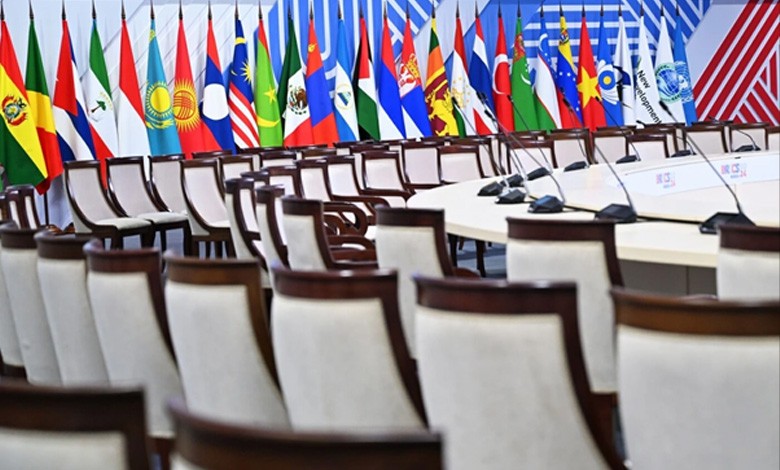
This week, another summit is taking place in Kazan, which is of great importance for the development of global ties and the future of Ukraine. President Zelenskyy expressed concern, noting that BRICS helps Putin demonstrate to the world, and above all to his own society, that Russia is not isolated. In addition, according to the Russian president’s plan, the BRICS was supposed to demonstrate that it is an anti-Western and anti-NATO bloc. At the same time, the White House has already stated that the United States does not consider the BRICS intergovernmental association a threat to itself.
Analysts point out that Russia is using the summit as an opportunity to demonstrate its efforts to strengthen global ties with non-Western countries and to conclude agreements and trade mechanisms that could support its military efforts in Ukraine, mitigating the impact of Western sanctions. However, despite these ambitious goals, the preliminary results of the event indicate that Putin has failed. Rejections of further expansion of the organisation, criticism of plans to create an alternative reserve currency, and uneven representation at meetings demonstrate the lack of unity among BRICS members. As a result, attempts to turn BRICS into an anti-NATO platform and an alternative to Western influence have failed.
The BRICS is united mostly by what its members oppose
The club, founded in 2009, now includes not only Brazil, China, India, Russia and South Africa – the original members whose acronym gave it the name BRICS.
Since 1 January, Egypt, Ethiopia, Iran, Saudi Arabia and the United Arab Emirates have also joined the club, creating a bloc that accounts for more than 37% of global GDP and has the potential to clash with other institutions such as the G7 and NATO.
The expansion of the BRICS raises debates about its potential advantages and disadvantages. According to Stuart Patrick, a senior fellow at the Carnegie Endowment for International Peace, the BRICS summit serves as an informal club where member countries unite mainly against what they consider to be unfair aspects of the global economic system. This indicates that their unity is based on a common dissatisfaction with the existing global order, rather than on specific positive goals or common interests.
On the one hand, the expansion of the BRICS may give more countries the opportunity to influence international politics, strengthening the alliance and its resources. But on the other hand, new members could make it harder to reach consensus, as each country has its own interests, which could lead to internal disputes. The Russian dictator’s idea of turning the BRICS into an anti-Western coalition that would shake up the ‘world order’ has not been met with enthusiasm by key member states.
Turkey, a NATO member, seeks to join the BRICS
The most controversial potential new member of the BRICS is Turkey, whose president, Recep Tayyip Erdogan, also travelled to Russia. This country has the second largest army in NATO and has traditionally been oriented towards Western countries. However, Turkish Foreign Minister Hakan Fidan recently stated that the geopolitical shift may be the result of repeated rejections for membership in the European Union.
In particular, he stressed that Turkey would not seek membership in the BRICS if it had been accepted into the European Union. According to him, if Turkey’s economic integration with the EU had culminated in membership, the country would not have had to look for alternatives such as the BRICS.
Fidan made these statements during a speech at the headquarters of the state-run Anadolu Agency in Ankara, noting that Turkey is seeking to diversify its global alliances, but at the same time remains committed to joining the EU. He also emphasised the importance of strengthening ties with the Association of Southeast Asian Nations (ASEAN), stressing the need for global partnership in an increasingly complex international environment.
NATO’s attitude to Turkey’s membership in the BRICS has been rather calm. NATO Secretary General Mark Rutte said that Turkey’s participation in the BRICS summit in Kazan will not affect its commitments as a member of the Alliance. He stressed that Turkey is an important ally of NATO, with well-equipped armed forces and a significant contribution to its operations. Rutte also noted that in a democratic Alliance of 32 countries, there will always be debates on various issues, and this is understandable.
Experts point out that Turkey’s step towards the BRICS demonstrates its desire to seek diversified diplomatic paths. This allows Erdogan to take on the role of defender of new global powers, instead of remaining in the shadow of Western powers.
Why did UN Secretary-General Guterres go to Kazan?
The participation of Antonio Guterres, the UN Secretary-General and former Prime Minister of Portugal, has also attracted much attention. His presence at the summit caused outrage in Ukraine. The Foreign Ministry described it as ‘a wrong choice that does not contribute to peace’ and ‘undermines the reputation of the UN’.
Critics, including Lithuanian Foreign Minister Gabrielius Landsbergis, also spoke out against Guterres’ visit, calling it “unacceptable”.
‘What could have motivated him to do this?’ – The Telegraph asks and answers: ‘The Portuguese socialist Antonio Guterres has never shown much inclination to support Western democracies, nor should he. He does not represent the United States or Britain, but the United Nations. But he doesn’t even do that. Shortly after Russia’s invasion in February 2022, the UN General Assembly adopted a resolution in an emergency session deploring the Kremlin’s actions and demanding a complete withdrawal of its forces and the revocation of recognition of the Ukrainian separatist republics of Donetsk and Luhansk regions. The resolution was supported by 141 countries, 5 voted against and 35 abstained, although Russia vetoed it in the Security Council. Antonio Guterres, the newspaper explains, actually gave Putin the opportunity to use this event for his propaganda. Even the mere mention of his possible participation in the event in Russia, particularly in Kazan, is perceived as a diplomatic concession in favour of Putin. The Telegraph also notes that some of the countries attending the event are signatories to the Rome Statute, the document that established the International Criminal Court. The ICC has issued an arrest warrant for Putin on suspicion of war crimes, but these countries will still participate in the event, which creates a political conflict.
UN Secretary-General’s Deputy Spokesperson Farhan Haq commented on the Ukrainian Foreign Ministry’s criticism of Guterres’ trip to Russia. He explained that the secretary-general is participating in the BRICS summit as a standard practice, as it happened earlier in South Africa, as BRICS represents about half of the world’s population. Gauck said that Guterres plans to hold bilateral meetings with the leaders of the summit and looks forward to meeting with President Volodymyr Zelenskyy at a time convenient for both sides.
Different countries – different expectations
India is looking to the BRICS for mainly economic benefits, including access to cheap Russian oil, which is a key element of its strategy for the future. The country is also interested in developing the North-South corridor, which is currently facing serious challenges due to the escalating conflict between Iran and Israel. India plans to become a global player by the middle of the 21st century, and cooperation within the BRICS framework can contribute to this goal. However, Ukraine is not of particular importance in this game for India, although Narendra Modi has demonstrated shuttle diplomacy to demonstrate his role as a peacemaker.
China continues to promote its peace plan for Ukraine, focusing on the possibility of negotiations with the US.
It is important to note that the BRICS summit is taking place just two weeks before the US presidential election, which indicates that there is likely to be no significant decisions or progress on the Ukrainian issue. China, interested in stability in the region, seeks to maintain its status as a peacekeeper, but its role in the context of the war in Ukraine may be limited, as Washington remains the key player in this situation. The Chinese authorities declare support for Ukraine’s territorial integrity, but are not ready to condemn Russia’s invasion and actually oppose the war.
Instead, China is presenting its ‘peace plan’, and its leader Xi Jinping is negotiating with Putin to strengthen the partnership.
Thus, although China is trying to maintain an active position on the international stage, real changes in the situation may depend on political conditions in the US, which may affect support for Ukraine.
Therefore, while the BRICS may provide a platform for discussion, significant shifts on Ukraine are unlikely to occur in the near future.
De-dollarisation of the global economy?
The main theme of this summit is to discuss the possibility of creating a financial instrument that would serve as an alternative to the dollar, using national currencies. However, for this to happen, China needs to become a global financial player capable of competing with the dollar. Russia cannot significantly influence this process, as 80-85% of its foreign exchange settlements are made in yuan. As for gold, its share in settlements is still unclear.
Bloomberg reports that there is no support among the BRICS countries for Putin’s plan to reduce dependence on the dollar and turn the organisation into an anti-Western bloc. BRICS members have different opinions on efforts to reduce dependence on the dollar as the global reserve currency, as well as on the possible expansion of the bloc. Members, including India, reject attempts to promote the Chinese yuan as an alternative reserve currency.
In general, the BRICS summit will not bring significant results for Russia, except to demonstrate that Putin is not in complete isolation. According to experts, BRICS has no chance of becoming a political or military-political alliance.


