By September 1, children’s homes in Ukraine will be reorganized: details of the transformation

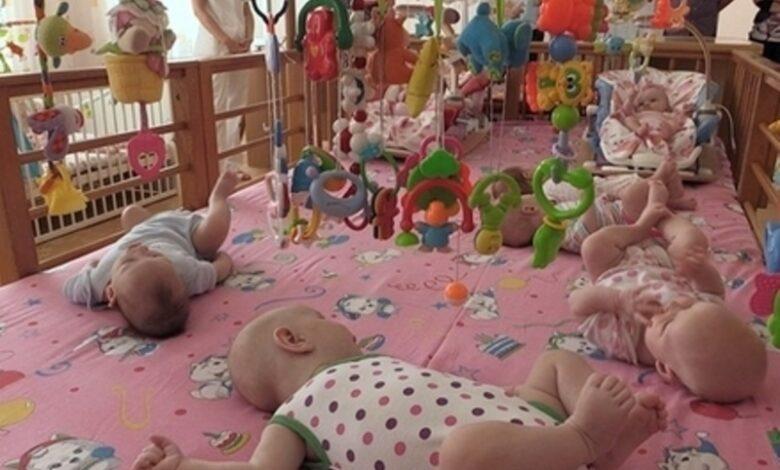
The problem of orphanhood in Ukraine has always been a difficult and painful topic. However, in the conditions of the war, it has become even more acute: the number of children who lose their parents increases sharply, and the system has to react in the conditions of a lack of resources, evacuations, and destroyed infrastructure. Children’s homes are institutions that mainly house young children who are left without family care or have serious illnesses. And although it was clear even in peacetime that the institutional form of education cannot be a long-term norm, only in recent years has the reform gained a real pace. By September 1, 2025, all children’s homes in Ukraine must be transformed – this decision was adopted by the Cabinet of Ministers. It is not only about changing the status of institutions, but about creating a fundamentally different system of protection, which focuses on family upbringing, social support and individual needs of each child.
Current status: how many children are in children’s homes and what is the structure of the system
As of today, 29 children’s homes are functioning in Ukraine, 13 of them are already at the stage of transformation. Currently, 1,081 children live in these institutions, of which 94 children require palliative care, that is, comprehensive care that alleviates the symptoms of serious, life-threatening illnesses.
According to the Coordinating Center for the Development of Family Education and Child Care, only 29% of foster children stay in such institutions for less than a year. The majority — 57% — have lived there for one to five years, another 14% — for more than five years. Experts emphasize that a child’s long stay in institutional care has a negative impact on his physical, mental and cognitive development. This is especially devastating for young children who have no experience of life in a family and are in a collective institution from an early age.
What reorganization involves: forms, deadlines, requirements
According to the government decree, by September 1, 2025, all children’s homes must be reorganized. It is about the transformation of such institutions into:
- medical rehabilitation centers;
- social support centers for families and children;
- healthcare institutions;
- institutions of social protection.
In parallel with this, the transfer of children to family forms of upbringing should be ensured: adoption, guardianship, foster and foster families. The legislation stipulates that regional state administrations must define such a model of transformation that will take into account the real needs of children, in particular, children under the age of three with severe developmental disorders or the need for palliative care.
The expert community and representatives of public organizations emphasize that the transformation of children’s homes is not just a change of name or form of ownership. It should be a comprehensive change of approaches. It is important not only to reduce the number of institutions, but to develop services that would prevent the removal of children from their families. It is about:
- support for families in difficult life circumstances;
- timely detection of cases of violence or neglect of children;
- effective response of social services.
What has already been done: expanding services for families and supporting patronage
Iryna Postolovska, Deputy Minister of Social Policy for European Integration notesthat the state is actively working on the development of the social services market. Today, there are more than 200 Life Sustainability Centers operating in Ukraine, which families with children can contact. Such centers run programs for the development of parental competences, provide training for future parents, and provide support during crises.
For families that are temporarily unable to provide care for a child, the institute of foster families is being developed. This is a professional form of care, when a child lives for a certain time in the family of a foster carer. In 2024, the state increased funding for such families, which allows more educators to be involved in foster care.
Iryna Tulyakova, head of the Coordinating Center for the Development of Family Education and Child Care, emphasizes that every decision regarding reform must take into account the needs of the child, be safe and not be reduced to formalities. Transformation should not be limited to changing the status of the institution — it should involve a real analysis of the situation, the involvement of various sectors, and interdepartmental interaction.
According to Serhiy Lukashov, director of the “SOS Children’s Villages” organization, public organizations can play a key role in this process, as they already have experience and have piloted new models and methods of assistance. But it is impossible to implement these developments at the system level without state support and political will. He emphasizes: every child in the demographic crisis must be saved, every child must be fought for, not lost due to inaction.
People’s deputy, head of the family and children’s subcommittee Tetyana Skrypka emphasizes: the reform must take place even in spite of local opposition, prejudice or bureaucratic difficulties. She calls for joint efforts of state structures and public organizations to achieve the main goal — that every child in Ukraine grows up in a family.
According to her, sometimes the transformation encounters resistance: children from boarding schools are deliberately diagnosed so as not to be transferred to families, the influence of the old Soviet school remains. But an open dialogue, a healthy partnership and readiness for change will make it possible to successfully implement the reform even in conditions of war. And this is important not only for children – it is an investment in the future of the country itself.
European vector and strategy until 2028
In November 2024, the Government of Ukraine adopted the Strategy for ensuring the right of every child to grow up in a family for 2024-2028. At the same time, the operational plan until 2026 was approved. Its goal is to create a full-fledged support system for families with children, which will allow the return of children from institutions to the family, as well as the development of alternative, family forms of care.
This reform is not only an internal need, but also one of the requirements of the European Union to Ukraine. It is a transition from an institutional system of care to a social infrastructure deployed directly in communities.