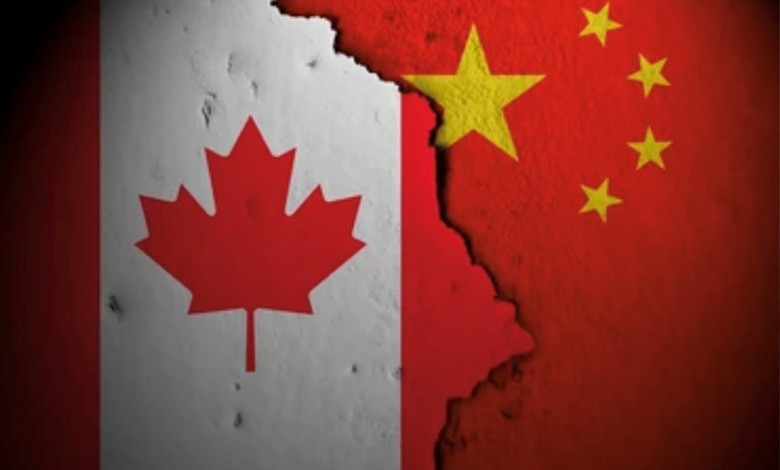
Canada announced, which will introduce an additional tax of 25% on Chinese-made steel and aluminum products from October 22. The list of steel and aluminum products subject to the duties includes flat steel, bars and pipes, as well as aluminum sheets, plates, rods and extrusions.
The move is part of a broader strategy to protect the nation’s industry and address concerns about unfair trade practices. Canada is imposing tariffs on Chinese steel and aluminum to address concerns about unfair trade practices and protect its domestic industry. The Trudeau government believes that Chinese manufacturers benefit from subsidies and other forms of government support, allowing them to dump in foreign markets, potentially hurting Canadian manufacturers.
In addition, these tariffs are part of a broader strategy to ensure fair competition and a response to similar measures taken by Western countries. By imposing these tariffs, Canada is seeking to level the playing field for its domestic producers and reduce the impact of what it considers unfair trade practices from China.
The president of the Canadian Steel Association said the move would not cause major problems for the supply chain because there is enough steel to meet the needs of Canadian and American consumers without the unfair trade of subsidized Chinese steel.
Canadian tariffs on Chinese electric cars, aluminum and steel as part of a Western macroeconomic trend
This strategy of the Canadian government is a typical example of protectionism, an economic policy aimed at protecting domestic producers from foreign competition by imposing tariffs, quotas or other restrictions on imports. Canada’s decision to impose 25% tariffs on Chinese steel and aluminum products and a 100% levy on Chinese-made electric vehicles to protect its manufacturers from cheaper products from China is in line with actions by the US and other countries.
Canada is imposing new tariffs on Chinese electric cars, aluminum and steel to support its producers and follow the lead of its Western allies. These duties will come into effect in the coming days, in October. The European Union also plans to introduce new tariffs on Chinese electric cars from October 30 of this year. Tariffs will be up to 35.3% on electric cars imported from China.
The Canadian government is discussing the need to introduce similar measures for other sectors – such as batteries and semiconductors.
Khrystia Freeland, a Ukrainian-born Canadian politician who currently serves as Canada’s finance minister and has previously served as foreign minister and international trade minister, said China’s oversupply policy is based on poor labor and environmental standards. She emphasized that Canada will not base its policies on labor abuses and pollution in China.
The Canadian government has announced that it will limit eligibility for electric vehicle incentives to products made in countries with free trade agreements with Canada. The new fees will be reviewed one year after their introduction.
The response of the Celestial Empire to Canadian protectionism
China’s embassy in Ottawa called the move “a typical act of trade protectionism and political dominance” that goes against World Trade Organization rules and Canada’s position as a supporter of global free trade and climate action.
China says Canada’s overcapacity accusations are baseless and that the development of electric vehicles in China depends on technological innovation and market competition. China has promised to take measures to protect its enterprises.
Earlier, China restricted imports of Canadian canola seeds for three years in response to the arrest of a Huawei executive. The main concern of the Canadian government is not Tesla, but cheap cars from Chinese automakers. In July, BYD – the Chinese multinational corporation, the largest manufacturer of electric cars in the world – informed the Canadian government of its plans to lobby lawmakers to enter the Canadian market.
Canadian Prime Minister Trudeau faces pressure to protect domestic jobs and wages. The government provides multibillion-dollar subsidies for electric car and battery factories of companies such as Stellantis NV, Volkswagen AG and Honda Motor Co.
With the upcoming revision of the US-Mexico-Canada Agreement in 2026, it is important for Canada’s auto industry and economy to join the US, said the president of the Canadian Vehicle Manufacturers’ Association.
Why Canada chose this approach
Tariffs on Chinese goods help protect Canadian manufacturers from cheap products that can make them less competitive. This is particularly important for the steel and aluminum sectors, which may be affected by excess capacity and supply from China.
Canada seeks to align its trade policy with that of its key allies, primarily the United States. This helps create a united front against China’s overcapacity and dumping.
Protecting strategic industries, such as steel and aluminum production, is essential to the country’s economic security. This helps preserve jobs and support economic stability.
The response to the actions of the Biden administration may also be politically motivated, as Canada is heavily dependent on trade with the US and is keen to maintain good relations with its neighbour.
Other market protections that Canada could use
In addition to tariffs, there are other market protections that Canada could use to protect national interests and ensure sustainable economic development. These are import quotas, subsidies for domestic producers, anti-dumping measures, technical barriers, free trade agreements, as well as investments in innovation and development. Here are some examples from the practice of Canada and other countries that demonstrate the effectiveness of different economic approaches.
First, it is the establishment of restrictions on the number of imported goods, which helps to control the volume of foreign products on the market. In 2018 economic interest occurred when Canada imposed quotas on steel and aluminum imports to protect domestic producers from excess supply from abroad.
Second, providing financial support to local producers can increase their competitiveness in the domestic and international markets. Yes, the EU provides substantial subsidies to farmers through the Common Agricultural Policy, which helps support agriculture in the region.
Third, the imposition of additional duties on goods sold at below-market prices to prevent dumping. Such an example can be anti-dumping duties on imports of Chinese solar panels to protect local manufacturers from unfair competition, introduced by the United States in 2020.
Fourth, the establishment of standards and regulations that make it difficult to import foreign goods, for example, requirements for the quality or safety of products. The strict safety standards for imported Japanese cars are widely known. This helps protect local manufacturers from competition from cheaper foreign cars.
Fifth, negotiating agreements that give preferences to Canadian goods in foreign markets can help balance trade. A good example is the agreement between Canada, the United States and Mexico, which promotes free trade between these countries by lowering tariffs and other trade barriers.
Finally, supporting research and development in strategic industries can increase the efficiency and competitiveness of domestic producers. Thus, Finland is known for active investment in research and development, which has helped the country become a leader in the field of technology and innovation.
Tatyana Morarash