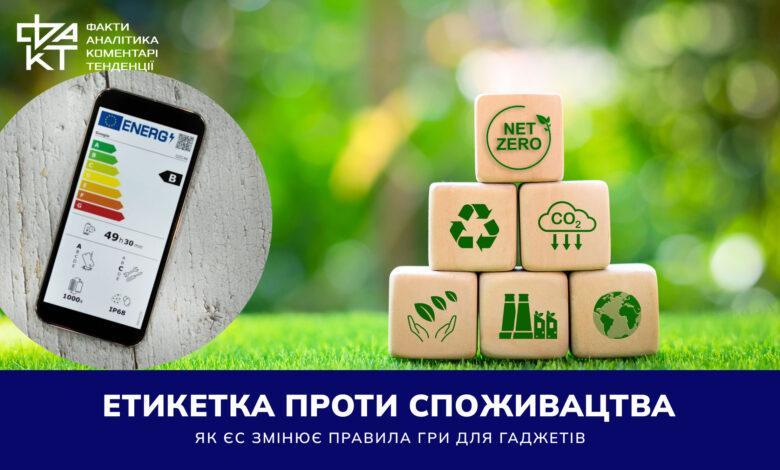
From June 20, 2025, all new smartphones, tablets, and push-button phones sold in the European Union must have a new energy label inside the packaging. This marking is outwardly similar to the stickers familiar to the European consumer, which have been decorating household appliances for many years – from refrigerators to washing machines. However, this time we are talking about digital devices with which we live almost every day – gadgets that, according to the apt words of Canadian futurist Marshall McLuhan, have become an extension of our body and mind.
The innovation, although technical at first glance, is a significant step on the way to reformatting the digital market in the spirit of environmental responsibility, transparency and sustainable development. The European Union demonstrates that the issues of climate change, e-waste and excessive consumption cannot be left only to the conscience of the user – the entire system, from production to disposal, must change.
What is a label and why is it important?
The new sticker shows seven key parameters of the device. They indicate the general energy efficiency class (from A to G), the duration of autonomous operation after a full charge, the endurance of the battery in cycles, resistance to falls, maintainability, the degree of protection against dust and moisture, as well as the unique code of the device registered in the European energy labeling register EPREL.
But behind the dry technical points is a much deeper idea – to give the consumer a tool that allows him to see the real characteristics of the device behind the shine of the screen. This is not an advertisement, not a subjective assessment, but independently verified indicators that allow you to easily compare different models with each other in terms of their reliability, life cycle duration and environmental impact.
Where did the idea come from?
As you know, more than four million tons of e-waste is generated in the EU every year. A significant part of this mass is smartphones and tablets that fail within a few years of purchase or simply become morally obsolete. The problem is that the consumer often has no real information about how long the battery will last, whether the phone will survive a drop, or whether it can be repaired without excessive costs.
The EU has decided that it is time to put an end to this. Now each device must not only demonstrate its energy efficiency class, but also meet strict eco-design requirements. For example, a battery is required to withstand at least 800 full charge and discharge cycles while retaining 80% of its capacity. Manufacturers must guarantee the supply of key spare parts for seven years after the device is withdrawn from sale, as well as ensure that the operating system is updated for five years. Moreover, these requirements apply not only to equipment, but also to accompanying software: service centers must have free access to the necessary firmware and diagnostic tools.
Technologies at the service of transparency
Device autonomy testing is now carried out using the software of the French company SmartViser – an independent developer of solutions for measuring the efficiency of batteries. And it was their standard that formed the basis of the new “battery endurance” indicator, which will now become mandatory for all new devices in the EU.
A separate role in the new system is played by the EPREL register, which is managed by the European Commission. It is not only a basis for certification, but also a transparent source of information for each consumer. From now on, the buyer will be able to simply scan the QR code on the package or label and get a complete profile of the device online.
The new requirements apply only to those devices that entered the market after June 20, 2025. Earlier smartphones or specialized devices, such as those with sliding displays or enhanced security, are not yet subject to regulation. But, as the logic of European regulations suggests, it is only a matter of time.
What does this mean for the consumer?
First of all – transparency. The buyer is no longer forced to blindly trust advertising promises or subjective reviews. It receives comprehensive, standardized information about the strength, autonomy, security and maintainability of the device, even before the moment of purchase.
Secondly – economy. If the smartphone lasts not two, but five years, the costs of new equipment and repairs will be significantly reduced. According to the calculations of the European Commission, extending the period of use of a smartphone for at least three years allows reducing CO₂ emissions per user by almost two times.
And finally, it’s about choice. Not only between brands or models, but between the consumer lifestyle, the so-called consumerism, i.e. consumption for the sake of consumption, and a responsible attitude towards the environment.
And what about the manufacturers?
For them, the new rules are both a challenge and an opportunity. On the one hand, the requirements for quality, documentation, and software support are increasing. On the other hand, a new field for competition is emerging: now brands can fight for trust not only with design or performance, but also with energy efficiency, maintainability and ethical production.
Those who are the first to adapt to the new standards will gain a strategic advantage in the market. Others risk being on the margins of the European consumer space.
So the new energy label for smartphones is not just a sticker on the box. This is a signal that Europe is declaring: the digital age must not only be fast and convenient, but also fair, ecological and humane. And this is the vector to which the whole world will have to adapt – sooner or later.
Consumer reaction: from enthusiasm to skepticism
The introduction of a new energy label for smartphones and tablets in the European Union has sparked a lively debate among users. The vast majority of commenters on the social network Reddit welcomed the emergence of transparent and standardized metrics that make it easy to compare devices before buying. However, some of the participants in the discussion expressed doubts about the usefulness of some of the presented parameters, as well as about the potential distortion of the evaluation system by manufacturers.
The most valuable characteristics are autonomy and maintainability
Most often, users in the comments mentioned two indicators that caused special admiration. This is, firstly, battery autonomy on one charge (battery endurance). Many have pointed out that this information is crucial when choosing a smartphone, because in reality it is the short battery life that causes disappointment in the purchase.
And, secondly, this is a maintainability class. Consumers appreciated being able to see how easy it would be to find parts, replace a battery or perform other basic repairs. This is especially important against the background of widespread practices of artificially complicating repairs by some manufacturers.
“A phone with a high repairability score and a good battery is a better investment in the long run, even if it costs a little more initially,” users write.
However, not all elements of the label won unanimous support. In particular, the general class of energy efficiency (from A to G) caused skepticism. Users noted that smartphones consume very little energy in absolute terms – about 7 kWh per year, which costs only 2 euros on average. “This indicator says almost nothing. It would be much more useful to see CO₂ emissions during the production of the device and its components,” opponents of labeling wrote in the discussions.
Issues of accessibility and transparency
Some have pointed out that placing the label inside the package reduces its usefulness to the buyer, since it becomes visible only after purchase. However, other users explained that the rules require retailers to display this information on price tags or next to the product, as has long been the practice for home appliances.
“A label inside the box? How is it supposed to help the buyer? But it’s good that stores should show it in the windows as well,” commented the commentators rightly.
In addition, the discussion touched on the EPREL registry, where all the technical specifications of the devices are located. Users complained that it is difficult to find devices by commercial names in the database: code identifiers are often used (such as GUR25 instead of “Pixel 9”). “Why not specify the usual model names? GZC4K doesn’t tell me anything,” consumers complained.
Care about the “right to repair” and durability
Many commented that the mandatory provision of spare parts for 7 years and software updates for at least 5 years is a real breakthrough in consumer protection policy: “This is a huge step forward. If Fairphone can implement it, others should too.”
Some users, however, warned that the rating system could later be “gamed” by manufacturers, for example, due to optimization specifically for the SmartViser test, and not a real improvement in autonomy or the convenience of battery replacement.
Some commentators pointed out that even this, at first glance, neutral innovation has already caused an ideological reaction. In particular, in some online communities, the new rules have been opposed simply because they are “government regulation”: “Transparency is what reduces market distortions. But some people hate it just because it’s an EU initiative.”
General mood: positive, but there are nuances
Despite some critical remarks, the general mood among users is positive. Most welcome the advent of labels as a real tool for informed choice. And although some aspects still need improvement, in particular, searching for models by name, displaying data before purchase, and avoiding manipulation by manufacturers, the very principle of transparency, durability and consumer protection received high praise.