Children of war are born under enemy strikes: how newborns were saved in Odessa after an attack on a maternity hospital

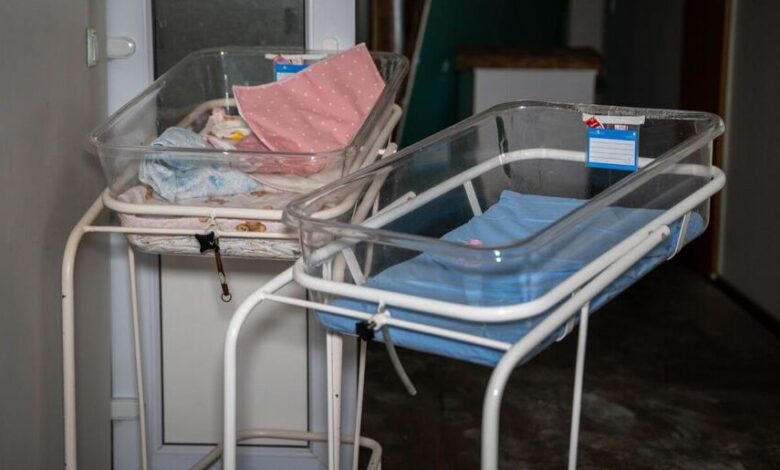
The war has long since gone beyond the front lines and entered the spaces where human life begins. Ukrainian maternity hospitals increasingly exist in two realities at the same time: in the usual rhythm of medicine, where doctors deliver babies, nurse premature babies, and monitor women after operations, and in the logic of constant threat, where every night this fragile order can be disrupted by a drone strike. The Russian drone strike on maternity hospital No. 5 in Odessa on the night of March 28 once again showed that war intervenes at a moment that should remain protected under any circumstances, because it concerns women after childbirth, newborn babies, and doctors who are forced to simultaneously save lives and act according to the rules of military danger.
During a night drone attack on Odessa, an enemy drone hit the roof of maternity hospital No. 5, where patients, doctors, and newborn babies were at the time. The director of the medical facility, Igor Shpak, reported that the impact occurred at about 1:30 a.m., and the explosion damaged the roof, the ceiling between the fourth and third floors, and destroyed the wards where the women in labor and their babies were.
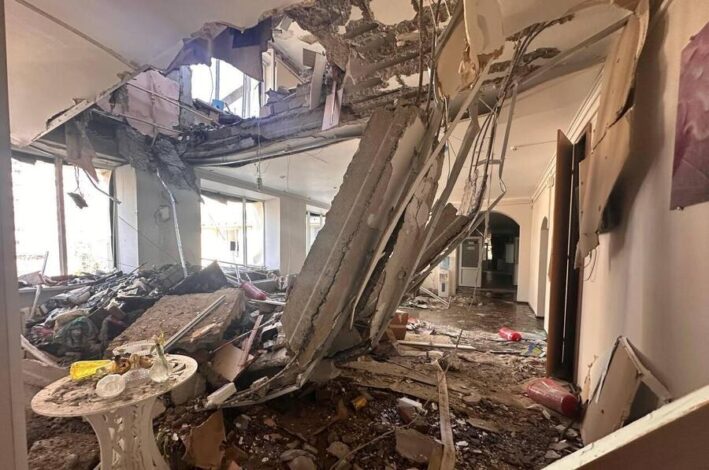
The shelling hit the medical facility at a time when routine hospital work was underway inside, related to caring for women after childbirth and newborn babies. There were 27 medical workers, 32 patients, and 22 newborns in the maternity ward at the time of the attack. Among the patients were women after surgeries, four twins, and one pregnant with triplets, so any disruption to the departments immediately posed a threat to several groups of people whose condition required constant supervision.
The most difficult task was the evacuation of newborns, among whom were children in serious condition. Igor Shpak said that there were critically low-weight twins in the maternity ward, and these babies were connected to a ventilator. For such children, even a short break in respiratory support poses a great danger, so the evacuation required precision, speed, and the technical readiness of the shelter to accept them without losing the necessary assistance.
It was extremely important that the bomb shelter in the maternity ward was equipped with resuscitation for newborns. Thanks to this, doctors were able to continue ventilation already in the shelter, without interrupting the treatment of children who depended on hardware support. It is in such details that the real price of preparing a medical institution for work during wartime is manifested, because salvation at a critical moment depends on decisions made long before the attack itself.
The upper level of the building, where the gynecological ward with the operating room is located, suffered the greatest damage. At the time of the strike, women were there after surgeries, so the medical staff had to simultaneously evacuate the woman in labor, carry newborns, and ensure the safe transfer of those patients who already needed intensive care before the attack.
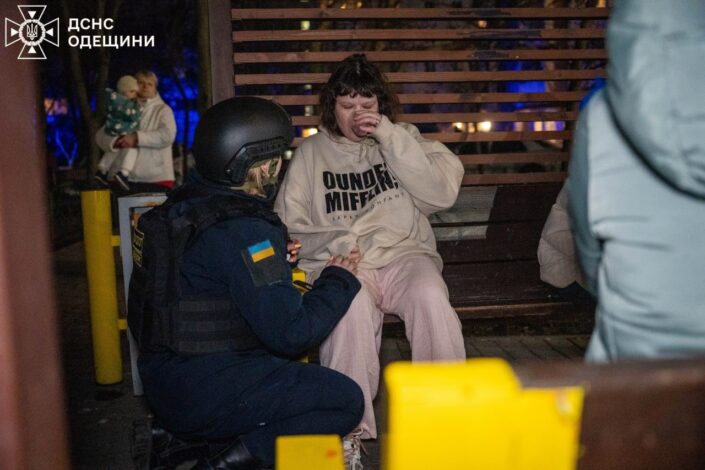
According to the director of the facility, the postoperative women were placed in the intensive care unit in the bomb shelter.
After the strike, a fire broke out in the building and on the roof of the maternity ward. Before the rescuers arrived, the doctors themselves began to extinguish it, using fire hoses and fire extinguishers. Igor Shpak reported that one of the doctors extinguished the fire on the roof, while other employees of the institution continued to evacuate patients and tried to contain the consequences of the explosion inside the building.
After the women and children were taken to a safer place, a second fire occurred, which was already being extinguished by the State Emergency Service employees. This episode shows that the medical staff on the night of the attack acted in several directions simultaneously, because they had to rescue people, maintain the condition of seriously ill patients, and at the same time contain the fire until the arrival of specialized services.
After the strike, maternity hospital No. 5 temporarily stopped accepting patients. All women in labor were transferred to the KNP “Maternity Hospital No. 1” and “Maternity Hospital No. 7”. Two newborns were hospitalized at the Odesa Regional Clinical Children’s Hospital.
The story of this attack takes on additional meaning due to the fact that Odessa Maternity Hospital No. 5 was completing a large-scale reconstruction, on which more than 147 million hryvnias were spent. The facility updated its exterior and interior decoration, repaired its heating and ventilation systems, and in February completed the reconstruction of the operating and intensive care unit.
This part of the project was implemented within the framework of the “Ukraine Recovery Program” together with the European Investment Bank. The maternity ward has two modern operating rooms, the latest anesthesia equipment, and intensive care, designed according to the standards of the Cologne Medical Center. In addition, the facility completely renovated the evacuation routes to the shelter. On the night of the attack, these upgrades were not just part of a modernization report, because they determined how quickly and safely women and children could be moved to a protected space.
The strike on the maternity hospital in Odessa once again showed that children of the war in Ukraine, even in the first hours of their lives, find themselves in a state of terror, accompanied by the sounds of explosions, urgent evacuation and the operation of resuscitation equipment in the shelter.