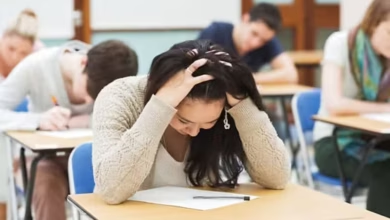
Children took the NMT for 13 hours without food and water: reaction of the Ombudsman and the Director of the Ukrainian Center for Education Quality Assessment

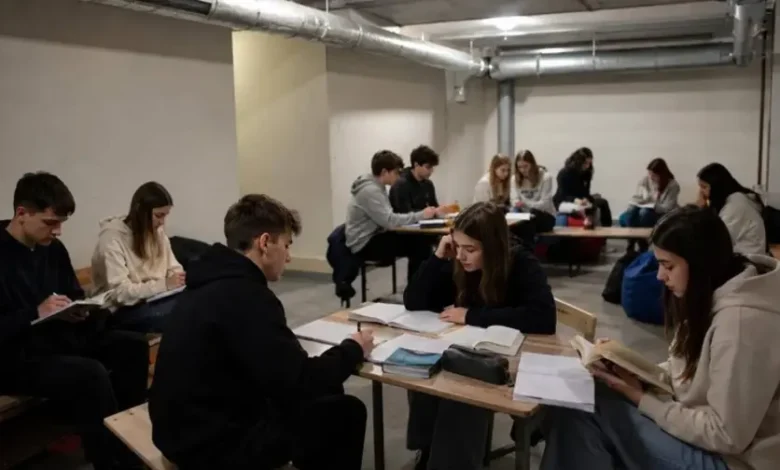
The National Multi-Subject Test under martial law has once again come into the spotlight after the situation in the Odessa region, where, due to prolonged air raids, participants remained at the testing point from morning until late evening. Ombudsman Dmytro Lubinets called this course of the exam a failure of the system, and the Ukrainian Center for Education Quality Assessment explained that participants were offered to move to an additional session.
What happened in the Odessa region and the Ombudsman’s position
As reported Dmytro Lubinets, the Office of the Verkhovna Rada Commissioner for Human Rights in the Odessa region received reports of serious violations during the National Multi-Subject Test in one of the examination centers. According to available information, the premises were not ready for work in conditions of martial law and prolonged air raids, due to which the testing was repeatedly interrupted and lasted from 09:00 to about 22:00.
The Ombudsman noted that the participants were in a state of constant psychological stress for more than 13 hours. At the same time, according to them, they were not provided with basic conditions of stay, in particular access to drinking water and food. Communication with parents was also significantly limited, and only some children who felt unwell had the opportunity to contact their relatives.
Lubinets paid special attention to the situation of orphans, who were actually left without support and assistance during their many hours in the examination center.
According to him, access to water and food was only organized thanks to the initiative of teachers and parents. In addition, it was thanks to the help of caring people that orphans and participants whose parents could not bring food and water were provided with the necessary things.
After completing the test, participants reported severe exhaustion, loss of concentration, and difficulty completing tasks. As the ombudsman emphasized, many people took the last blocks of the test in a state of extreme fatigue, which may affect the objectivity of the results, equality of conditions for applicants, and the fairness of the assessment in general.
Lubinets also reported that the participants were offered to take the NMT during an additional session, but without specific dates for its conduct and without guarantees that a similar situation would not occur again. He called this case an unacceptable failure of the NMT system under martial law and emphasized that such an organization of testing does not provide children with an adequate level of security, basic living conditions, and equal opportunities. He called on the Ministry of Education and Science to urgently respond to the situation and review the current testing procedures.
What the UCEQA explained
The Director of the Ukrainian Center for Education Quality Assessment, Tetyana Vakulenko stated that participants who remained to take the NMT after long breaks were offered to move on to an additional session.
According to her, such an opportunity is provided in cases where the total duration of air alarms exceeds 2.5 hours. Vakulenko noted that participants were reminded several times of their right to stop testing and apply for participation in an additional session, but they decided to continue because they wanted to get the result on the same day.
The UCEQA explained that the decision to suspend testing can be made by the person responsible for the point together with the regional center for assessing the quality of education. At the same time, if participants and their parents ask to continue the exam, the organizers can agree to this option.
Vakulenko emphasized that in such cases, employees of temporary examination centers work much longer than the usual schedule, responding to the requests of applicants. She also noted that a strict limitation on the duration of testing could narrow the opportunities for those participants who seek to complete the exam without a postponement.
During an air raid, NMT participants cannot use mobile phones according to general rules. At the same time, Vakulenko reported that in the situation in the Odessa region, children were allowed to use devices to communicate with their parents.
Regarding food, the official explained that testing centers are not obliged to provide participants with food. Candidates are advised to bring drinks and snacks to use during the 20-minute break. According to Vakulenko, in many temporary exam centers, parents were nearby and handed out food and water to their children, so such issues were resolved on the spot.