
Currency exchange rates for May 11–17: a banker told whether there are grounds for hasty purchases of dollars and euros

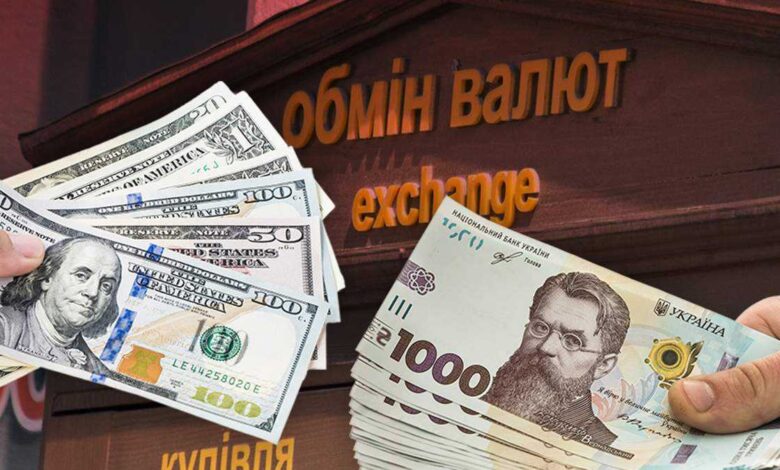
The Ukrainian foreign exchange market remains relatively predictable even against the backdrop of external tensions and constant economic risks, so the main attention of market participants is focused not on expecting sharp jumps, but on whether the National Bank will continue to maintain a balance between demand for foreign exchange, inflation and hryvnia stability. The situation is determined by several factors at once: international financial support, the regulator’s policy, the profitability of hryvnia deposits, fluctuations in global energy markets and the reaction of the population to any external threats. Under such conditions, banks do not predict sharp exchange rate changes in mid-May, although the impact of geopolitics and the cost of energy will continue to be felt on the Ukrainian foreign exchange market.
Forecast for May 11–17: the dollar will remain within the usual limits
Director of the Department of Financial Markets and Investment Activities of GLOBUS BANK Taras Lesovyi believes that in the coming days the exchange rate in Ukraine will move without sharp jumps. According to him, the situation on the market looks quite stable, and factors that could significantly change the exchange rate dynamics do not yet create grounds for revising the expected ranges.
“The current situation does not give grounds to expect a significant increase in exchange rates. There is also no reason to predict their noticeable decrease or revision of the already familiar corridors of daily changes. In fact, the main factors remain stable, and therefore, currency fluctuations should be moderate,” the banker noted.
According to the expert’s forecast, on the interbank market, the dollar may be within 43.8–44.25 UAH during the week of May 11–17. On the cash market, the expected range will be close to the interbank one — approximately 43.75–44.25 UAH per dollar. Such dynamics continue the trend of previous weeks, when the foreign exchange market remained controlled, and daily fluctuations did not go beyond the expected corridors.
The National Bank remains the main market stabilizer
According to Lesovy, the National Bank plays an important role in maintaining exchange rate equilibrium. The regulator uses currency interventions to smooth out excessive demand on the interbank market and restrain sharp movements that could quickly spill over into the cash segment.
At the same time, the hryvnia exchange rate is not rigidly fixed, as the market operates in a mode of managed flexibility. This approach allows the currency to respond to supply and demand, but does not allow market participants to shake up the situation due to short-term surges in demand or nervous expectations.
“Foreign exchange interventions remain the main tool that helps smooth out excessive demand and prevent sharp exchange rate jumps. The managed flexibility mode does not “preserve” the exchange rate, but at the same time does not allow uncontrolled fluctuations,” Taras Lesovyi believes.
Thanks to this policy of the NBU, the foreign exchange market remains more predictable for businesses, banks, and the population. For the cash segment, this means that exchangers and banks will focus on interbank dynamics, although the difference between buying and selling currency will remain noticeable.
Why hryvnia deposits reduce demand for currency
The banker calls the monetary policy of the National Bank a separate factor that restrains demand for the dollar and euro. The regulator’s decision to leave the discount rate at 15% supports interest in hryvnia deposits, since banks maintain a fairly attractive yield on deposits in the national currency.
Average rates on hryvnia deposits, according to the expert, are within 13–14.5% per annum. For some Ukrainians, such yield becomes an alternative to buying cash currency, especially under conditions when sharp exchange rate jumps are not predicted in the short term.
“This yield exceeds potential inflation forecasts, so keeping hryvnia funds on deposits remains more profitable than chaotic buying up cash currency,” Taras Lesovyi emphasized.
In such a situation, the population receives a financial incentive to leave part of its savings in hryvnia. This reduces pressure on the cash foreign exchange market, where any increase in demand is quickly reflected in rates in banks and exchange offices.
The Middle East remains an external risk
Despite more stable internal conditions, the foreign exchange market of Ukraine depends on external events, among which the expert separately highlights tensions in the Middle East. This factor is important due to its impact on energy markets, oil prices, and fuel costs in Ukraine.
“Persistent tensions in the Middle East will mean that fuel prices in Ukraine will remain quite high. This will not necessarily lead to a sharp change in the exchange rate, but will remain an important background factor,” the banker noted.
The increase in fuel costs can affect business costs, logistics and consumer prices, so the currency market is carefully reacting to any aggravation in the region. At the same time, Lesovy does not predict an automatic sharp jump in the exchange rate due to this factor, since its impact is still considered as a background one.
European credit and budget risks
Another important factor, the expert calls the European Union’s €90 billion loan. Unblocking these funds could have a long-term positive effect on the Ukrainian economy, since international financing helps reduce the pressure on the budget deficit.
According to the banker’s logic, the presence of external financial support reduces the risks to macro-financial stability, because without such funds, the budget deficit could create much stronger pressure on the economy. This is important for the currency market due to the expectations of business, banks and the population: the clearer the source of financing for state needs, the lower the nervousness about the exchange rate.
What will happen to the euro
The euro exchange rate in Ukraine will depend on two components: the internal situation on the currency market and the euro/dollar ratio on world markets. According to Lesovoy, if the relative military “calm” is maintained, the euro/dollar ratio may remain at 1.16–1.18.
“In the event of a military escalation in the Middle East, the dollar may strengthen. If the relative military “calm” persists, the euro/dollar ratio will remain at 1.16–1.18. This will correspond to the Ukrainian euro exchange rate within the range of 50.5–52.5 UAH,” the banker shared his expectations.
On the cash market, the euro exchange rate is forecast to fluctuate from 50.05 to 51 UAH. This range shows that the European currency will also remain within the controlled dynamics, although its movement may be more sensitive to external changes through the euro/dollar pair.
Spreads in banks and exchangers will remain noticeable
The difference between the buying and selling rates of currency during the week will remain noticeable. On the interbank market, the spread may be up to 0.15 UAH per dollar and up to 0.2 UAH per euro. In banks, the difference may be wider — up to 0.5–0.6 UAH per dollar and up to 0.8–1 UAH per euro.
In exchange offices, the spreads may be the largest. According to the forecast, the difference between buying and selling may reach up to 0.6–1 UAH per dollar and up to 1–1.3 UAH per euro. Because of this, buying currency during moments of short-term excitement may be unprofitable for clients, since a wider spread increases the actual costs of exchange.
The average difference between the interbank and cash markets, depending on the currency, is expected to be at the level of 0.1–0.15 UAH. Total weekly deviations, according to Lesovy, should not exceed 1–1.5% of the rate at the beginning of the week.
Should I Hastily Exchange Currency?
The banker’s forecast suggests that there is no reason to rush to buy currency due to expectations of a sharp jump in the exchange rate. The dollar, according to his assessment, will remain within UAH 43.75–44.25 on the cash market, and the euro will move within the forecast range, unless external conditions worsen.
For Ukrainians choosing between a hryvnia deposit and buying currency, the level of return on deposits remains important. Since deposit rates remain at 13–14.5% per annum, part of the savings in hryvnia may remain a financially justified alternative to spontaneous exchange.
“Therefore, the foreign exchange market remains manageable and quite stable. Even in the presence of external risks, the system of “managed flexibility” allows Ukraine to maintain control over the situation and avoid sharp exchange rate spikes,” — the banker summarized.
In such a situation, the exchange rate on May 11–17, according to the expert’s forecast, should remain within the already familiar indicators. The main conditions for stability will be further actions by the National Bank, continued interest in hryvnia instruments, the absence of a sharp escalation in the Middle East, and a sufficient level of international financial support for Ukraine.


