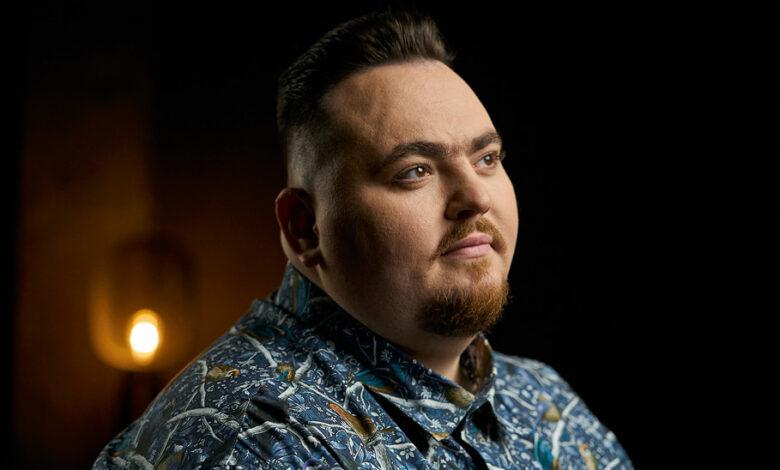
In recent years, the issue of investing has become especially relevant for Ukrainians. People seek not only to save savings, but also to multiply them, looking for an answer to the question: what to invest in in conditions of war, inflation and an unstable financial environment? Someone is considering bank deposits, someone is looking at securities, someone is looking at real estate or starting their own business. But as practice shows, general investment advice often doesn’t work. What really helps is the experience of real people who have been practicing investing for years and have their own proven logic of actions. One of such people is Dmytro Karpilovskyi, founder and managing partner of the UkrInvestClub investment community. His experience is a path with many risks, losses, lessons, ethical dilemmas, gains and honest conclusions that can serve as a guide for others. He advised Ukrainians, where is better to invest – in deposits, securities, real estate or own business.
Karpilovskyi started investing in 2004, today this is his main activity. He emphasizes: works only with own funds, does not take money for management, does not serve other people’s capital. The main part of his investment portfolio is concentrated in Ukraine. From experience, he believes that it is worth starting as early as possible, and necessarily — with careful, conservative tools. According to him, he himself invested too risky for a long time – in particular, in startups, digital assets, cryptocurrencies, as well as in early-stage businesses. And only with the beginning of a full-scale war did he begin to shift his emphasis towards more cautious decisions — investing in real estate, the so-called defensive assets. According to Karpilovskyi, the correct investor strategy consists in a gradual transition from conservative to risky, as experience and skill increase. For him, this path was the opposite, and, as he himself admits, it was hardly the right decision.
When asked what amount to start investing with, Karpilovskyi answers: there is no fundamental limit here. Much more important is interest and willingness to learn. Of course, the financial result directly depends on the amount, but the formation of the habit of investing is much more valuable. It is necessary to train oneself not just to save money, but also to manage it competently – to earn more than to spend, and to invest the surplus not in consumption, but in saving and multiplying. According to him, this is a fundamental rule that any strategy should obey.
Speaking about his own defeats, Karpilovsky frankly admits: he is an aggressive investor who consciously takes high risks. In his practice, there were dozens of failed cases, losses occur every month, but at the same time, there are profits. He estimated that the total losses in failed investments exceeded two million dollars. This is part of the journey. According to him, in such a model, part of the deals inevitably fail. The main thing is that those deals that bring income cover losses. And for now, this strategy is working for him. He calls the most unsuccessful project an attempt to invest in the export of agricultural products — there he lost about half a million dollars. There were also cryptocurrency transactions that “minus” him by hundreds of thousands of dollars. He does not recall a similar level of failures in the real sector, but notes: there were many deals where he lost from 10 to 100 thousand dollars. At the same time, there are also enough deals that brought profits of the same amount.
Among the most successful cases, he singles out the year 2024, when he had six exits from Ukrainian income real estate projects — the average yield on these deals amounted to more than 36% per annum in dollars. In wartime, in a poor country, this is, in his opinion, a fantastic result. He also mentions cryptocurrency cases where it was possible to make a profit of half a million dollars from one transaction. But emphasizes: it is possible to honestly assess the success of investments only at a temporal distance. The result for the year is not an indicator. If today a passive investor earns 20% in currency, then this is already an extremely high level, unattainable for most.
Karpilovskyi is convinced that most of the profits in crypto are blind luck. Even his early entry into the crypto market (end of 2010) did not protect him from failures. He had hundreds of unsuccessful deals, and he does not consider successful deals to be the result of his own skill, but rather luck. Although he considers the fundamental bet on the crypto industry to be logical, he emphasizes: profitability, time of exit, the right decision – all this depended on luck. On the other hand, income real estate in Ukraine is an example of a field where skill is indispensable. Because of the high risks here, you need to be able to analyze, control, and react. But the results are valid only over a long period of time – at least ten years. This is the only way to distinguish luck from professionalism. Notes: even those investors who are now flaunting their results are 80% luck and only 20% knowledge.
The expert also does not deny that he made money from questionable things. There were situations when he had insider information or worked in an environment of market manipulation. Not everything that was profitable was ethical. He calls the 2017 deal the most dubious, when he invested in the asset, knowing that a financial pyramid was behind it. But he made a bet that it will not fall apart in the near future. The bet worked – he managed to get out. But there were cases when he did not have time. As an example, he cites the case of “Optika 1st”, where the opening of stores was financed, and later it turned out that the reporting was falsified, and the money was simply stolen. Now they are pursuing the culprit in the criminal field, but for Karpilovsky it is a complete loss of funds.
He does not hide that sometimes he invested in frankly ridiculous things. In it, the investor often competes with the blogger — he wants not only to make money, but also to try something new, to test, to share. This was the case with TRUMP Coin, a token purchased before Trump’s inauguration. His goal is to make money from the information drive. Indeed, the token tripled. But instead of exiting, they decided to hold – and the token fell. There were times when I felt ashamed for my partners. For example, the store on Sofiivska Borshchagivka, where the management turned out to be dishonest – the deal was closed. Personally, he is not ashamed of his decisions, but of situations when they talked about a successful investment publicly, and later the business “fell”. Publicity imposes moral responsibility.
When asked how much he keeps “under the pillow”, Karpilovskyi answers that usually – nothing. He invests “below zero”. This is not a mistake – it is his conscious decision. He can afford such a model because he has “insurance nets”: competences, acquaintances, trust, connections. There are people you can call in the middle of the night and get money. But adds: this is not a one-size-fits-all recipe. If a person has financially dependent relatives, it is necessary to have a pillow for at least three months. He himself is an “adrenaline addict” who feels comfortable riding a “roller coaster”.
In terms of conservative instruments, Karpilovskyi notes that in war conditions the most safe, reliable and interesting instrument for a mass investor in Ukraine are domestic state loan bonds (OVDP), and in particular hryvnia, not foreign currency. In his opinion, this is an asset from which you can withdraw money at any time, as well as place funds for a short term.
The second important direction, which he singles out among conservatives, is agricultural land. He emphasizes that if it is possible to withdraw money from OVDP even tomorrow, then it is worth investing in the land for at least several years. Despite this, agricultural land, especially in central and western Ukraine, looks the most “indestructible” in the sense of military risks, unlike other types of real estate.
Personally, he also invests in recreational real estate, but he honestly admits that it is no longer a completely low-risk instrument. However, he considers income real estate in the later stages of construction to be a fairly reliable option with the potential for further growth in value. According to his forecast, after the end of the war, such assets can provide a good additional yield. In 2025, he plans to invest about one million dollars in Ukraine, half of which he wants to direct to the energy sector, which he calls a young, complex, not sufficiently open to the general public, but with huge potential. He is especially attracted to those industries that will benefit from the deterioration of the situation: for example, the more problems in energy, the greater the demand for energy conservation systems.
Karpilovsky cites a project with Chinese electric cars as one of the examples of an effective investment strategy. He made a bet that against the backdrop of the US tariff war, Chinese cars will become cheaper, while American and German cars will become more expensive. In the conditions when Chinese electric cars can be imported into Ukraine without duty and VAT, this rate, according to him, has started to work. They buy cars and transfer them to work in a Kyiv taxi. The combination of the international situation, domestic benefits and stable demand for taxis in the capital gives results – in the first month, the return on this investment was 70% per annum. He emphasizes that he gets high returns for high risks, and this logic works for him.
At the same time, Karpilovsky clearly outlines what he does not invest in. During the war, he believes, it is not worth investing in assets that do not compensate for the risks. He considers classic residential real estate to be one of them. Low purchasing power of the population, demographic crisis and military threats make this asset uninteresting, in his opinion. Also, he almost completely withdrew from cryptocurrencies, because today he considers this market too unstable and unpredictable. He does not invest in American securities either. The reasons are the difficult macroeconomic situation, customs duties, problems with the withdrawal of capital from Ukraine and the feeling that the long-term growth has already ended.
The expert does not see the potential for further growth and assumes a fall. An additional argument is the patriotic factor — every dollar invested in Ukraine works for its economy: creates jobs, generates taxes, supports national industries. Accordingly, investing, say, in the energy industry in Ukraine, he understands that even in case of losses, he has done something important. If you invest in Germany, the benefit will be only personal, not social.
Karpilovsky is skeptical of the cult of big investors. He does not believe in creating idols for himself and believes that everyone should create their own success story, taking into account personal circumstances, starting conditions, and context. He critically mentions Warren Buffett, emphasizing that even his results have a lot of luck. He believes that systematic, ethical investing in the long term gives a result no worse than the market one, even without a famous brand.
As an example of a successful, albeit controversial investment, he mentions cryptocurrencies. According to him, it was a phenomenon of collective faith – with the joint efforts of millions of people, they turned an ephemeral idea into a capitalization of trillions of dollars. He calls this a classic example of the “next fool’s market,” where an asset is bought not because it is valuable, but because it can be resold profitably to someone else. It does not inspire him, but he is fascinated by how it is even possible in the modern world.
He is also impressed by Nvidia’s case — how it transformed from a video card manufacturer into a major player in the global technology market, multiplying investors’ capital hundreds of times. He also draws attention to the phenomenon of gold — an asset that is rarely used in practice, but has enormous value due to the belief of generations. Or the example of diamonds – inflated value by marketing, based on a successful advertising campaign. He notes that investors should be careful, because the real value of an asset can easily be distorted by external factors.
Speaking of books, Karpilovsky mentions Kiyosaki’s “Rich Dad, Poor Dad” — in his opinion, this is a completely dubious, populist book that contains ineffective advice, and the author is generally bankrupt. However, he admits that the impact of this book on people’s financial consciousness was enormous. As a similar phenomenon, he mentions the film “The Wolf of Wall Street” – a story about a swindler who became a cult character. Karpilovsky considers Benjamin Graham’s “Smart Investor” to be a counterweight to this, a book that adequately, honestly and professionally explains the essence of investing without illusions and pathos. It does not promise guarantees, does not sell hope, but talks about risks, realities, and the long-term perspective.
Among the things he will never invest in again, Karpilovskyi lists life insurance, bank deposits in Ukraine, residential real estate for personal residence, ultra-expensive cars and jewelry as investments. All this, in his opinion, has no real growth potential and does not correspond to basic investment principles.
Among the most expensive life lessons, he names those when he broke his own rules: invested in projects he didn’t understand, trusted charismatic people, absolved himself of responsibility — and lost hundreds of thousands of dollars. Every time he gave up on critical thinking and analysis, it cost him dearly.