How much gold has been mined throughout human history and what reserves remain in the bowels of the Earth: scientists’ calculations

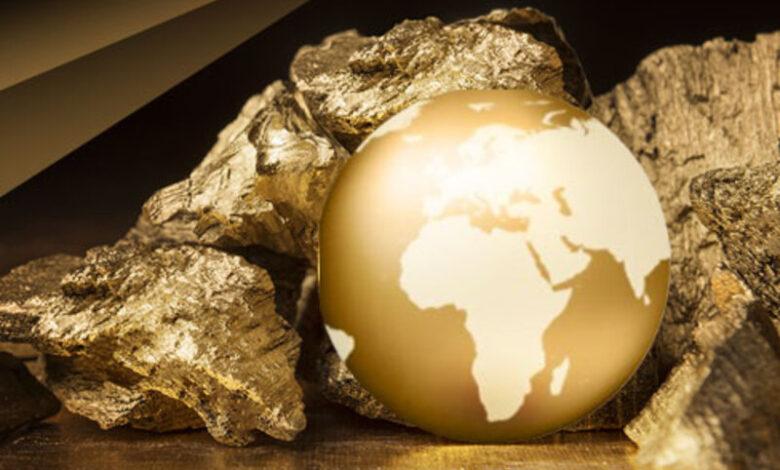
For data According to the US Geological Survey, approximately 206,000 tons (187,000 metric tons) of gold have been mined from rocks and rivers throughout human history, with the majority of this volume going into jewelry production.
Meanwhile, the World Gold Council, an organization set up by major gold producers, estimates that total production is 238,391 tonnes (216,265 metric tons) of gold, an amount that would fit into a cube roughly 72 feet (22 meters) on each side. About 45% of this gold was used to make jewelry, 22% is kept in collections in the form of gold bars and coins, and 17% is in the reserves of central banks of various states.
However, a significant amount of gold still remains in the Earth’s crust. The US Geological Survey estimates that deposits that are currently economically viable for development contain an additional 70,550 tons of this metal. The largest known deposits are located in Russia, Australia, South Africa and China.
At the same time, experts distinguish between confirmed gold reserves, which can be mined using modern technologies, and potential, not yet definitively confirmed resources. According to the World Gold Council, confirmed reserves amount to 60,370 tons, while unconfirmed reserves are estimated at 145,000 tons.
In total, the total amount of gold, which is contained both in mined form and in deposits, is from 277 thousand to 299 thousand tons.
However, according to research from the University of California at Berkeley, the majority of gold is not actually concentrated in deposits, but scattered in the earth’s crust, seawater and igneous rocks. Scientists have estimated that the total mass of gold in the earth’s crust is approximately 441 million tons, but these scattered microconcentrations are practically impossible to extract from an economic point of view.
However, even these calculations do not cover all the gold reserves of the planet. According to scientists’ calculations, about 99% of all earth’s gold is in the core of the planet. If it were possible to extract it, this gold would be enough to cover the surface of the planet with a layer half a meter thick.
Geologist Chris Voysey of Monash University in Australia explains that during the formation of the planet more than 4.5 billion years ago, most of the gold ended up in the core. Only a small part of it reached the surface.
According to the scientist, approximately 99.5% of all gold was drawn into the subsoil during the formation of the Earth. Another approximately 0.5% entered the planet later — as a result of intense meteorite impacts that occurred between 4.1 and 3.8 billion years ago.
Voysey points out that while some gold has continued to flow in from space for billions of years, the amounts are tiny compared to the reserves already in place. Due to the complex geological structure of the planet, it is practically impossible to accurately determine the total amount of gold on Earth, as well as the volume of deposits that have not yet been discovered.