
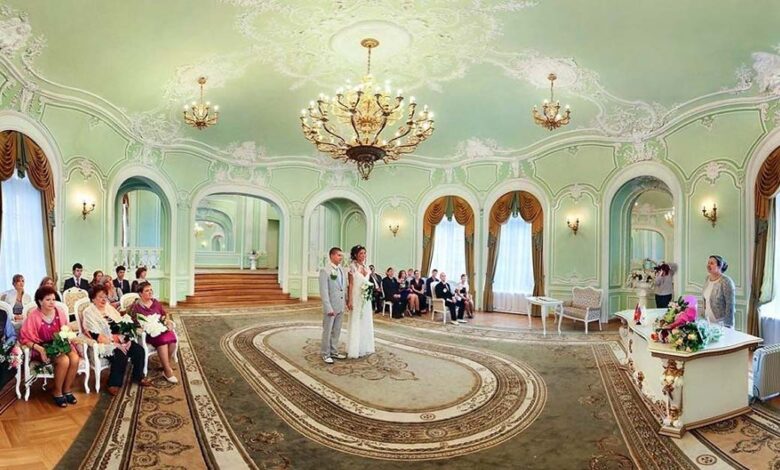
February 11 is the Day of Civil Registry Office Workers (CRO), the International Day of Women and Girls in Science, the World Day of the Sick and the European Day of the Emergency Service 112. This day in different eras has become a day of decisions, discoveries, wars, cultural events and political upheavals that have left a noticeable mark on world history.
Day of Civil Registry Office Workers (CRO)
In Ukraine, February 11 is celebrated as the Day of Civil Registry Office Workers. In 2022, the Cabinet of Ministers of Ukraine approved a decree of the President on the official establishment of this date. The holiday was introduced to honor employees who ensure the state registration of birth, marriage, divorce, name change and death, as well as maintaining relevant registers.
The CRO bodies are part of the system of the Ministry of Justice of Ukraine and work with the State Register of Civil Status Acts of Citizens. They issue certificates, make changes to records, restore lost documents, and ensure the preservation of archives. Their work is of legal importance for the registration of inheritance, social benefits, citizenship, marriage and divorce, and for confirming family ties.
Interesting facts
In Ukraine, the first systematic attempts at state registration of civil status acts began after 1917, when the functions of recording births, marriages, and deaths were transferred from churches to state bodies.
Before the introduction of state registration, most records of births, marriages, and deaths were kept in registry books at churches and synagogues, and these books are now stored in state archives as valuable historical sources.
During World War II, a significant part of registry books and civil status records on the territory of Ukraine was lost or destroyed, which is why complex procedures for restoring data through the courts are still ongoing today.
The State Register of Civil Status Acts of Citizens of Ukraine is an electronic database created in the 2000s, and it combines data from all regions of the country, which allows you to obtain duplicate documents regardless of the place of initial registration.
In Ukraine, during martial law, the procedures for registering births and deaths in temporarily occupied territories were simplified, in particular due to the possibility of establishing facts in court under a simplified procedure.
In many countries of the world, a dual accounting system still exists to this day, where religious communities keep records alongside state bodies, while in Ukraine only records entered in the state register have legal force.
The oldest surviving metric books on Ukrainian lands date back to the 17th century and contain records in Old Ukrainian, Polish and Latin.
In some regions of Ukraine in the 19th century, priests kept records with detailed notes on the social status of the family, causes of death or even circumstances of birth, which now provides researchers with unique demographic data.
In different periods of the 20th century, the rules for writing surnames and given names in documents changed, which is why in archives you can find different spellings of the same family.
In Ukraine, there is a possibility of changing the name and surname at the request of the person, and every year thousands of citizens use this right, and the corresponding changes are necessarily made to the State Register of Civil Status Acts.
International Day of Women and Girls in Science
This holiday was introduced by the UN General Assembly in 2015 to support equal access of women and girls to science, technology, engineering and mathematics. The initiative arose within the framework of global programs to ensure gender equality and expand women’s participation in research and innovation.
This day draws attention to the barriers faced by women in science, in particular, unequal representation in leadership positions, the pay gap, and limited access to research funding. On February 11, educational events are held, stories of female scientists are popularized, and initiatives for schoolgirls and students are supported to choose a career in science and technology.
Interesting facts
The decision to establish the International Day of Women and Girls in Science was adopted by a resolution of the UN General Assembly on December 22, 2015, and it was first celebrated in 2016.
According to UNESCO, women make up less than a third of scientists in the world, and this figure varies from less than 20 percent to more than 50 percent in different countries.
Marie Skłodowska-Curie remains the only woman to have received the Nobel Prize twice in different scientific fields – in physics and chemistry, as well as the first person to be awarded the Nobel Prize twice in history.
Rosalind Franklin made a key contribution to the discovery of the structure of DNA, and her X-ray images became the basis for the double helix model, although she did not receive the Nobel Prize during her lifetime.
Ukrainian scientist Kateryna Yushchenko in the 1950s created one of the world’s first high-level programming languages - the address language for the Kyiv computer.
The first woman to become a member of the National Academy of Sciences of Ukraine was botanist Oleksandra Yanata, who made a significant contribution to the development of environmental protection.
In the space industry, the contribution of women remained little known for a long time, although it was the calculations of female NASA mathematicians in the 1960s that provided accurate flight trajectories for the first American astronauts.
In some countries of the world, until the beginning of the 20th century, women were forbidden from officially studying at universities, and they received their education as free students without the right to receive a diploma.
In Ukraine in the 21st century, women are actively represented in the fields of biotechnology, medicine, solid-state physics and IT research, and the share of women among young scientists is gradually increasing.
Studies show that gender-diverse scientific teams often demonstrate higher citation rates and a wider interdisciplinary impact of their publications.
World Day of the Sick
This day was introduced by Pope John Paul II in 1992, and this day was first celebrated in 1993. The date was chosen not by chance – it is connected with the day of honoring Our Lady of Lourdes in the Catholic tradition, which is associated with caring for the sick.
The purpose of this day is to draw attention to the needs of people with diseases, support patients and their families, as well as recognize the work of medical professionals and volunteers. In different countries, on February 11, information campaigns, charitable initiatives and spiritual events are held to support people undergoing treatment or requiring constant care.
Interesting facts
The initiative to create the World Day of the Sick was established by the apostolic letter of John Paul II, in which he emphasized the need for solidarity with people suffering from physical and mental illnesses.
The city of Lourdes in France, with which the date of February 11 is associated, receives millions of pilgrims every year, many of whom are people with serious illnesses.
According to the World Health Organization, chronic non-communicable diseases are the cause of more than 70 percent of deaths in the world, which emphasizes the relevance of attention to patients with long-term illnesses.
In many countries, on February 11, free medical consultations and screenings are organized, in particular for the early detection of oncological and cardiovascular diseases.
Palliative care, which aims to relieve pain and maintain the quality of life of terminally ill people, was officially recognized as a separate area of medicine only in the second half of the 20th century.
In Ukraine, the palliative care system began to develop actively after 2010, in particular with the introduction of access to modern painkillers for seriously ill patients.
Psychological support for patients has been proven to affect the course of treatment, and studies show that social isolation can worsen a person’s physical condition.
Different cultures have their own unique attitudes towards illness, and in many traditional societies, caring for the sick is considered a shared responsibility of the family and community.
European Emergency Call Day 112
This date was chosen because of its consonance with the number 112 (11/2), which is the only European number for calling emergency services. The initiative was introduced to raise awareness among citizens about the possibility of contacting the police, ambulance and fire and rescue units free of charge by a single number.
The number 112 operates in all countries of the European Union and in a number of other European countries. Calls to this number are free of charge and can be made from a mobile or landline phone, even without a SIM card or with no funds on the account. In Ukraine, the 112 system is being implemented in stages, and emergency services are coordinated through the relevant call processing centers.
Interesting facts
The decision to introduce a single number 112 in the European Union was made in 1991 to ensure that citizens can seek help in any EU country.
The number 112 operates in more than 40 countries around the world, including countries outside the EU, in particular in some countries in Asia and Africa.
In most countries, 112 operators speak several foreign languages, which makes it possible to serve tourists and foreigners.
Modern 112 centers use systems for automatic location determination of the subscriber, which allows for faster assistance even when a person cannot give an exact address.
In some countries, the ability to send text messages or use mobile applications to call 112 has been introduced, which is especially important for people with hearing or speech impairments.
In Ukraine, during martial law, emergency services operate under increased load, and the integration of various services into a single call processing system is designed to reduce response time.
112 can be dialed even from a blocked mobile phone, and in the absence of a network signal, the device automatically searches for any available network to make an emergency call.
EU countries run regular information campaigns to teach children and adults how to use the 112 number correctly and to avoid false calls that put additional strain on emergency services.
11 February has been a day of decisions, discoveries, wars, cultural events and political upheavals that have left a significant mark on world history.
Historical events on this day
660 BC – According to Japanese legend, the tribal leader Jimmu founded the state of Japan and began the imperial dynasty, which, according to traditional chronology, is considered the oldest continuous monarchical line in the world.
55 – Tiberius Claudius Caesar Britannicus, son of Emperor Claudius, was poisoned by order of Nero with the participation of the famous poisoner Locusta, which opened the way for Nero to sole rule in the Roman Empire.
244 – In Mesopotamia, on the orders of Philip the Arab, the Roman emperor Gordian III was secretly killed during a military campaign against Persia, after which Philip proclaimed himself the new ruler.
435 – Emperor Valentinian III recognized the conquest of the Vandals led by Geiseric in North Africa by a peace treaty, giving them part of Mauritania and Numidia in exchange for an annual tribute and military service, and Geiseric’s son Guneric was held in Rome as a hostage for some time.
1115 – Emperor Henry V is defeated at the Battle of Welfesholz by a coalition of Rhenish and Westphalian princes, which weakens his position within the Holy Roman Empire.
1234 – During the Crusades in the Baltic, the Bishopric of Courland is created as a separate spiritual principality with its capital in Pilten, which becomes the center of German influence in the region.
1573 – During the Huguenot Wars, Catholic troops begin the siege of La Rochelle, one of the main strongholds of Protestants in France.
1626 – Negus of Ethiopia Susnyose, together with Patriarch Alfonso Mendes, proclaim the subordination of the Ethiopian Church to Rome and the introduction of Catholicism as the state religion, which causes widespread internal resistance.
1659 – During the Danish-Swedish War, Swedish troops made an unsuccessful attempt to storm Copenhagen, which ended with significant losses.
1695 – As part of the Polish-Turkish War, the Great Crown Hetman Stanisław Jan Jabłonowski repelled a Tatar attack on Lviv and defeated the troops of Shebas-Girey.
1727 – The siege of Gibraltar began as part of the Anglo-Spanish War, which became one of Spain’s key attempts to regain the strategic fortress.
1809 – Robert Fulton received a patent for a steamboat, which was an important step in the development of steam navigation and the transport revolution.
1826 – Nikolai Lobachevsky publicly announced the creation of non-Euclidean geometry, questioning Euclid’s axioms, which had been considered indisputable for over two thousand years.
1826 – University College London was founded as a new type of secular educational institution, open to students regardless of their religion.
1830 – The Little Russian Sugar Commission was created, which contributed to the development of the sugar industry in Ukrainian lands.
1852 – Nikolai Gogol burned the manuscript of the second volume of Dead Souls, leaving the work unfinished and giving rise to numerous literary discussions.
1865 – Charles Lutwidge Dodgson began using the literary pseudonym “Lewis Carroll”, under which he later published Alice in Wonderland.
1878 – The first weekly weather forecast was published in Great Britain, which initiated regular meteorological information for the population.
1889 – A constitution was adopted in Japan, which introduced a bicameral parliament, leaving key powers to the emperor.
1894 – A meeting was held in Lviv, which launched the Ukrainian youth sports society “Sokil”, which played a role in the formation of the national movement.
1922 – The discovery of insulin was announced in Toronto, which was a breakthrough in the treatment of diabetes.
1928 – The II Winter Olympic Games opened in St. Moritz, Switzerland, and brought together athletes from around the world.
1929 – The Lateran Accords were signed between the Italian government led by Benito Mussolini and Pope Pius XI, according to which the Vatican received the status of an independent state.
1945 – The Yalta Conference of the leaders of the USA, Great Britain and the USSR ended in Livadia, where the principles of the post-war European order were determined.
1949 – The Menorah was approved as the official emblem of the State of Israel.
1950 – The Central Committee of the Communist Party of Ukraine (Bolsheviks) adopted a resolution on the magazine “Dnipro” with accusations of anti-nationalism and formalism, which reflected ideological pressure on culture.
1953 – The premiere of Walt Disney’s animated film “Peter Pan” took place.
1963 – A conference on the culture of the Ukrainian language began in Kyiv, the participants of which appealed to the authorities with a demand to grant the Ukrainian language the status of a state language.
1963 – The Beatles recorded their debut album “Please Please Me”, which was the beginning of their global success.
1964 – The Beatles performed their first concert in Washington, opening a period of large-scale tours in the USA.
1965 – Ringo Starr’s wedding took place, which was attended by John Lennon and George Harrison.
1979 – The Islamic Revolution won in Iran, which led to the fall of the monarchy and the establishment of a new political system.
1989 – The founding conference of the Taras Shevchenko Ukrainian Language Society was held, which later became the All-Ukrainian Society “Prosvita”.
1990 – Nelson Mandela left prison after 27 years in prison, which was an important stage in the dismantling of apartheid in South Africa.
1990 – The Crimean Regional Executive Committee adopted a decision to prohibit the granting of land plots to Crimean Tatars, which caused a sharp public reaction.
1992 – The Republic of Botswana officially recognized the independence of Ukraine.
2004 – Ben Hammersley, in a publication for The Guardian, proposed the term “podcasting”, which later entered everyday use.
2011 – Egyptian President Hosni Mubarak resigned after mass protests, which became part of a wider wave of events in the region.


