February 12 is the International Day Against the Use of Child Soldiers (Red Hand Day), Darwin Day (International Day of Science and Humanism) and International Day of Marriage Agencies. This day has been marked in different years by events that have significantly influenced politics, culture, science and international relations in the world.
International Day Against the Use of Child Soldiers (Red Hand Day)
This date was chosen to commemorate the entry into force in 2002 of the Optional Protocol to the UN Convention on the Rights of the Child on the Involvement of Children in Armed Conflict, which prohibits the compulsory mobilization of persons under the age of 18 and obliges states to take measures to prevent their involvement in hostilities. The initiative arose with the support of international human rights organizations that document cases of recruitment of minors and work on their release and reintegration.
According to the UN, tens of thousands of children have participated in armed conflicts over the years. They are used not only as fighters, but also as scouts, ammunition carriers, messengers, cooks, or for forced labor and sexual exploitation. The largest number of documented cases in the 21st century was recorded in Africa, the Middle East, and Asia, but the problem is not limited to certain regions. International missions regularly report on the recruitment of children by both state forces and non-state armed groups.
Interesting facts
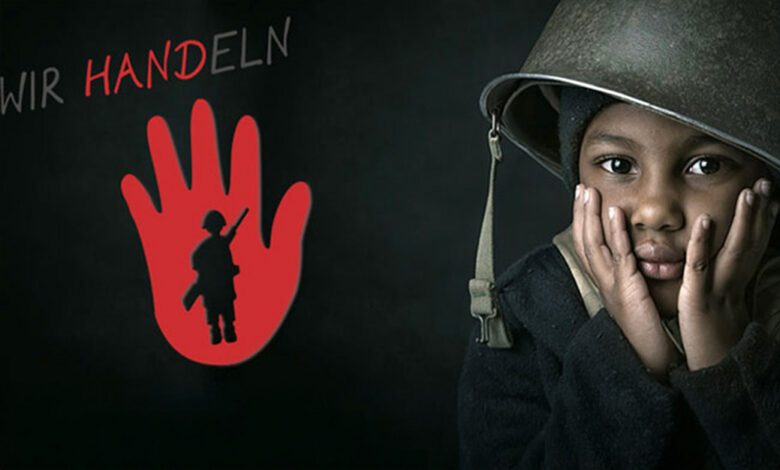
The name Red Hand Day is associated with the symbol of a red palm print, which is used as a sign of protest against the recruitment of children. The campaign with this symbol started in the early 2000s in Germany and quickly spread to other countries.
In some conflicts, children were recruited at the age of 8–10. Human rights activists have documented cases of young children being forced to participate in punitive actions against their own communities to prevent them from returning home.
In Uganda, during the war with the Lord’s Resistance Army, thousands of children were abducted from schools and villages. Some were forced to become fighters, others were “wives” of warlords, and attempts to escape were publicly punished.
In Sierra Leone, during the civil war, child soldiers were often drugged before fighting to reduce fear and increase aggression. After the war, rehabilitation programs included long-term psychological assistance because of the high rate of post-traumatic stress disorder.
In Colombia, illegal armed groups have recruited minors for decades. Some children joined because of poverty or lack of access to education, while others were forced to join under the threat of violence.
The International Criminal Court first issued a verdict for the recruitment of child soldiers in 2012, when Congolese field commander Thomas Lubanga was sentenced to 14 years in prison for using children under the age of 15 in combat.
According to UNICEF, girls make up a significant proportion of children recruited into armed groups, but their participation is often underestimated because their roles are not limited to combat missions and remain less visible.
In Ukraine, after 2014, international organizations recorded cases of the use of minors in the armed conflict in the east of the country, in particular to perform auxiliary functions. Ukrainian legislation sets 18 years as the minimum age for military service, and the facts of the involvement of children were investigated by law enforcement agencies.
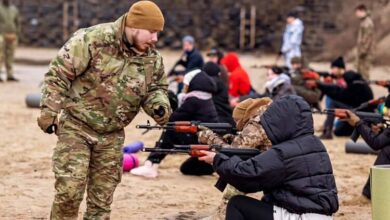
Following Russia’s full-scale invasion in 2022, Ukrainian and international agencies reported the militarization of children in the temporarily occupied territories, including through participation in paramilitary youth movements and weapons training. Such actions are considered violations of international humanitarian law.
Demobilization programs for child soldiers in various countries include not only release from armed formations, but also the restoration of documents, return to school, vocational training, and community work, as former child fighters are often stigmatized in their own villages.
Darwin Day (International Day of Science and Humanism)
This date is dedicated to the birthday of the English naturalist Charles Darwin, who was born on February 12, 1809. The idea of an annual commemoration emerged in the late 20th century in scientific and educational circles, which sought to emphasize the importance of evolutionary theory for modern biology and the development of scientific thinking.
Charles Darwin is best known for his 1859 work On the Origin of Species, in which he substantiated the mechanism of natural selection as the driving force of evolution. His research was based on materials collected during a circumnavigation of the globe on the HMS Beagle in 1831–1836. Darwin Day is used to promote science, critical thinking, and humanistic values associated with rational knowledge of the world.
Interesting facts
During the voyage on the HMS Beagle, Darwin suffered from chronic seasickness and spent most of his time on land, collecting specimens of plants, animals, and fossils that later became the basis of his scientific conclusions.
In 1871, Darwin published the work “The Descent of Man”, where he put forward the thesis of the common origin of humans and other primates, which caused heated discussions in scientific and religious circles.
The manuscript of “The Origin of Species” was published in a print run of about 1,250 copies, and the first edition was sold out on the day the book was released in November 1859.
For a long time, Darwin did not dare to publicly announce his ideas because of the possible reaction of society. The impetus for the publication was a letter from the naturalist Alfred Russel Wallace, who independently formulated a similar theory of natural selection.
Darwin studied earthworms for more than 40 years and proved their role in soil formation; his last book was devoted to this topic.
In Ukraine, the ideas of evolution were actively discussed already in the second half of the 19th century; professors of Kyiv and Kharkiv universities published works on comparative anatomy and zoology, relying on Darwinian approaches.
In the 20th century, the theory of evolution in the USSR came under political pressure due to support for the pseudoscientific concepts of Trokhim Lysenko. Genetics and Darwinism were officially criticized, and some scientists were persecuted.
The remains of Charles Darwin are buried in Westminster Abbey in London next to Isaac Newton, which became a symbol of recognition of his contribution to science.
International Marriage Agency Day
This holiday was launched at the beginning of the 21st century on the initiative of representatives of the dating industry, who work in the field of international and local mediation in creating families. The date is not related to state decisions or international conventions, but it was supported by professional associations in different countries.
Marriage agencies work as intermediaries between people looking for a partner for a serious relationship or starting a family. They create client profiles, check personal data, organize acquaintances and meetings, and provide consultations on intercultural communication. With the development of the Internet, a significant part of the services has moved to an online format, but classic personal selection agencies continue to operate, especially in the segment of international acquaintances.
Interesting facts
One of the first well-known marriage bureaus opened in London in the mid-17th century; its clients were mainly representatives of the middle class who did not have a wide range of social contacts.
In the 18th century, marriage advertisements were regularly published in European newspapers, which described in detail the property status, origin and religion of the potential bride or groom; such texts sometimes took up several paragraphs and contained specific financial conditions.
In the United States, so-called “mail-order brides” appeared at the end of the 19th century – women who, through catalogs and correspondence, agreed to move to distant states to marry farmers or gold miners.
In Japan, the omiai tradition involves official mediation between families when searching for a partner; modern agencies partially follow this model, combining it with digital platforms.
In Ukraine, marriage agencies have been actively developing since the 1990s, focusing on international dating; some companies specialize in organizing tours for personal meetings between foreign clients and Ukrainian women.
Some international agencies are introducing mandatory video verification of clients to prevent fraud, as the dating industry remains one of the most vulnerable to fake profiles.
In South Korea, there are state support programs for marriage mediation for residents of rural regions, where there is a gender imbalance and a decrease in the population.
Some countries have introduced licensing of international marriage agencies due to cases of human trafficking and abuse; legislation provides for the verification of contracts and mandatory information to clients about their rights when marrying abroad.
Historical events on this day
1502 – a decree of Queen Isabella of Castile was issued, which forbade Muslims in the territories under her control to openly practice Islam; the document was a continuation of the policy of religious unification after the end of the Reconquista and provided for either baptism or exile.
1541 – Spanish conquistador Pedro de Valdivia founded the city of Santiago, which later became the capital of Chile; the settlement was laid in a strategically advantageous valley, which allowed the Spanish administration to establish itself in the region.
1832 — Ecuador announced the annexation of the Galapagos Islands, including the archipelago in its composition; later these islands gained world importance due to research in the field of biology and evolution.
1852 — according to the literary version of events, Nikolai Gogol burned the manuscript of the second volume of Dead Souls, considering the text unfinished and artistically imperfect; this step significantly influenced the perception of his creative heritage.
1914 — the first flight of the Ilya Muromets aircraft designed by Igor Sikorsky with 16 passengers on board took place; the multi-engine machine became one of the largest in the world at that time and initiated the development of heavy aviation.
1918 — in Korosten, the Small Council of the Ukrainian People’s Republic approved the Vladimir Trident as the large and small emblem of the state; the symbol of the princely era became the official sign of Ukrainian statehood.
1921 — Georgian Bolsheviks launched an armed uprising against the government of the Democratic Republic of Georgia; within a few days the Red Army crossed the border, which led to the establishment of Soviet power.
1924 — the mummy of Pharaoh Tutankhamun was removed from the tomb more than a year after its discovery by archaeologist Howard Carter; the process took place under the close attention of the press and the scientific community.
1931 — in the presence of Pope Pius XI and inventor Guglielmo Marconi, Vatican Radio began broadcasting; the new radio station became a tool for the Holy See to communicate with believers in different countries.
1936 — the first exhibition of Ukrainian folk art opened in Kyiv at the Museum of Ukrainian Art; the exhibition presented traditional crafts and decorative forms from different regions.
1939 — the first elections to the Soyum of Carpathian Ukraine were held in the autonomous Transcarpathia; the vote became a stage in the formation of the political life of the region on the eve of the proclamation of statehood.
1946 — Winston Churchill first publicly used the phrase “No Comments,” which later became a common formula for evading an answer in political practice.
1947 — French fashion designer Christian Dior presented the New Look collection; silhouettes with an emphasis on the waist and full skirts marked a turning point in post-war fashion and returned Paris to the status of an influential center of style.
1949 — panic broke out in the capital of Ecuador, Quito, after the radio broadcast of the Spanish-language adaptation of “War of the Worlds”; an angry crowd set fire to the radio station and the newspaper office, accusing them of disinformation.
1960 — The first Ukrainian research nuclear reactor VVR-M was put into operation in Kyiv at the Institute of Physics of the Academy of Sciences of the Ukrainian SSR; the facility was used for scientific experiments in the field of nuclear physics.
1991 — The Supreme Soviet of the Ukrainian SSR adopted a decision to restore the Crimean Autonomous Soviet Socialist Republic within the Crimean region within the Ukrainian SSR; the document defined the new status of the region during the period of political transformations.
1992 — Ukraine established diplomatic relations with Latvia, starting an official interstate dialogue after the restoration of the independence of both countries.
1992 — The Democratic Socialist Republic of Sri Lanka recognized the independence of Ukraine, which became part of the process of international recognition of Ukrainian statehood.
1998 — The Verkhovna Rada of Ukraine adopted the Law “On Elections of Deputies to the Verkhovna Rada of the Autonomous Republic of Crimea” and called for early elections to the Crimean parliament, defining the legal principles for the formation of its composition.
2002 — The trial of Slobodan Milosevic began in The Hague at the International Criminal Tribunal for the former Yugoslavia; this was one of the first cases of a former head of state being held accountable for war crimes at the international level.