June 8 is World Oceans Day, International Housewife and Homemaker Day, and Vacuum Cleaner Birthday. This day in world history is distinguished by events that changed borders, scientific ideas, everyday habits, cultural symbols, and the fate of entire communities.
World Oceans Day
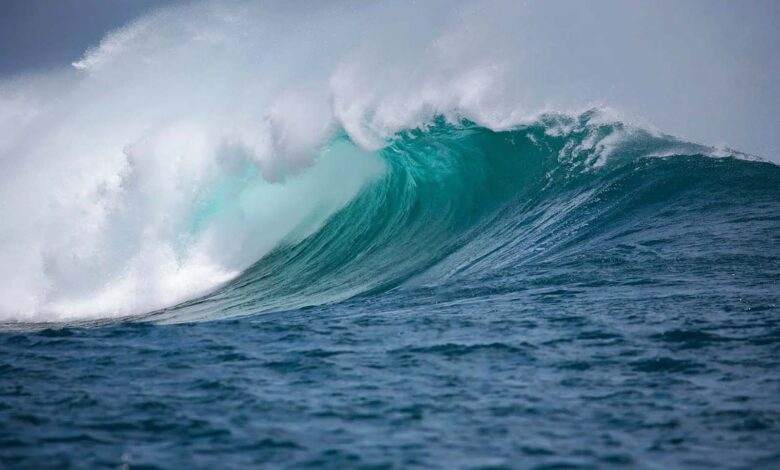
This day is celebrated to draw attention to the state of the World Ocean and its importance for life on Earth. The oceans cover more than 70% of the planet’s surface, regulate the climate, produce a significant part of oxygen, and provide livelihoods for billions of people through fishing, maritime transportation, and other activities. The day is designed to remind us of the need for responsible use of marine resources and the preservation of natural ecosystems.
One of the main problems facing the oceans remains plastic pollution, overfishing, the destruction of coral reefs, and the effects of climate change. Rising water temperatures, ocean acidification, and a decline in biodiversity affect marine organisms and entire ecosystems. Preserving the oceans requires reducing pollution, protecting marine areas, and more rational use of natural resources.
Interesting facts
The Pacific Ocean is home to the Mariana Trench, the deepest known place on Earth. Its deepest point, the Challenger Deep, is almost 11 kilometers deep, and the pressure there is more than a thousand times greater than atmospheric pressure at sea level.
In 1960, the bathyscaphe Trieste made the first-ever dive to the bottom of the Mariana Trench. During a brief stay at maximum depth, researchers saw living sea creatures, which was a surprise to the scientific world of the time.
More than 80% of the ocean floor has not yet been mapped in detail and remains poorly explored. Humanity has more accurate maps of the surface of the Moon and Mars than much of the seabed of its own planet.
The longest mountain range on Earth is hidden underwater. The mid-ocean ridge system stretches for about 65 thousand kilometers and covers almost all the oceans of the world.
In the depths of the ocean there are hydrothermal springs, where the water temperature can exceed 350 degrees Celsius. Despite such conditions, unique ecosystems flourish around them, which receive energy not from the Sun, but from chemical reactions.
Hidden under the waters of the World Ocean are thousands of sunken ships from different eras. Among them are ships of Ancient Rome, medieval merchant ships and warships of the 20th century, many of which have not yet been found.
There is an underwater waterfall in the World Ocean. It is located near the island of Mauritius in the Indian Ocean. In fact, the water does not fall down, but this effect is created by streams of sand and silt that move along the seabed, creating the impression of a huge waterfall.
Sperm whales can dive to a depth of more than 2 kilometers and hold their breath for more than two hours. To do this, their body accumulates large reserves of oxygen in the muscles and blood, which makes these animals some of the best divers among mammals.
There is an area in the Pacific Ocean called “Point Nemo”. This is the most distant place from any land on the planet. The closest people to this point are sometimes not on Earth, but on board the International Space Station during its flight over this area.
Huge fields of so-called “underwater footprints” have been discovered on the bottom of the Atlantic Ocean. These are traces of the movement of icebergs that scratched the seabed with their underwater parts thousands of years ago.
Huge reserves of fresh water are hidden under the oceans. In 2013, scientists discovered giant reservoirs of water under the seabed, the volume of which may exceed the reserves of some terrestrial lakes.
The loudest natural sound recorded by humans in the ocean is called the “Bloop.” It was recorded in 1997 in the South Pacific. Initially, it was thought to be caused by an unknown giant creature, but it was later determined that the sound was caused by cracks and collapse of Antarctic ice.
Living creatures have been found in the deep ocean that have remained virtually unchanged for tens of millions of years. Some species of sharks, sponges, and crustaceans have retained features that date back to the dinosaur era.
Millions of tons of potato-shaped metal nodules lie at the bottom of the Pacific Ocean. They contain manganese, nickel, cobalt, and copper and grow extremely slowly—only a few millimeters per million years.
International Housewives and Homemakers Day
This day is dedicated to people who are involved in running a household, caring for a home, raising children and organizing the daily life of a family. The idea for its introduction belongs to Gabriela Delgado, an employee of the National Institute of Women in Mexico City. The day is designed to draw attention to the significant amount of domestic work that often goes unnoticed, although it requires time, responsibility and constant effort.
Housework covers a wide range of responsibilities – from cooking and cleaning to caring for children, elderly relatives and planning the family budget. In many countries, more and more men are also choosing the role of homemakers, taking on the bulk of household chores. International Housewives and Homemakers Day reminds us of the importance of this work for the well-being of the family and the normal functioning of society.
Interesting Facts
In ancient Rome, wealthy families often kept special household books, where they recorded in detail the costs of food, clothing, housing maintenance, and the work of servants. Such records today help historians study the daily life of the ancient world.
The first household vacuum cleaner was so large that it was transported by horse-drawn carriage. In the early 20th century, the machine was left outside, and long hoses were stretched through the windows of houses.
In many medieval European cities, washing clothes was a collective affair. Residents gathered near rivers or special public laundries, where they could spend the whole day at work.
Refrigerators began to spread widely in homes only in the 1920s and 1930s. Before that, products were stored in icehouses, where large blocks of natural ice were regularly delivered.
The first electric washing machines appeared in the early 20th century, but many models did not have protective mechanisms. Because of their exposed moving parts, they were considered quite dangerous to use.
In Japan, there is a tradition of carefully keeping a home financial diary called “kakebo”. It was started at the beginning of the 20th century, and it still helps millions of people control family expenses and savings.
Birth of the vacuum cleaner
The birth of the vacuum cleaner is associated with June 8, 1869, when the American Ives McGaffney received a patent for one of the first mechanical devices for dust collection. His invention was manually operated: a person turned the handle, and the mechanism created a draft to suck up dust. The device was inconvenient compared to modern models, but it was an important step in the development of household appliances.
The appearance of the vacuum cleaner changed the idea of household cleaning, which previously required much more physical effort and time. Before the spread of such devices, dust was knocked out of carpets on the street, swept with brushes or collected by hand. Over time, vacuum cleaners became more compact, received electric motors, dust bags, filters and various attachments, turning into one of the most common household appliances in the home.
Interesting facts
Ives McGaffney’s first vacuum cleaner was called the “Whirlwind”. It did not have an electric motor, so during cleaning it was necessary to simultaneously move the device and turn the handle, which made it quite difficult to use.
At the beginning of the 20th century, some vacuum cleaners were so large that they could not be brought into the house. The machine was placed outside, and long hoses were pulled through the windows to the rooms that needed to be cleaned.
The first vacuum cleaning services were sometimes perceived as a spectacle. People would come to watch the machine extract dust from carpets and furniture, because for that time such technology seemed almost incredible.
One of the early inventors of the vacuum cleaner, Hubert Cecil Booth, came up with his device after seeing a machine that blew dust off train seats. He realized that it was more efficient not to blow dust out, but to pull it in.
The first electric vacuum cleaners were expensive, so they remained a luxury item for a long time. They could only be afforded by wealthy families, hotels, and large institutions.
Before the advent of vacuum cleaners, carpets were often taken outside and beaten with special beaters. In large houses, this was a difficult, regular job, especially in winter or rainy weather.
Modern robot vacuum cleaners did not appear immediately after the invention of automated technologies. The first models were expensive, did not work for long, and often moved around the room chaotically, but they were the ones who started a new direction in household appliances.
During archaeological excavations in Pompeii, well-preserved kitchens, bakeries, and utility rooms were found. The eruption of Vesuvius effectively preserved many details of the city’s inhabitants’ daily lives for almost two thousand years.
Historical events on this day
1668 — Petro Doroshenko was elected Hetman of Ukraine. His reign fell on the difficult period of the Ruin, when Ukrainian lands were divided between the influences of neighboring states, and Doroshenko himself sought to unite Right-Bank and Left-Bank Ukraine under one authority.
1783 — The eruption of the Laki volcano began in Iceland, which became one of the most destructive in European history. Ash and poisonous gas emissions caused the death of livestock, famine, and severe climatic consequences that were felt far beyond the borders of Iceland.
1815 — The Congress of Vienna, which redrawn the political map of Europe after the Napoleonic Wars, ended. Its decisions determined the balance of power between the great powers for decades to come.
1815 — The Duchy of Warsaw was annexed to the Russian Empire under the name of the Kingdom of Poland. It received limited autonomy, but was actually under the control of the Russian emperor.
1824 — Canadian Noah Cushing patented a machine for washing and felting wool. This invention was important for textile production, as it helped speed up the processing of woolen raw materials.
1827 — The Saki mud resort was founded. Its healing mud later became known far beyond the borders of Crimea and was used to treat diseases of the musculoskeletal system and the nervous system.
1869 — American Ives McGaffney patented the vacuum cleaner. His device was manually operated and required physical effort, but it was one of the first steps towards the creation of modern household cleaning appliances.
1915 — Kazimir Malevich created his first “Black Square”. This work later became one of the most famous avant-garde paintings and a symbol of a radical rethinking of 20th-century art.
1918 — The Democratic Republic of Georgia was proclaimed. It emerged after the collapse of the Transcaucasian Federation and tried to establish its own statehood in difficult conditions after World War I.
1919 — During the Chortkiv Offensive, the Ukrainian Galician Army captured Chortkiv and forced the Polish troops to retreat about 120 kilometers. The operation became one of the most notable pages of the fighting of the ZUNR.
1924 — British climbers George Mallory and Andrew Irwin set off to conquer Everest. They did not return from the expedition, and disputes about whether they could have reached the summit earlier than Edmund Hillary and Tenzing Norgay continue to this day.
1928 — The first air flight from the USA to Australia was made. The flight was an important achievement of early aviation and showed the possibilities of long-distance intercontinental routes.
1934 — The USSR adopted a law “on treason”, which provided for punishment not only for the accused, but also for their family members. This norm became one of the instruments of the repressive policy of the Soviet government.
1940 — The discovery of plutonium, the 94th element of the periodic table, was announced. It later played a significant role in the development of nuclear energy and military technology.
1947 — Navigation across the Dnieper River was opened for the first time. This was of great importance for transport, trade, and economic ties between different regions of Ukraine.
1949 — George Orwell’s novel “1984” was published. The book became one of the most famous works about totalitarianism, state control, propaganda, and distortion of the truth.
1965 — The American companies Frito-Lay and Pepsi-Cola merged to form PepsiCo. The merger became the basis for the emergence of one of the largest food corporations in the world.
1967 — In the Mediterranean Sea, Israeli air and naval forces mistakenly attacked the American ship USS Liberty. The ship was observing hostilities in the region, and the incident led to numerous casualties and diplomatic tensions.
1988 — The first Bulgarian, Alexander Alexandrov, flew into space with a Soviet crew. His mission was an important event for the Bulgarian space program.
1992 — The first issue of the newspaper “Flot Ukrainy” was published. The publication became the only Ukrainian-language newspaper of the Ukrainian Navy in Crimea.
1993 — The all-Ukrainian miners’ strike began. It was associated with the difficult economic situation, wage arrears, and social tension in the mining regions.
1999 — The International Baccalaureate program became available in Ukraine for the first time. It was offered to students by the Pechersk International School in Kyiv, opening up the opportunity to study according to international educational standards.