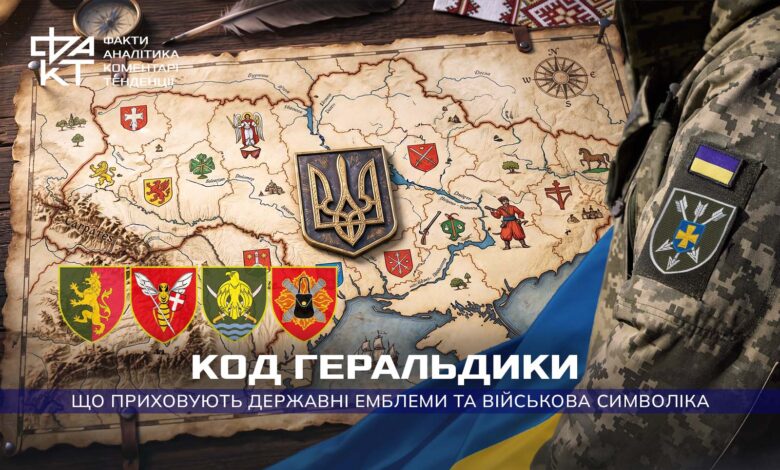
The modern world, suffocating in gigabytes of digital noise, often forgets about the existence of a language capable of declaring war, recording a triumph or saving an entire nation from oblivion without a single word. We are used to perceiving heraldry as a dusty medieval exotic, but now an uncompromising battle of visual brands is unfolding on the front lines, the entrance gates of European cities and state seals. Each line, predatory beast or laconic geometric sign on a chevron is not a decorative whim, but a visual passport that people carry through the centuries. Without understanding these encrypted codes, we risk losing a huge layer of our history, while the ability to read the language of heraldic symbols reveals amazing secrets.
Heraldry as a language of status: who created symbols of power and why
International Heraldry Day, celebrated on June 10, encourages us to take a deeper look at the study and preservation of this discipline, which has long formed the visual framework of the social and state system. Although the original emblems were created exclusively for a pragmatic purpose, namely to identify iron-clad knights during the chaos of battles or tournament competitions, over time they transformed into a unique language of symbols. The tradition of celebrating this date dates back to the chronicle year 1128, when the English monarch Henry I Beauclerc, knighting Geoffrey V Plantagenet, presented him with a shield with golden lions, which became one of the earliest officially recorded facts of the transfer of a family emblem by inheritance. Today, the scope of such signs has gone far beyond medieval militarism, as modern republics, municipalities, academic institutions and individual families actively use their own symbols.
The formation of heraldry (from the Latin heraldus, heraldica, ars – “announcer”, “herald”) took place according to strict canons, where the key role was played by heralds – special officials who not only unmistakably recognized the belonging of each sign, but also monitored the purity of the rules and announced the fighters. The basis of the classical visual code was a strictly limited set of colors and metals, where gold and silver form a separate privileged group, which clearly contrasts with the fixed palette of red, blue, green, black and purple shades. An example of the amazing viability of these canons is Denmark, whose national emblem with three blue lions on a gold background has been in continuous operation for over 7 centuries, maintaining the status of the oldest unchanging symbol in the world. The widespread popularity of the lion image has generally turned it into the most replicated animal in European emblems. At the same time, the Ukrainian trident demonstrates a completely different vector of development, since it traces its lineage to the ancient princely signs of the Rurik dynasty and was minted on coins and seals back in the days of Kievan Rus.
The significance of these visual passports in medieval cities was so significant that their silhouettes necessarily appeared on entrance gates, municipal coins, flags and official documents as the main legal confirmation of autonomy. To unify this system, a special, highly technical description language was developed, the specific terminology of which allows specialists to flawlessly reproduce graphics using only text.
And if the classical canons gravitated towards predatory animals, then the development of crafts and geographical discoveries later enriched world practice with very atypical elements. As a result, hardworking beavers and bees, sea ships, books and the first accurate astronomical instruments began to appear on the shields of that time, along with mythical creatures, which turned heraldry into a mirror of the intellectual development of mankind.
Coat of arms instead of a passport: what medieval symbols told about a person
The history of the emergence of heraldic terminology is closely connected with the military culture of the Middle Ages. In many European linguistic traditions, the name of this symbol directly indicates combat equipment, since the first such signs appeared precisely among professional warriors. This also explains the presence of purely military elements in the structure of the coat of arms, such as a protective shield, a combat helmet or a tent. A similar path of development of the term can be traced in early Slavic practice, where the concept of weapons or jewels was used to denote such signs for a long time.
However, later the word “coat of arms” became established in most Slavic peoples. It has Germanic roots and originally meant inheritance. Such a linguistic borrowing clearly reflects the main function of the sign, which is its mandatory transmission to descendants through the male line.
Despite the fact that heraldry was born from the military needs of knighthood, a clear sign system quickly attracted other social strata of that time. Representatives of the clergy and wealthy burghers began to create their symbols, who tried to emphasize their special social status. Already in the 14th century, contemporary jurists, in particular Bartolo di Sassoferrato in his work on signs and weapons, legally recorded the right of each person to freely choose and use their own distinctive symbol. Specialists of that time equated coats of arms with names, noting that both of these tools were created with the same purpose – to identify and distinguish individuals in society.
Since the coat of arms, by its very nature, served as a visual passport of a person, the authors of these emblems tried to encode in them not only the pedigree, but also personal triumphs, professional secrets or even subtle humor. Thanks to this, heraldic history has preserved many unique examples where the symbolism says much more about the owner than dry biographical information.
A special place in this process was occupied by the so-called eloquent coats of arms, built on a play on words or a direct depiction of the owner’s surname. This was an extremely popular technique, which was used by both poor nobles and influential European families. For example, if a person’s surname was associated with a certain animal, plant, or household item, this object became the central element of the composition. This approach made the emblem as understandable as possible for the society of that time, where not everyone could read, but everyone could decipher the visual rebus and instantly recognize the owner of the house or the owner of the property.
Over time, personal emblems began to reflect real, sometimes curious life events or professional achievements. There are known cases when rulers or guilds allowed a specific detail to be added to the family sign in memory of a distinguished service. Thus, exotic animals or details of foreign ships appeared in the heraldry of some sailors or merchants, which indicated successful long-distance voyages. In other families, specific instruments were depicted on the shields, from surgical knives to architectural compasses, which emphasized the intellectual or artisanal contribution of the family to the development of the state.
Secret meanings and denials of traditions have always been a separate intrigue. Since the law of the time, as Bartolo di Sassoferrato noted, allowed the construction of symbols quite freely, some artists and thinkers used their coat of arms as a manifesto. They encrypted philosophical rebuses in drawings, where the combination of incompatible elements – for example, a snail and a star – could mean the pursuit of a high goal while maintaining life wisdom and leisure. Such a personal approach turned each shield into a unique imprint of human destiny, which later became the main relic for many subsequent generations.
A vivid example of an eloquent rebus based on a play on words is the emblem of the Italian Borromeo family. The central element of their symbolic arsenal was three intertwined rings. The peculiarity of this composition was that the rupture or removal of even one ring instantly destroyed the entire structure. This visual image not only hinted at the strength of family ties and the union of three influential families, but also created a graphic pun that commented on the indissolubility of their status and internal unity.
Another approach is demonstrated by the legacy of the outstanding German artist Albrecht Dürer. He independently designed his family symbol, turning it into a deep allegory of his own origin and life path. His shield depicts an open door under a canopy. This is a direct visualization of his father’s surname, because the Hungarian village where his father, a jeweler, came from was called Aytos, which translates as “door”, and the German word “Tür” has the same meaning. The winged man added later at the top symbolized creative flight and intellectual labor, combining artisanal roots with the artist’s personal triumph.
An example of how unique professional achievements and state merits were captured in symbolism is the badge of the English navigator Francis Drake. When Queen Elizabeth I elevated him to knighthood, there was a need to create a new shield that would reflect his real merits to the crown. His new coat of arms featured two polar stars, symbolizing the North and the South, and a wavy line ran between them — the personification of the ocean. The composition was crowned by a ship circling the globe. Such a drawing became a direct chronicle of his round-the-world voyage and navigational triumphs, forever fixing the historical status of the owner in official heraldry.
Chevron as a weapon: how symbols shape the fighting spirit and reputation of brigades
Ukrainian military heraldry is currently experiencing a true renaissance, which in terms of its scale and speed of formation has no analogues in modern military history. What was previously created for decades in the offices of European herald masters, in Ukraine was formed directly on the battlefield. Military symbols have transformed from a formal element of uniforms into a powerful weapon of psychological influence, a marker of identity and a tool of strategic communications. The modern design of sleeve insignia of Ukrainian brigades and battalions is based on three fundamental principles: historical continuity, de-Sovietization and conceptual minimalism. A soldier who wears a chevron with a deep historical or symbolic background automatically becomes part of the myth of the unit. This increases fighting spirit and creates a sense of elitism.
It is also important to understand that the era when the army was anonymous has passed. Brigades with a strong visual brand, such as the 3rd Separate Assault Brigade with its recognizable stylized idea of three lines forming a sign similar to the Wolf’s Hook rune, or the “Offensive Guard” brigades, are much more successful in attracting volunteers and collecting donations for technical support. The presence of high-quality clothing, the basis for which is a military patch, has become the norm.
The symbolism of regular brigades is most often tied to the geography of their formation or to the names of historical figures assigned to the units. For example, the 24th Separate Mechanized Brigade named after King Danylo bases its identity on the heritage of the Kingdom of Rus, so the central element of its emblem is the golden Galician lion resting on a rock – the historical coat of arms of the Galician-Volyn state. At the same time, the 72nd Separate Mechanized Brigade named after the Black Zaporozhians refers to the military traditions of the Ukrainian Revolution of 1917–1921, using the symbols of the cavalry regiment of the UNR Army of the same name, which consists of a black Cossack skull and the slogan “Ukraine or death.”
A different approach was demonstrated by the 93rd Separate Mechanized Brigade “Kholodny Yar,” which borrowed the symbols of the Cherkasy region’s liberation movement of the early 20th century, depicting a black raven on its chevron as a hint at the pseudonyms of the Kholodny Yar atamans, as well as oak leaves, indicating the relict forests of Kholodny Yar as a center of resistance. The 10th separate mountain assault brigade “Edelweiss” also clearly marks its geographical and tactical specificity, the emblem of which combines the contours of the three highest peaks of the Ukrainian Carpathians, the edelweiss flower from the highlands and crossed Hutsul bartkas, which are traditional axes and cold weapons of the inhabitants of this region.
Unlike linear formations, special forces and assault brigades use more aggressive, metaphorical images that reflect the nature of their combat missions and the philosophy of struggle. The special operations forces turned to ancient Ukrainian folklore and the image of a warrior-beast, choosing as their totem a werewolf, girded with a magical belt-nauz, which, according to legends, protected the characters and helped to change their appearance for imperceptible penetration into the enemy’s rear. The Main Intelligence Directorate built its symbol on the principle of direct confrontation with Russian special services, because since the former emblem of enemy intelligence was a bat, Ukrainian military intelligence depicted an owl as a natural predator hunting bats, and in its paws this owl holds a sword, the tip of which is directed directly at the map of the Russian Federation.
When the coat of arms becomes a manifesto: stories of power, struggle and survival
When you look at world heraldry, you quickly understand that state emblems can be imaginatively divided into two categories. The first are large manifestos that have shaped the geopolitical map for centuries and carried an important ideological charge, under whose banners borders were redrawn. The second is pure, concentrated originality, where nations, as if disregarding European canons, encrypted their own, sometimes very eccentric, authenticity in their symbols.
Let’s start with those countries whose symbols represent, as it were, the concentrated DNA of nations accustomed to dictating terms or fighting for their right to exist in absolute minorities. Here it is impossible to bypass the USA and its famous bald eagle. When in 1782 the founding fathers approved the Great Seal, they laid in it the ideal psychological duality of the new superpower. In one paw, the eagle clutches an olive branch, and in the other – thirteen arrows. The direction in which the bird’s head looks has determined world politics for centuries. According to legend, in peacetime the eagle looks at the olive branch, but as soon as a great war breaks out, its gaze turns in the direction of the arrows. This is a coat of arms warning that the country is open to conversation, but its arrows are always sharp and calculated.
A completely different, but no less dramatic story is told by the Ukrainian Trident. This is perhaps one of the most laconic and at the same time most mysterious symbols on the planet, which traces its lineage back to the princely signs of the Rurikovichs and Vladimir the Great. While European monarchs overloaded their shields with dozens of details, gold chains and ermine fur, Ukrainian heraldry chose the path of absolute minimalism, which was millennia ahead of its time. Scientists still argue about what exactly the coat of arms carries: a stylized falcon falling on prey, the trident of the sea god or the coded word “Will”. However, everyone agrees that the Trident has become a symbol of chronic resistance and identity that no empires have been able to dissolve. This is a coat of arms that has turned from a princely brand into a bulletproof vest for an entire nation.
The history of the Ukrainian coat of arms is a fascinating chronicle of long-term survival, where ancient magic and strict modernity intertwined in one graphic sign. It all started with the laconic two-pronged trident of Svyatoslav the Brave, which served not for beauty, but as an iron confirmation of princely power and the right to pass laws. Later, his son, Volodymyr the Great, added a third element to his father’s sign, creating the same trident that was minted on the first gold coins of Rus. This symbol managed to go through the centuries, survive the times of the Ukrainian People’s Republic in the elegant graphics of Vasyl Krychevsky and survive during the cruel Soviet bans, when one of its drawings could cost you your freedom. Today, this continuity is coming to life with new force: while the trident proudly flutters as the official small State Coat of Arms, its ancient predecessor, the princely two-pronged chevron, has returned to the chevrons of the Special Operations Forces soldiers, firmly linking the era of brave princes with the modern struggle for independence.
Great Britain is confidently entering this league. Its coat of arms has become a classic reflection of royal ego and historical claims. On the shield, formidable English lions and a Scottish lion rearing up fight for attention. But the most interesting thing is hidden in the white unicorn that holds this shield on the right side. In medieval myths, the unicorn was considered an incredibly dangerous, wild and untamed animal that could not be tamed. That is why this mythical beast is chained in a gold chain on the British coat of arms. This is a metaphor for the Scottish savagery that was once tamed by the English crown. True, this chain looks quite fragile, which adds a special historical irony to the coat of arms against the background of modern talk about Scottish independence.
Now let’s move to the other pole of heraldry, to the very place where countries decided not to measure themselves by ambitions, but honestly and originally told about their realities. Take Botswana, which created perhaps the most realistic manifesto of survival in the wild. The central place on their shield is occupied by three ordinary gears, hinting at diamond mining, and bulls’ heads, symbolizing the main wealth of local farmers. But the main masterpiece is concentrated in the motto “PULA”, written on a ribbon held by two zebras. This word translates as “rain”, because in the Kalahari Desert water symbolizes life. Botswanans adore rain so much that they named their currency and the main greeting when meeting with this word. In fact, their coat of arms tells of numerous factories, cattle. However, such a natural phenomenon as precipitation is perhaps the most important factor for the country.
No less impressive is Mozambique, which in the mid-1970s of the last century decided that sophisticated European metaphors would be too boring for their nation, which had just won independence in a bloody guerrilla war. They took and placed in the center of their state emblem a Kalashnikov assault rifle with an attached bayonet. For the rest of the world, this looked like a militaristic shock, but for the Mozambicans, the Soviet AK-47 became the main instrument of decolonization. The visual rebus, consisting of an assault rifle crossed with a hoe on top of an open book, tells the story of a people who have just come out of the trenches, are going to feed the country and, finally, learn to read. And although times have changed, the local parliament refuses to remove the machine gun from the coat of arms, because for them it is a symbol that freedom is not given, but earned in battle.
Finally, let’s take a look at the Isle of Man, which has hidden a real anatomical paradox in its coat of arms. There is a triskelion drawn there – three human legs in knightly armor, growing from one point and twisting in a circle. This symbol has accompanied the island for 8 centuries, and its motto sounds proudly: “If you don’t throw it, it will stand.” The Isle of Man has been torn apart by the Vikings, the English and the Scots for centuries, it passed from hand to hand like a hot cake. The locals simply recorded their philosophy of life, according to which, if they were not turned by a historical whirlwind, they would still maintain balance.
The coat of arms has never been just a decorative element or an abstract picture. In a world overloaded with information noise, the heraldic code remains almost the only way to say the most important thing without a single word. Every line, color or specific symbol in modern emblems turns into someone’s conscious choice, a manifesto or a reminder of the price that had to be paid for the right to have one’s own name. Given how quickly contexts change today, the symbols on our sleeves and flags determine not only where we came from, but also what we are ready to stand for to the end.