
Housing, kindergarten, language and years of adaptation: how the Czech Republic treats Ukrainian refugees

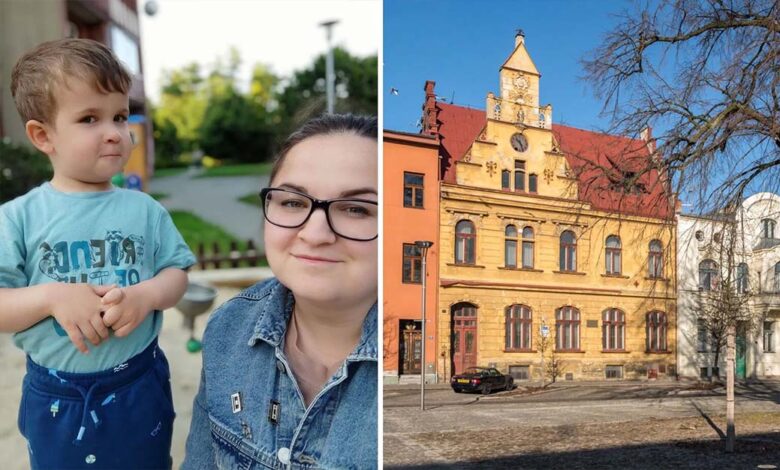
The forced departure of Ukrainians to the Czech Republic after the start of a full-scale war for many families has turned into a complex process of daily integration, in which the attitude of the host country, the work of local institutions, and small everyday mechanisms play no less a role than aid programs. A refugee from Ukraine told about how she adapted in a foreign country and how the Czech Republic treats our citizens.
Where hospitality ends and integration begins
Daria’s move to the Czech Republic with her son in April 2022 began without a ready-made plan for emigration, but with a clear desire to protect her child from the constant danger she felt in Ukraine after the start of a full-scale war. First, they left Kyiv to their parents in Dnipro, where the lack of shelter nearby and the feeling that “something was constantly flying overhead” gradually replaced the hope that they could simply wait it out and return to their usual life, which included work, a home, and a kindergarten where the child was already settled.
Daria describes the beginning of the Czech period as life in a very small town with a friend’s family, where the help was as practical and intensive as possible: support, translation, trips to vaccinate the child, registration of temporary protection, explanations of how local services work. This stage shows that attitudes towards Ukrainians are often shaped not by loud words, but by the willingness of specific people to spend their time on other people’s affairs, when a newcomer has neither insurance, nor documents, nor language, and sometimes even basic support under their feet.
Along with gratitude, this story also sounds like a tension familiar to many refugees: living with another family, different daily habits, the presence of small children on both sides, the fear of being superfluous. That is why the next step was an attempt to find housing, and the search went through the municipalities of neighboring cities, where Darya did not ask for free shelter, but immediately explained that she was ready to pay.
A separate layer in this experience was how the Czech Republic sometimes perceives Ukrainians who came from the war. It is not always easy for local residents to imagine that a person fled not “from poverty”, but from a threat, having a normal life, job, salary and professional prospects. Darya emphasizes that she had housing and a job in Ukraine, and her child went to a good state kindergarten, and this detail is important because it explains the psychology of many families: leaving is not perceived as choosing the “best”, it is perceived as a forced exchange of stability for security.
The language barrier as the most difficult starting test
Darya calls the language factor the most difficult in the first months, and not in the abstract sense of “I didn’t know the language”, but in a very concrete one – people addressed her in Czech and expected an answer in Czech, while she could not speak it. In small towns, according to her observations, English is almost non-existent among older people, and communication is either in Czech or German, so any bureaucratic steps that are done automatically at home turn into a difficult quest in a new country, where without a guide it is easy to lose time or chance.
Daria took advantage of the Airbnb program for refugees, which provided financial assistance for temporary rent, and she deliberately chose not a “week in Prague” but a “month in a small town”, because in her situation what was more important was not the capital’s picture, but the time to find a longer-term option.
Moving to Bohumín, a city of about 20 thousand inhabitants, gave her another point of reference: a large railway junction from which you can get almost anywhere, and this is again about logic survival, when transport accessibility often weighs no less than the square footage of the apartment. Later, through contact with a municipal employee and volunteers, they managed to find a small apartment in the center, where they first lived without paying, and then switched to utilities and rent, which shows a mixed model of assistance: first stabilization, then a gradual return to self-payment.
How is state kindergarten organized in the Czech Republic and why there are not enough places
The issue of kindergarten for the child in the first months, according to Darya, was not the main one, because the family’s nervous system worked in the “endure” mode, and the son’s behavior changed dramatically: tantrums, detachment from everything familiar, high sensitivity and how the child reads the mother’s condition when the adult herself is on the verge. However, it was a random letter from a city council employee that became a turning point, because it was about the additional recruitment of Ukrainian children to kindergartens and schools with a very specific deadline for submitting documents.
The admission mechanism was separate for Ukrainians at that time, and Darya actually managed to apply “at the last minute” when she submitted documents to a kindergarten that was combined with an elementary school. It is important that the procedure was anonymized: the child was assigned a code, and the status of the application was checked by code, without surnames on general lists, and this approach at the same time reduces the space for prejudices and creates a sense of equality of rules, even if the recruitment itself was special.
As a result, Darya’s son became the only Ukrainian boy in the kindergarten, and despite this, the family, according to her, did not feel “other”, because inclusion in the group occurred immediately through participation in joint classes, songs and crafts, and the symbolic gesture with a drawn Ukrainian flag in children’s works became an important marker of acceptance for them.
The preschool education system itself, as Darya describes it, works according to a different logic than the “queue from birth” model familiar to Ukraine. Toddlers may not attend kindergarten at an early age, but the last year before primary school is mandatory, so the state actually guarantees basic preparation before school through socialization, language development, and the formation of study skills.
The financial part is also structured: attending kindergarten from the age of five is free, before that, parents pay a fee for attendance, and meals are paid separately, and Darya names the prices specifically using her own example: lunch cost about 36-38 crowns, and later increased to about 51 crowns. A separate nuance that disciplines both parents and the system is that if there is no warning about the absence, you have to pay the full cost of lunch, while if you notify in advance, there is no additional payment.
Despite the number of kindergartens, even in a small town, there are often not enough places, and groups increase when the age of compulsory preschool is reached: in my son’s group there were initially 16-18 children, and after five years the number reached 20. Daria also mentions private kindergartens and kindergartens affiliated with the church community, but her experience of contacting private ones has shown additional requirements, in particular a request to confirm a connection to the Czech labor market, and she honestly adds that she does not know whether this is the norm or the exception.
For local children, following the example of a friend from a neighboring city, there is a points selection system that takes into account the place of residence, additional criteria, and the fact that a brother or sister already attends this kindergarten, and after five years, when the last year becomes mandatory, children are accepted without additional conditions.
Three years of getting used to it: what does a child’s adaptation look like in a foreign language environment
The comparison with the Ukrainian experience in this story is especially revealing, because in Kyiv the child adapted to kindergarten in about three months, although the process was gentle and gradual, when the mother first sat under the kindergarten, leaving her son for an hour, then for two, and gradually increased the time. In the Czech Republic, the start was more abrupt, because the child was immediately taken to a full-time school without a gradual introduction, and the difference between the “understandable system” and the “unfamiliar language world” acted as a shock.
Daria describes that for almost all three years, from 2022 to 2025, her son was actually in the process of adaptation, and it is important that the child himself formulated the reason for his behavior with a phrase that explains a lot: “I behave badly because I don’t understand.” According to her, he could not listen to what was being said in class, he was too mobile, because in a situation where instructions are given in another language, habitual obedience becomes unavailable, and accumulated anxiety seeks an outlet in hyperactivity.
The kindergarten’s approach in this case looked like a constant attempt to help, although not all suggestions were realistic: the phrase “speak Czech at home” sounds logical for a system that does not always realize that a father or mother may not yet speak the language. At this point, Daria makes an important choice when she explains that it is fundamentally important for her to preserve Ukrainian, because the child already spends eight hours in a Czech-speaking environment, so at home the language becomes not only a means of communication, but also a way to stay in touch with her own identity.
The compromise was the practical tools given in kindergarten: special cards with simple phrases and actions in Czech, which helped the child communicate basic needs, for example, about pain or about needing to go to the toilet. Such a tool works as a bridge between linguistic uncertainty and a sense of control, because the child ceases to be helpless in situations where every word matters.
The form of interaction with parents is also very revealing, when Daria was invited to spend a whole day with her son in kindergarten so that she could see what the children were doing. Against the backdrop of the stereotype that a refugee should “figure it out on their own,” this practice looks like institutional support that does not eliminate the problem, but makes it clearer, and in combination with the fact that the mother was learning Czech at the same time, it turned into a joint learning process, where the adult shows the child an example: if the mother is learning, then it is easier for the child to accept that learning is not humiliation, but a path to adaptation.
Psychologists and a solution that does not turn into a drama
The psychological block of this story is important precisely because it is not about labels, but about a slow check of the child’s readiness, when the kindergarten fixes problems, offers cooperation, and then expertise is connected. Darya recalls the moment when the kindergarten asked her to come “to solve something” because the child was not adapting, and her reaction was emotional, but she emphasizes that the key was cooperation, not conflict.
As a result of observations and psychological examination, when the commission assessed the child’s behavior among other children, the specialists came to the conclusion that the child was normotypical, she just needed time. What was also important for the mother was how the possible “staying in kindergarten for another year” is treated in the Czech Republic: it is not presented as a punishment or shame, but is discussed as a normal situation in which someone really needs an extra year, which contrasts sharply with the cultural habit of scaring children with the phrase “you will stay for a second year”.
This approach also affects decisions about school, because, according to Darya, if there are doubts about psychological readiness, the child is not forced to go to first grade at the age of six, and a psychologist can come to the kindergarten, observe, and only then is a decision made. Her story ends with a “breakthrough” about six months before school, when the progress became so obvious that the kindergarten confirmed the child’s readiness.
Preschool life in the Czech way: what is striking about the regime, premises and rules
In the details that Daria calls the most unexpected, a different organization of daily life is felt. Kindergartens open very early, at 06:00 or 06:30, but the child must be picked up between 15:00 and 16:00, and as she was explained, at 16:00 the gate should already be closed, and this regime immediately forces parents to plan work, logistics and clubs differently.
The changing room in the kindergarten is described as a small room without doors, where each child has their own section with a label, shelves, hangers, drawers for shoes and clothes, and this room is sometimes even used for classes, so the space works not as a decorative area, but as part of the everyday system.
Sleep is organized on folding mattresses, which are folded into a closet after rest, and this everydayness contains an important signal: space in the kindergarten belongs to children’s activities, not stationary furniture. Added to this are constant walks in the winter, requests to bring “worse” things outside so as not to get them dirty, dryers for wet clothes, and the absence of attempts to “stay out in the cold in a group,” as well as constant airing even in cool weather, when children fall asleep to soft music.
Daria calls a separate cultural feature the habit of positively reinforcing behavior with sweets, when for help or a “right deed” a child receives a candy or jelly as a reward, and this, she feels, happens often and systematically.
Czech traditionalism in the kindergarten is also manifested in the carnival in February, when children come in costumes, and participation in joint calendar events becomes part of socialization. Along with this, she mentions involving children in charitable initiatives, when boxes are set up for collecting donations and children receive a symbolic yellow flower, as well as short festive mornings for 30-40 minutes, where everyone is involved, without long, multi-hour “concerts for parents”.
The practice of “kindergarten in nature” also became interesting to her, when six-year-old children are taken to the mountains for a week without their parents, and educators take responsibility for the group, forming independence not through lectures, but through the experience that the child experiences with their body and everyday life.
Clubs, prices and the most valuable choice in the city
A child’s life outside kindergarten in Czech Republic, according to Darya, is built around a large number of sections that operate in the Children and Youth Center, where there are sports, creativity, languages, dance, photography, swimming, theater and much more. The fundamental difference for parents is that you have to pay for everything, either in one payment per year, or in installments for half a year, and even when there are support programs, they have to be searched for and arranged separately.
She calls tennis the most expensive club in the city, which cost about 1,000 crowns per month, while other sections cost three to four times less. To understand the scale of the costs, Daria gives her own figures: a music school cost 3,200 crowns per year, plus 1,200 crowns for drum rental, and in total a year of classes cost 4,400 crowns, and a swimming pool costs about 2,500 crowns per year.
At the same time, the system allows for partial compensation through the insurance company for sports activities, if you submit a check and issue a refund as an element of preventive programs. The amounts do not look large, but the mechanism itself shows a different style of interaction between the state, insurance companies, and the family.
The pace of registration for the section, which Daria describes as “whoever managed to register, registered”, deserves a separate paragraph, because registration opens online, places disappear in a matter of hours, and popular clubs can be filled even for a person who has just entered to the site at night.
Communication with parents and everyday trifles that keep the system running
Instead of endless parental chats, which in Ukrainian realities often become a parallel “second workplace”, communication in the kindergarten that Darya’s son attended took place either in person during the child’s drop-off, or through a special application with photos, activity notifications, and organizational details. Additional payments, in addition to the main fee and meals, were small contributions to the cultural fund for organizing trips and activities, and chat rooms appeared only before graduation, when parents began to coordinate preparations.
Meals in the kindergarten were organized through catering, which brought ready-made meals, and in the kitchen they were only heated and laid out. Darya notes that the food seems less salty than usual, but she took this as an advantage, because the child is not formed from childhood into the habit of over-salting, and the menu generally consists of soups, sandwiches with spreads, yogurts, meat or fish with side dishes and vegetables, as well as fruit, which sometimes simply stands in a basket in the locker room, and the child can take an apple or orange without complicated rituals.
How the Czech Republic treats Ukrainian refugees in everyday reality
In this interview, the Czech Republic’s attitude towards Ukrainians does not look like a black and white poster, because it consists of specific practices and reactions that the family experiences in everyday life. Допомога подруги, контакт працівниці муніципалітету, залучення волонтерів до пошуку житла, наявність процедур для донабору українських дітей у садки, готовність вихователів співпрацювати і шукати інструменти, щоб дитина могла комунікувати, запрошення мами провести день у садку, а також відсутність відчуття, що їх маркують як “інших”, формують картину, у якій інтеграція відбувається через роботу системи та людей.
Поруч із цим Дар’я чесно говорить про те, що відчуття безпеки не повертається автоматично лише тому, що ти за кордоном, і вона зізнається, що боїться можливих меседжів на кшталт “повертайтеся додому”, хоча у її особистому досвіді такого не було. На цьому тлі особливо помітною стає різниця між країною, де дитину не кваплять і не лякають “другим роком”, та внутрішнім станом біженця, який довго живе в режимі напруги і потребує часу, щоб знову довіряти світу.


