How meat consumption will change in the coming decade: economic drivers, regional trends and structural restructuring

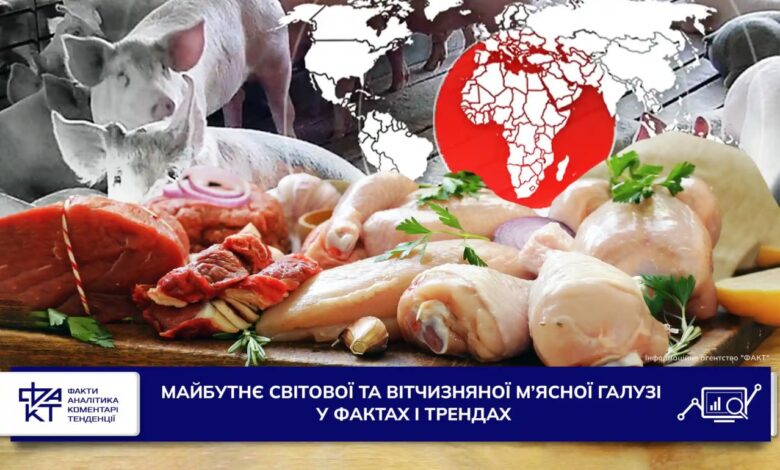
On August 6, the Day of Appreciation of Agricultural Workers, we should remember the meat industry, which appears as one of the most complex and sensitive segments of agricultural production. The global meat market is in a phase of structural changes caused by a combination of economic, demographic, technological and cultural factors that have different effects on consumer behavior in different regions of the world. After decades of growth fueled by urbanization, rising incomes, and livestock development, global consumption dynamics are less and less linear. Interest in alternative protein sources is increasing in developed economies, while demand for traditional meat remains consistently high in middle-income countries. Against the background of climate challenges, changes in the structure of nutrition and pressure on agrarian systems, the question of what will be the balance between the growth of production and the reorientation of food habits in the coming decade, becomes of key importance not only for consumers, but also for national economies, global trade and food policy.
World meat consumption: dynamics and prospects until 2034
The meat industry is a complex structure that precedes every kilogram of meat in the store, starting with fields, feed raw materials, conditions of keeping animals and ending with decisions on agrarian policy. Meat production is impossible without the daily, physically exhausting work of farmers who keep cattle, pigs and poultry. In times of war and crisis, this part of the agricultural sector is the most vulnerable, as it requires constant control, high costs and does not tolerate delays. Modern meat production begins on a farm, in a piggery, in a poultry house – where people work, whose work often goes unnoticed. According to the UN, more than 70% of the world’s food is produced not by agricultural holdings, but by small and medium-sized farmers.
In the next ten years, the global demand for meat will continue to grow steadily, although its dynamics and structure will increasingly depend on regional factors, income levels, consumer habits and technological development of the agricultural sector. According to estimates of international analytical organizations, from 2025 to 2034, the volume of global meat consumption will increase by almost 48 million tons. Average annual growth per capita will be approximately 0.9 kg in retail terms. At the same time, the leading role in this process will be played by the poultry meat segment, which shows the most dynamic growth due to its affordable price, favorable nutritional profile and lower environmental impact compared to other types of animal protein. It is expected that by 2034, the share of poultry meat in the global consumption of meat protein will exceed 45%.
The growth of meat production in the world will occur mainly at the expense of Asian countries, which will account for more than half of the increase. The most powerful drivers of this segment remain China, India, the countries of Southeast Asia and Africa — regions where meat still has the status of a product of prestige and a symbol of well-being. In these countries, rising incomes, urbanization, and the expansion of the middle class are causing a steady increase in demand. At the same time, the consumption of poultry – a relatively cheap, universal source of protein, as well as pork and beef – will grow the most.
In addition to Asia, Latin America will play an important role in the growth of production. This region is strengthening its position on the world market thanks to a combination of competitive advantages: the availability of land and water resources, technological improvement in the field of feeding, the development of genetic programs, as well as the flexibility of logistics chains. Countries such as Brazil, Argentina and Mexico are actively taking advantage of favorable conditions to scale up meat production, particularly in the pork and beef segment, which provides them with a strategic presence in both regional and global markets.
While countries with developing economies show an increase in meat consumption, countries with a high level of income, on the contrary, record a tendency to stabilize or even decrease. In the European Union, the United States, Canada and some other developed countries, consumers are increasingly revising food priorities under the influence of environmental awareness, health and ethical issues related to animal welfare.
Giving up red meat, reducing the total consumption of animal protein, switching to diets with a greater share of plant foods is a constant trend, which is supported by government policies, information campaigns and the development of new technologies in the field of protein alternative production. It is about both the growing popularity of plant-based meats and the development of laboratory cultured meats, proteins from insects and other non-traditional sources. In many cases, the shift in emphasis does not necessarily mean a complete rejection of meat as a product, but implies a change in the paradigm of consumption: less in volume, higher in quality, with a transparent origin and with a minimal impact on the environment.
According to forecasts, in 2034 the total volume of global meat production will reach 406 million tons, which is a 13% increase compared to the base period of 2020-2022. The poultry meat segment alone is forecast to add 28.5 million tons. Overall, global meat consumption will grow by 14% over the next decade, with middle-income countries remaining the main driver. In such countries, there is an increase in purchasing power, expansion of urban agglomerations, transformation of lifestyle and food patterns.
Accordingly, the demand for meat products here is supported not only by demographic factors, but also by changes in consumer culture. In the countries of South and Southeast Asia, in Africa, as well as in Latin America, meat remains an important element of social status and a marker of economic progress. Of the types of meat in these regions, the highest consumption growth rates are projected for poultry, as well as pork and beef, depending on traditional preferences and affordability.
Therefore, the global meat market will develop unevenly in the next decade. The main growth will occur in regions where meat remains a key source of protein and a socially important product, while in developed countries the transition to alternative dietary patterns will become increasingly important. This creates new challenges for international trade, regulatory policy and agricultural production — especially in the context of climate change, food security and global commitments to reduce greenhouse gas emissions. Meat as an economic and socio-cultural factor will remain an important topic of global discussions, where the interests of producers, consumers, governments and transnational companies intersect.
How ecology, technology and politics are transforming meat consumption and production
In the next ten years, global meat consumption and production will come under unprecedented pressure from climate policy, market changes, technological development and cultural conflict. We are not talking about a gradual evolution of food habits, but a real restructuring of the whole system in the form of specific decisions made by governments, corporations, agricultural associations and consumers – often in opposite directions, under the pressure of conflicting demands.
According to official estimates of the Food and Agriculture Organization of the United Nations, animal husbandry today is responsible for about 14.5% of all greenhouse gas emissions caused by human activity. The biggest burden is created by the production of beef, which is accompanied by significant emissions of methane, a large amount of water, forage crops and land use. One kilogram of beef can require up to 15,000 liters of water, and forests continue to be cut down to grow feed for cattle, particularly in the Amazon basin.
These data became the basis for stricter regulation of the meat industry in certain countries. Government strategies in the European Union, Great Britain, Canada and Australia already include direct measures to reduce the intensity of livestock production. This requires the implementation of other economic policies — subsidies for technological substitutes, labeling of food products according to the carbon footprint, promotion of food models aimed at reducing meat consumption.
Within the framework of the Green Course, the European Commission envisages a gradual reduction of animal husbandry as a tool for achieving climate goals. This strategy causes tension in the agrarian environment, in particular in countries with a significant share of livestock in the export and domestic market. Farmer organizations are protesting the measures, which they see as a threat to economic stability and food security. However, the process is already underway: states, large retail chains and technology companies are reorienting investments from the traditional meat sector to the segment of protein substitutes.
This segment is showing explosive growth. Plant-based meat, cultured meat, and protein ingredients from fungi, yeast, or insects are moving from experimental to serious business. In 2024, the plant-based meat market reached more than $10 billion, and by 2030, according to Bloomberg Intelligence, it could exceed $75 billion. It should be noted that the sale of meat grown from animal cells in laboratory conditions is already allowed in the USA. Although the price of the product is still high, production costs are falling rapidly, and the technology will reach the mass market in the next decade.
At the same time, the European Union allows the use of beetle larvae flour, which is also considered a source of protein with a lower environmental impact. Countries with high meat prices, limited resources or the need to diversify imports are betting on this direction.
In addition, the transition to a new protein structure is accompanied by resistance at the level of cultural ideas and political narratives. In many societies, meat remains a symbol of everyday life, festive traditions and national cuisine. Any attempt to limit its consumption is perceived as an encroachment not only on the diet, but also on the way of life. In many societies, meat is not just a product, but part of the cultural core. Barbecue in the USA, sausages in Germany, barbecue in the Caucasus, meat dishes in the Arab world – all these traditions are difficult to reconcile with the concept of a “post-meat” diet. In this regard, changes in meat consumption will be uneven and conflicting.
On the one hand, the population in Western Europe and the USA is increasingly switching to vegetarianism or flexitarianism, reducing the consumption of animal proteins. On the other hand, in many countries, nationalistic rhetoric is developing around meat as an element of traditional culture, and any attempts to limit it are interpreted as an encroachment on the way of life. In the coming decade, these contradictions will only intensify, so meat will increasingly be not just a product, but an economic and social marker.
In addition to environmental and cultural changes, the availability of meat is also affected by purely economic factors. The increase in the price of feed, changes in climatic conditions, the spread of veterinary diseases and energy instability create the conditions for rising prices. According to FAO forecasts, meat will remain an expensive commodity until at least the mid-2030s. This means increasing inequality in access to products of animal origin, especially in countries with unstable economies or high levels of inflation. States will be forced to balance between the support of the traditional agricultural sector and the development of new production technologies. Parallel programs are already being implemented in a number of countries: supporting farmers who implement a sustainable model of animal husbandry, and at the same time funding startups in the field of meat substitutes.
In 2025–2035, meat will not disappear from the global diet, but its role, price, availability and production structure will change. In high-income countries, red meat consumption is expected to decrease and shift to alternatives. In middle-income countries, by contrast, demand for meat may increase due to urbanization, rising incomes, and changes in eating behavior. However, even in these countries, restrictions may arise due to market conditions: unstable prices, import barriers, problems with logistics.
Therefore, the world in the coming decade will not be faced with the choice “to eat meat or not”, but with the need to rethink the system that ensures its production, availability and consumption. There are no universal answers in this system anymore, as it is being rebuilt under the pressure of climate policy, market competition, cultural resistance and technological innovation. And in these conditions, meat becomes a factor of strategic choice at the level of states, corporations and each individual consumer.
Meat market in Ukraine: dynamics and prospects
Over the past two years, the meat market of Ukraine has demonstrated complex and heterogeneous dynamics, in which signs of production growth, fluctuations in consumer demand, foreign trade successes and internal instability coexist. At the same time, farmers and agricultural workers do not stop working even during hostilities, minefields, rocket attacks and logistical collapses. Many of them died while doing agricultural work in the risk zone.
In 2023, the average level of meat consumption in Ukraine reached 54.7 kg per person, which is only slightly higher than the established minimum figure of 52 kg. However, this figure in itself does not reflect the real structure of consumer behavior, because it hides a decrease in some items and a compensatory increase in others. Pork lost in volume — a decrease from 20.3 to 19.8 kg, while beef and poultry meat increased — from 7 to 7.4 kg and from 26.2 to 27 kg per person, respectively.
Such an internal change in the structure indicates the presence of several interconnected processes: first, the gradual cheapening and massification of chicken, secondly, the transition of some consumers to a more affordable type of meat against the background of economic pressure, thirdly, a stable, albeit limited, niche for beef.
Due to internal fluctuations, manufacturers sought a compensatory model through exports. The year 2024 turned out to be a record year in this regard: $962.7 million in foreign currency revenue from the sale of poultry meat abroad — plus 20.4% compared to the previous year. Export volumes also increased — by almost 6%, to 448.8 thousand tons. Such a result became possible thanks to the competitive price, stable logistics chains and the technological readiness of domestic enterprises to scale up to the demands of the foreign market. On the other hand, the situation in the domestic market remained tense: the decrease in the purchasing power of the population, which has been observed since the beginning of the full-scale invasion, directly affects the volume of consumption – and not only in a quantitative, but also in a qualitative sense.
However, in 2025, the average annual meat consumption in Ukraine, as in previous years, will remain at a stable level. At the same time, meat foreign trade now shows a clear structural asymmetry: the country is steadily increasing the export of poultry meat, mainly chicken, while at the same time the import of pork is growing several times.
Such an imbalance indicates a deep shift in sectoral priorities: poultry farming works for the foreign market, focused on foreign exchange earnings and large-scale production, while pig farming, on the contrary, cannot withstand internal challenges and is increasingly losing positions. Ukraine is turning into an exporter of what it is profitable to produce, and an importer of what it cannot provide on its own. Behind this asymmetry is a strategy of survival in conditions of war, crisis and lack of resources. However, this structure of foreign trade creates risks: the strengthening of positions on foreign markets may be accompanied by the weakening of internal food security in the segment of pork, which remains an important component of the consumer basket.
At the same time, it also reflects a change in the logic of production: large poultry farms that have access to external sales channels maintain financial stability and focus on exports. And small and medium-sized pork producers, who work mainly for the domestic market, face difficulties that force them to curtail production or reduce volumes. Consequently, the agrarian structure is gradually being restructured in favor of large-scale chicken exports, while domestic demand for pork is increasingly dependent on external suppliers.
In January-May 2025, Ukraine exported 195.6 thousand tons of poultry meat. In monetary terms, this is $457.8 million. These volumes exceed the indicators of the similar period of 2024, which indicates the stable presence of Ukrainian chicken on foreign markets and the preservation of its competitiveness in the conditions of war and unstable logistics. The main buyers remain European countries, the Middle East and North Africa, where the Ukrainian product maintains its position due to its relatively low cost, the scale of production and the available infrastructure for export.
The increase in export volumes is partly explained by the effect of quotas granted to Ukrainian producers for the supply of poultry meat and offal to EU countries. Allocation of quotas depends on actual export volumes in the first four months of the year, encouraging major players to ramp up supplies early in the year to ensure continued market access. A separate reserve of quotas is allocated for new exporters, which allows expanding the circle of participating companies, but also creates additional competition within the sector. Such a system contributes to the growth of exports, but it also directs production to the foreign market, sometimes to the detriment of domestic supply.
At the opposite pole is the situation with the import of pork. In the first half of 2025, Ukraine imported 7.2 thousand tons of this product, which is 4.5 times more than the volume of imports for the same period last year. In monetary terms, this is $18.3 million. Previously, in the first quarter, growth rates were similarly high: imports increased by 3.8 times. This indicates a steady trend, not a short-term fluctuation. The demand for imported pork is growing both among processing enterprises and among distributors, who are forced to compensate for the shortage of domestic supply.
The main reason for the increase in imports is the decrease in the number of pigs on Ukrainian farms. This process has been going on for more than a year and is associated with low profitability, high feed costs, rising energy prices, veterinary risks and a lack of investment in the restoration of production facilities. As a result, even despite fluctuations in demand within the country, the domestic market was unable to ensure a stable supply of products, which forced importers to intensify purchases abroad.
Meat prices in Ukraine in 2025 will increase in all major categories. This is most noticeable for pork and chicken, which traditionally occupy the largest share in the structure of consumption. The increase in cost is explained by a combination of several factors: a reduction in livestock, rising feed prices, high energy costs and a general weakening of the economy. According to the “Swinemakers of Ukraine” Association, the number of pigs on the domestic market has decreased. This supply shortage is already directly reflected in purchase prices. At the same time, the fall in domestic production creates pressure on the market, especially in regions where demand is consistently high. Perceptible fluctuations in purchase prices have been recorded in some regions, but the general trend is the same — pork is becoming more expensive across the country.
With pork, the situation is similar for chicken producers. Despite the greater stability of this segment in previous years, in 2025 it also experiences an increase in cost. The main reason for this is the increase in the price of feed, especially grain, which forms a significant part of the costs in poultry farming. The cost of the fodder base is increasing due to inflation, deterioration of logistics conditions and general tension in the agricultural market operating under martial law.
It should be noted that the increase in the price of meat is not only related to agrarian risks. The economic situation in the country remains unstable, which puts pressure on all links of the production chain – from the farm to processing. The cost of electricity, fuel, transport services and packaging have increased, and all these costs are passed on to the end consumer. As a result, even with a reduction in purchasing power, meat prices do not decrease, but continue to rise. This creates additional stress for Ukrainians with medium and low incomes, who are forced to revise their eating habits in the direction of chicken or reduce the amount of meat products in their diet. However, beef consumption remains at a low level and has all the prerequisites for further reduction. The high cost of production, small volume of domestic livestock and weak domestic demand leave this segment within the limits of a niche.
Therefore, taking into account the totality of factors, the forecast for the coming decade indicates a gradual change in the structure of meat consumption in Ukraine. Total volumes may remain stable or decline slowly, primarily due to reduced access to higher-priced categories. The basis of the diet will be cheaper types of meat – mainly chicken. Pork will gradually lose ground if the state does not offer a program to support the industry, which is already experiencing a livestock crisis, and beef will remain unaffordable for the majority of the population.
As of 2025, there are no prerequisites for a reduction in the price of meat products in the short or medium term. And if the livestock support model does not change, energy prices do not decrease, and logistics do not stabilize, meat in Ukraine will remain a category to which access will be significantly limited for a significant part of the population. This reality requires not only market solutions, but also a conscious state strategy.
Expectations of a further increase in meat prices are confirmed not only by Ukrainian statistics, but also by global trends. According to MeatNews, the FAO meat price index rose in May 2025, signaling the rising cost of meat products worldwide and, accordingly, pressure on local markets that import certain items or are dependent on external feed and technology suppliers.
Meat market and vegetarians
In the global context, vegetarianism is gradually ceasing to be a niche behavioral model. According to international research sources, in 2025, approximately 10-12% of the world’s population will give up meat consumption. Among them, 1 to 3% are vegans, who completely exclude any products of animal origin from their diet. At the same time, these indicators are averaged and vary significantly depending on the country and cultural context.
The highest indicators in this matter are in India, where more than 30% of the population follows a vegetarian diet. This is primarily due to religious norms rather than environmental or ethical considerations. In Western Europe, the USA, Canada, and Australia, the share of vegetarians is 5–10%, and in certain social groups — among young people and residents of large cities — it reaches 12–14%.
Against this background, Ukraine demonstrates a different dynamic. According to the Ukrainian Food Journal, about 1.8% of the country’s population identify as vegetarians, and another 1.3% identify as vegans. For comparison: even in neighboring Poland, these figures are several times higher. However, at the same time, within the consumer environment, up to 17% of Ukrainians limit their consumption of meat or animal products, but do not give them up completely. These are the so-called flexitarians, a group that considers it appropriate to reduce the frequency of meat consumption for reasons of health, ecology or budget.
The reasons for this distribution are explained not only by eating habits, but also by socio-economic status. In Ukraine, meat is still perceived as a status product due to its historical association with wealth and satiety, so the complete rejection of meat has not yet become part of mass culture. In addition, the widespread adoption of vegetarianism requires stable access to alternative foods, including plant protein, soy, nuts, fortified food additives, and vegetables. In the conditions of war, inflation and logistical difficulties, such positions are not always available.
At the same time, the consumer landscape is gradually changing. In supermarkets, the range of vegetarian products is growing – not only fresh vegetables and cereals, but also specialized plant-based semi-finished products that imitate meat. In big cities, some restaurants and cafes consistently include vegetarian items in the menu, and in establishments with a premium segment, even separate vegan lines. Such shifts are not the result of a radical change in the eating behavior of Ukrainians, but rather an attempt to respond to the demand of a new niche.
In the long term, the growth in the number of flexitarians, access to imported plant products, and the popularization of vegetarianism among young people may gradually form new market segments, but this will not significantly affect the overall structure of meat consumption in Ukraine over the next ten years. The market currently remains meat-centric, and meat, despite the price, remains the dominant category in the food structure.