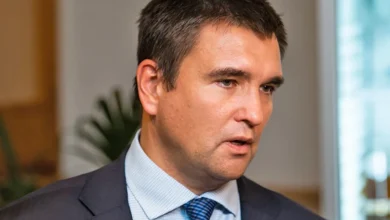
In modern warfare, technology comes to the fore, and man loses his key role: Ivan Kyrychevsky


Modern war is radically different from the wars of previous eras. Not only the methods of conducting hostilities are changing, but also the very nature of war. If in the 20th century the main factor remained a person with his decisions, will, mistakes and strategies, then in the 21st century technologies are rapidly coming to the fore. It is in such a reality that the Russian-Ukrainian war is unfolding, which demonstrates a fundamentally new structure of hostilities, where the role of man is pushed aside, and high technologies become the main driving force. About the features of this transformation expressed military analyst Ivan Kyrychevskyi expressed his opinion.
The expert calls the war taking place in Ukraine the first in history where the concept of “Technology” came to a prominent place:
“Our current war against the Russian Federation is probably the first in history, where the very concept of “Technology” came to prominence, followed by the concepts of “Organization” and “Worldview”.
Kyrychevsky points out that this is clearly evident even in Western analytical materials and publications, when describing, for example, the successful attack on Russia’s strategic aviation, which Ukrainian forces carried out on a day that the Western press received the conditional name “Little Kid’s Day”. As the analyst notes, in such assessments there are complimentary statements that Ukraine is actually rewriting the rules of warfare, relying on modern technologies.
At the same time, the expert compares the current state of affairs with the experience of the Second World War. He reminds that in that war the civilized world was able to achieve victory not at all thanks to the superiority of technology. At that time, it was the worldview that was of primary importance: vision of goals, definition of principles, understanding of what the allies of the anti-Hitler coalition were fighting for. Only after that, the organization took a back seat — that is, the management structure, coordination of actions, logistics, production. And technology was already in third place.
The analyst draws attention to the fact that you can admire the characteristics of the famous German tank “Tiger” as much as you like, which in its technical parameters really remained a model of powerful armored vehicles of that time. However, as Kyrychevsky emphasizes, the “Tiger” itself did not determine the course of the war. The decisive factor was how quickly the anti-Hitler coalition found effective means of combating this tank and adapted to new challenges.
He also cites a lesser-known example of the World War II-era press describing the campaign to shoot down V-1 cruise missiles over Great Britain as “the first robot war.” On the British side, these German missiles destroyed American anti-aircraft systems, which were already equipped with elementary ballistic computers for calculating trajectories. But, as Kyrychevsky emphasizes, even under such conditions, the main thing was the person himself, his decisions, speed of response, flexibility in decision-making. Man remained the subject of war, and technology was only a tool.
Instead, now, as Kyrychevsky emphasizes, the situation has changed fundamentally. It is technology that has come to the fore, and man is gradually losing his central role in the direct conduct of hostilities. Modern weapons systems, drones, automated guidance systems, artificial intelligence, autonomous intelligence complexes — all of this is gradually reducing the role of a living soldier in the combat process. The analyst points out that we are already at a point where Man is relegated to the background, while Technology shapes the course of war itself.
That is why, Kyrychevsky emphasizes, a fundamental question arises – to which civilizational system is this process leading us? After all, the answer to it will determine not only the concepts of the development of armies, but also the model of the entire society, to which we will come in the coming decades. This will depend on what type of army and what type of weapons we will need.
The analyst expresses his personal opinion, which may not coincide with the editorial position.