Integration of Ukrainians abroad: who will not return home and what determines their choice

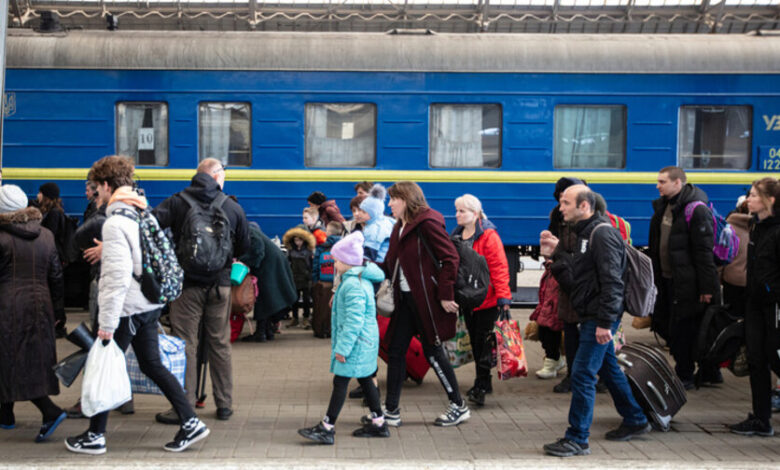
Over the past four years, the number of Ukrainians outside the country has reached 5.6 million, and most of them have settled in Western countries. This information is contained in the study “Ukrainian refugees after four years abroad” by the Center for Economic Strategy. It reflects both the scale of population movement and the complex structure of its socio-demographic characteristics, which have a direct impact on the country’s economic future and the formation of new diaspora communities.
Main destinations of departure and countries of refuge
Germany and Poland remain the key states that have accepted the largest share of Ukrainians. Germany provided shelter for 33% of all refugees, Poland for 19.5%. Exact data on the number of Ukrainians in Russia and Belarus is difficult to estimate due to the lack of updated statistics; the latest official UN estimates date back to 2023 and indicate about 1.3 million people.
The structure of departures reflects gender and age inequality: women make up 40% of all refugees, children under 18 years old – 31%, and men over 18 years old – 29%.
After the introduction of permission to freely cross the border for young men aged 18-22, from August to November 2025, the number of people leaving this category exceeded those who returned by 96 thousand people. As a result, approximately one in seven young people in this age group is currently abroad.
A significant part of the refugees left as entire families with children: more than a third of families have children under the age of 18. In 2025, the activity of complete families was higher than in previous years — 25% versus 17% in 2022–2024. The presence of children influences the choice of host country and the level of integration, as families seek to ensure a stable education system and social security for the younger generation.
Education, professional experience and integration
The majority of Ukrainian refugees have a high level of education and professional experience. 71% have a bachelor’s degree or higher, and a similar proportion were employed in Ukraine before the war.
Currently, 1.7 million adult Ukrainians have integrated into the labor markets of Western countries, demonstrating the ability to adapt to new conditions and maintain professional skills. This aspect is particularly important for the economies of the receiving countries, as Ukrainians mostly have qualifications that meet the requirements of highly qualified specialists.
Motives for staying abroad and factors for return
According to the Economic Strategy Center, 2.1 to 3 million Ukrainian refugees may not return, while 1.3–2.2 million people are likely to return home. This scale of displacement implies a potential annual loss of Ukraine’s GDP of between 2% and 9.5%, depending on how many people remain abroad.
This highlights the importance of developing strategies to retain skilled personnel and create conditions for the return of those with ties to the country, in order to reduce economic risks and ensure sustainable recovery from the war.
Men, young people, and those with high incomes abroad are least likely to return. In addition, having children often keeps a family outside of Ukraine, as stable education and social systems in host countries create a sense of security and predictability.
Factors that encourage return include the presence of a partner in Ukraine, which doubles the likelihood of return, the possibility of remote work or study in domestic institutions, and regular remittances that maintain economic and emotional ties with family.