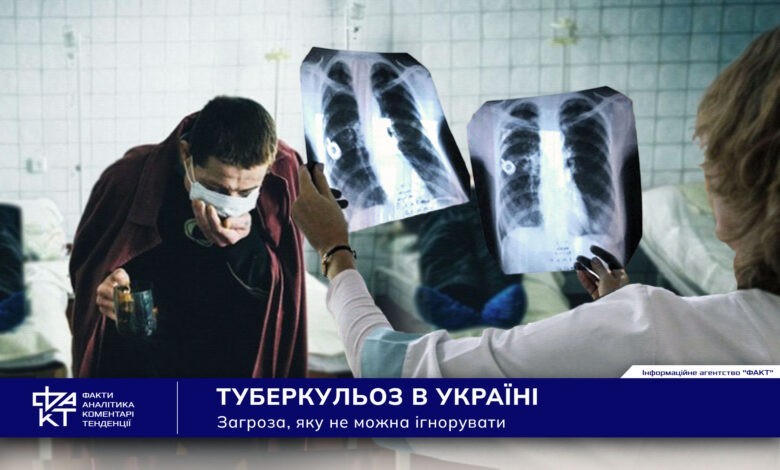
Ukraine is faced with alarming statistics: tuberculosis claims thousands of lives every year, and the number of infected people is steadily increasing. The disease, which in many countries of the world is already considered overcome, continues to spread in Ukraine, remaining in the shadow of public attention. The war exacerbated all the weak points of Ukrainian medicine, and the fight against tuberculosis became even more difficult. Ruined infrastructure, drug shortages, lack of systematic screening and limited access to health services in remote regions have created ideal conditions for the spread of this dangerous disease. At the same time, the low level of awareness of the population about the symptoms and consequences of tuberculosis strengthens the problem. Isolated attempts at treatment, closure of medical facilities and insufficient funding of programs to fight the epidemic risk turning it into a national disaster.
Shocking facts
In Ukraine, tuberculosis still remains a problem that many people try to ignore. But such indifference can be fatal for everyone. In our country, tuberculosis is no longer a disease of the past, as many people think, but a real threat that affects thousands of lives every year. Those suffering from tuberculosis find themselves in a double trap: fighting for their own health, they face societal indifference and problems in the health care system.
For data According to the Public Health Center of the Ministry of Health of Ukraine, as of November 2024, 1,285 people with tuberculosis were registered in Ukraine. Among them:
- 957 new cases of the disease;
- 260 patients with relapse;
- 68 others.
There are 227 people among patients with a persistent form of tuberculosis. Pulmonary form of the disease was detected in 1,217 patients, 68 patients had extrapulmonary form of tuberculosis. 208 patients had HIV-positive status. Among patients, there are more men (994 people) than women (291 people).
World Health Organization (WHO) made public The Global Tuberculosis Report 2024 confirmed that the goal of ending the global tuberculosis epidemic remains a long way off. The document contains an assessment of the situation with the tuberculosis epidemic and an analysis of progress in the prevention, diagnosis and treatment of this disease at the global, regional and national levels.
193 countries and regions, which cover more than 99% of the world’s population and register cases of tuberculosis, participated in the preparation of the report.
According to WHO data, 10.8 million new cases of tuberculosis were registered in 2023. This is slightly more than in 2022 (10.7 million), but significantly higher than in 2021 (10.4 million). This growth is partly explained by the increase in population.
The TB incidence rate (number of new cases per 100,000 population) in 2023 was 134. This represents a slight increase of only 0.2% compared to 2022. At the same time, 87% of new cases in 2023 fell on 30 countries with a high level of the burden of tuberculosis. Among them, five countries had the largest number of cases: India, Indonesia, China, the Philippines and Pakistan, which together accounted for 56% of all cases. Statistics among patients showed that 55% of patients are men, 33% are women, and 12% are children and adolescents.
It should be noted that in 2023, TB deaths decreased to 1.25 million people, which is an improvement over the pre-pandemic level of 2019 (1.34 million). Despite this, tuberculosis once again became the leading cause of death from infectious diseases, overtaking COVID-19. This shows progress in reducing the number of deaths, but the problem remains serious. The high death rate shows that tuberculosis continues to threaten the lives of millions of people, especially in countries with weak health systems and high concentrations of poor people.
Children and adolescents need special attention, which in the world, including in Ukraine, makes up 12% of all patients. In many cases, children remain the most vulnerable due to underdiagnosis and lack of access to necessary treatment.
In November 2019, the Cabinet of Ministers approved the Concept for the Development of the System of Anti-tuberculosis Medical Assistance to the Population, which provided for “the implementation of measures for the reorganization of regional anti-tuberculosis facilities, which includes the merger of all anti-tuberculosis facilities in the region into a single anti-tuberculosis facility in the region, which has the status of a regional phthisiopulmonary medical center”, however, over 10 years in Ukraine, about 40 institutions were cut. Officially, this was explained by optimization, but in practice, thousands of patients remained without access to treatment. Today, there are 93 phthisiatric dispensaries in Ukraine. Now dFor many residents of villages or small towns, the diagnosis of “tuberculosis” has become a sentence, because they have to travel hundreds of kilometers to get help.
The closure of these institutions greatly complicated the fight against the epidemic. Patients who require isolation and specialized treatment are forced to be treated at home or in general hospitals, where the risk of spreading the infection increases significantly. This creates a vicious circle: the lack of access to treatment leads to complications and an increase in the number of infectious people.
Another shocking fact is that people with tuberculosis are mobilized to the ranks of the Armed Forces of Ukraine. Although, how declare at the Department of Defense, each case is examined on a case-by-case basis and fitness for duty is assessed based on how much the disease affects their ability to perform military duties. There is no doubt that every citizen wants to help the country in times of war, but the forced enlistment of people with serious infectious diseases endangers the lives and health of those around them. Patients with tuberculosis, even if they themselves do not realize how dangerous their condition is, can infect others. In military conditions, where people are constantly in close contact, the risk of disease transmission increases many times. Unfortunately, such cases are becoming more and more common.
In addition to medical problems, patients face stigmatization. They often hide their diagnosis for fear of being judged or losing their jobs. There is no social support system to help people on their way to recovery. And the treatment, which lasts for months, requires not only patience, but also financial resources, which not everyone can afford.
Where did tuberculosis come from?
Attitudes towards people with tuberculosis (formerly known as tuberculosis) and methods of treatment have changed over the centuries. The history of the fight against tuberculosis is an example of how medicine, public perception of diseases and scientific knowledge have evolved. Archaeological findings show that tuberculosis was known in ancient Egypt and India. In mummies found in Egyptian tombs, traces of bone damage characteristic of tuberculosis were found. In those days, illness was perceived as a punishment from the gods or a demonic curse. Treatment, as a rule, included religious rites, amulets and herbal infusions. People knew almost nothing about the causes of the disease, so the fight against it was reduced to magical and ritual actions.
In medieval Europe, tuberculosis became an epidemic. People believed that the disease was transmitted through “bad air” or was hereditary. Patients were isolated, often driven outside the settlements. Treatments included bloodletting, diets, mixed herbs, and “folk remedies” such as donkey or goat milk. In many regions, patients were simply left to die to avoid infecting others.
In the 17th and 18th centuries, the attitude towards tuberculosis began to change. Doctors began to notice that the disease was transmitted in cramped and dirty conditions. There were the first assumptions about its contagiousness. In the 19th century, the disease became especially widespread among the urban population due to rapid industrialization. Cramped factory premises, poor ventilation and unsanitary conditions created ideal conditions for the spread of the disease. During this period, tuberculosis was called the “white plague”. “Climate therapy” began to be used in the treatment. Patients were sent to sanatoriums in the mountains or on the sea coast. Clean air and peace were considered the main medicines.
In 1882, the German microbiologist Robert Koch discovered the causative agent of tuberculosis, the bacterium Mycobacterium tuberculosis. This became a revolutionary breakthrough, because for the first time scientists understood that the disease was caused by a specific microorganism. At the beginning of the 20th century, the first attempts to develop vaccines and drugs against tuberculosis appeared. In 1921, French scientists Albert Calmette and Camille Guerin created the BCG vaccine, which became a key tool for disease prevention.
In the 1940s, streptomycin was discovered, the first antibiotic effective against tuberculosis. Later, other drugs such as isoniazid and rifampicin were added to the treatment.
States began implementing mass vaccination programs and creating specialized dispensaries and sanatoriums for treatment. In the middle of the 20th century, tuberculosis began to be considered an almost defeated disease in many developed countries. In the 21st century, tuberculosis has returned as a serious threat due to the development of multidrug-resistant forms (MDR-TB). These strains of bacteria are resistant to most antibiotics, which greatly complicates treatment.
Despite advances in diagnosis and treatment, stigma and discrimination against people with tuberculosis remain a global problem. The history of the fight against this disease reminds us how important investments in science, education and medicine are to prevent such tragedies.
Treatment of tuberculosis in foreign countries
Today, tuberculosis is considered a controlled disease in most developed countries, while the situation remains critical in low- and middle-income countries.
In countries such as the USA, EU countries, Japan, South Korea, tuberculosis is not a massive problem thanks to effective prevention, treatment and social support programs. Patients with tuberculosis are not stigmatized here. After all, the disease is perceived as something that can be treated. Patients with the contagious form are isolated in specialized medical facilities to prevent the spread of infection.
Treatment is based on standardized WHO protocols (DOTS). Antibiotics, such as isoniazid, rifampicin, pyrazinamide, are provided free of charge to patients. In case of multi-resistant tuberculosis, the latest drugs, such as bedaquiline and delamanid, are used. BCG vaccination is mandatory in developed countries. And among risk groups, which include migrants, prisoners and the homeless, regular screening is actively used. The state does not abandon patients to their own devices, but provides housing, food and support during treatment.
Treatment of tuberculosis abroad has its own characteristics, depending on the country, access to medicine and the level of development of the health care system. However, the basic principles remain the same — treatment should be accessible, controlled and free of charge for the patient. In developed countries, modern diagnostic methods are widely used, which significantly reduce the time of tuberculosis detection:
- GeneXpert — a device that determines the presence of bacteria and their resistance to drugs in 2 hours;
- tests for interferon-gamma – allow to distinguish the latent form of TB from the active one;
- digital radiography with artificial intelligence — helps to quickly assess the condition of the lungs.
In many countries, the DOTS (Directly Observed Treatment, Short-Course) strategy is in place, which provides that the patient takes the medicine under the supervision of a medical professional. This ensures that the patient does not miss a single dose. For example, in Great Britain, patients are offered mobile applications for medication reminders and video consultations with doctors. In the US, special health workers come to the patient’s home or meet with him in a clinic. In general, treatment of tuberculosis abroad is tailored to a specific patient. If the disease is caused by drug-resistant bacteria, more powerful but more expensive drugs such as bedaquiline or delamanid are prescribed. Treatment may include injections and oral medications depending on the patient’s condition.
Some countries, such as the Netherlands or Sweden, use innovative methods for treatment:
- artificial intelligence to analyze patient data and optimize treatment;
- telemedicine for consultations of patients from remote regions.
In countries such as Canada or Australia, patients are provided not only with treatment, but also with social assistance, free food kits, and psychological support, as long-term treatment is often accompanied by stress. Some countries, such as South Korea, are conducting large-scale research into new TB vaccines that will help reduce the number of new cases.
Thus, the foreign approach to the treatment of tuberculosis is focused on a combination of modern technologies, availability of services and patient support at all stages of the fight against the disease. The experience of other countries shows that the successful fight against tuberculosis depends on access to treatment, support for patients and large-scale prevention programs. It is important for Ukraine to provide funding for phthisiatric institutions, control the quality of treatment and change the public attitude towards this disease.
Tuberculosis in Ukraine is not just a disease, but a reflection of our attitude to life, humanity and responsibility. The closing of the typhoid facilities, the lack of resources, the ignoring of the risks – all this has turned the problem into a silent epidemic that spreads quietly but catastrophically. The worst thing is that even those who need isolation and long-term treatment are sent to war. They find themselves among their comrades on the front line, exposing them not only to enemy bullets, but also to the invisible threat of infection.
This invisible war requires no less attention than the combat operations at the front. Without proper treatment, prevention and support for the sick, we risk another tragedy that will affect everyone. Decisive action is needed now to prevent TB from winning this war.