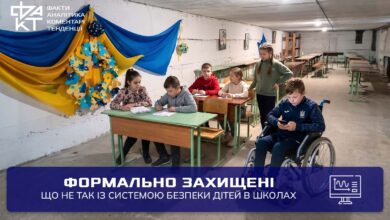
Education is an industry that is closely related to the life of society, and therefore must meet the requirements of time and constantly change. The launch of the New Ukrainian School in 2017 marked the start of radical changes in the organization of the educational process. In the conditions of war, the reformation process is somewhat complicated, but it still takes place. And now the next step is the reform of senior specialized secondary education, which will start in 2027.
Let’s try to figure out what to expect from the next educational reform.
The reform provides that school education consists of:
- elementary school (grades 1-4);
- basic (grades 5-9). From now on, schools become gymnasiums;
- senior specialized school (10-12 grades). Academic and specialized lyceums appear.
11-year education will change to 12-year education, as in all developed European countries. Many parents were skeptical about this innovation, as they believe that it is already too late to be a school graduate at the age of 18. But, obviously, such a change will bring Ukraine closer to European standards, and therefore, in the future, Ukrainian graduates will not have to prove the equality of their certificates with European ones.
It is planned to reduce subjects to 10-11. The Ukrainian language, a foreign language and the history of Ukraine will be among the mandatory ones. Moreover, the 10th grade will act as a springboard for catching up with the program. It is in this class that a significant number of subjects will be concentrated. That is, 60%-70% of the study time will be allocated to the main subjects, 20-25% will go to specialized subjects, and 10%-15% – to subjects of the student’s choice. However, in the 11th grade, 50%-55% of time will be allocated to compulsory subjects, 30%-40% to specialized subjects, and 10%-15% to electives. In the 12th grade, 35%-40% of time will be allocated to compulsory subjects, 45%-50% will be devoted to specialized subjects, and 10%-20% – to electives.
If we recall the 11-year education system, a large number of subjects come to mind, including those that could be classified as group activities. Almost 7 lessons every day, not enough hours per week of those subjects that were chosen for admission to higher educational institutions, etc. As a result, the students are overtired and the need to find tutors to prepare for passing the ZNO or NMT in the chosen subjects.
So, thanks to the reform, the situation will fundamentally change. Students will not be overtired, and the subjects chosen by the student will make learning interesting and more motivated.
One of the main innovations of the senior school reform will be the creation of academic and professional lyceums, among which 9th grade graduates will choose. Education in academic lyceums will last three years and will represent preparation for admission to a higher educational institution, while professional lyceums will provide immediate and full general secondary education and the opportunity to acquire a profession. Such differentiation will make it possible to satisfy the country’s need for in-demand professions, and not to observe the picture of mass enrollment in higher education institutions and replenishment of the labor market with professions that are not in demand in the current conditions.
However, there is a negative side to the creation of academic and professional lyceums.
A separate building should be allocated for such institutions. But if, say, there is not a large number of children in the community, then after the end of the 9th grade, quite a few students will go to the 10th grade, and therefore, it will simply not be profitable to allocate a separate building for them. In this case, schoolchildren will either have to go to the cities where the main lyceums will be concentrated, or live in specially created dormitories.
At the “Teachers of the Future” festival, the head of the Committee of the Verkhovna Rada of Ukraine on Education, Science and Innovation Serhiy Babak said:
“For all 30 years, there have been three key weaknesses in Ukrainian education – these are the non-modernized educational space, the content of education and low wages. All this is happening because of one reason – it is insufficient political will to take the lead in this process. The main reason, of course, is financial. After all, it requires enormous funds, billions of dollars in order for us to make the educational system one of the best in the world in 7-10 years. Now there is such political will, we know what to work on, what to improve and where to get funds. And if we correct these three disadvantages and get a great educational environment, then we will return the million children who left, and then they will want to come to us from abroad, and we will not look for where to send the child to study.”
So, the state has a driving force that pushes for changes in the educational process and, obviously, a vision of what the modern educational space should be has been formed. Of course, it takes time and balanced actions to improve. Therefore, in the 2025-2026 academic year, the state plans to launch an educational pilot project of a high school. According to it, it is stipulated that one academic and two professional lyceums should be established in each oblast. The preference for the vocational lyceum is caused by the state’s desire to raise the rating of vocational education. After all, it is not a secret for anyone that such a stereotype has developed in society that those students who did not study well at school go to vocational schools and technical schools. And this is not surprising, because the results of PISA 2022 showed a low level of knowledge of schoolchildren in reading and mathematics.
The completely ineffective program of these educational institutions does not contribute to the popularity, because it is based on mastering uninteresting and irrelevant professions for young people. Thanks to the reform, the situation should fundamentally change. Profile lyceums will offer entrants 3 profiles: linguistic and literary, social and humanitarian, and STEM. The radical approach to education will change in favor of concentration on in-depth study of subjects necessary for the future profession. Reducing the number of subjects will relieve students and give them the opportunity to improve their level of knowledge in the main subjects. This reform is fully oriented towards compliance with European standards and meets the demands of the labor market.
Excessive workload, loss of interest in learning and concentration of attention only on those subjects needed for admission to higher education institutions, and then the appearance of specialists in whom the state does not need in such numbers on the labor market indicated the obvious shortcomings of the educational process and the need for reformation. The renewal of senior specialized secondary education indicates a number of advantages:
- program unloading;
- the opportunity to choose between subjects that are needed for the future profession;
- the ability to acquire both professional skills and general secondary education at the same time;
- increasing effectiveness in education;
- increasing the prestige of professional education;
- orientation to European standards in education.
In addition, the system will be flexible, and if desired, the student can always change the lyceum and continue studying in an academic direction, or, conversely, in a professional direction.
However, there are certain difficulties for the implementation of this reform, such as, for example, selecting a separate building for each lyceum and organizing the logistics of students or creating a dormitory for living on the territory. It is necessary to allocate the necessary funding for the communities to create a full-fledged material and technical base, as well as to provide a full-fledged teaching staff. All points will be carefully studied and discussed during the pilot project.
SWOT – analysis of the reform of senior specialized secondary education
| Strengths | Weak sides |
|
|
| Opportunities | Threats |
|
|