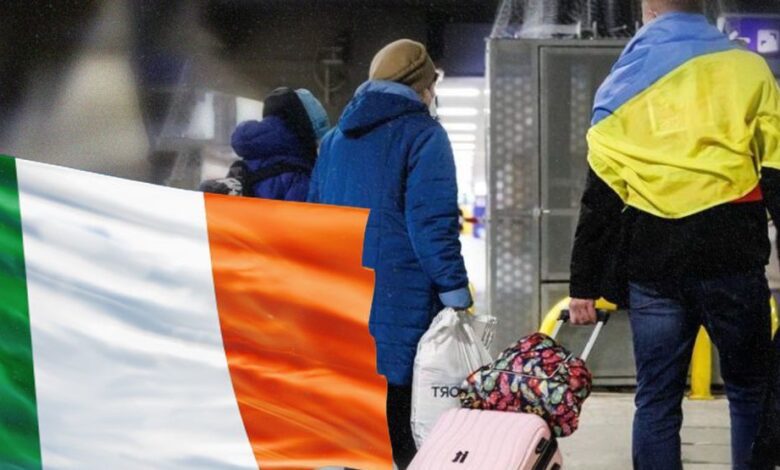
Against the backdrop of pan-European shifts in attitudes towards temporary protection for Ukrainians, Ireland has officially begun the process of winding down housing support for those who arrived in the country after the outbreak of full-scale war. The move was announced as part of a broader approach to rethinking aid policy amid a protracted crisis, growing budget burdens, and increasingly frequent calls for self-integration of refugees into local labor and rental systems.
How Ireland helped the Ukrainians at the beginning of the full-scale war
From the first days of Russia’s full-scale invasion of Ukraine, Ireland took a clear and active position of support. Despite its geographically remote status, the country quickly joined the pan-European humanitarian mobilization: it waived visa requirements, introduced direct payments, free medical care, access to education and, most importantly, offered mass public housing.
At the peak of the humanitarian wave, Ireland provided shelter to more than 60,000 Ukrainians, offering state housing in hotels, student campuses, dormitories, and municipal facilities. Today, however, just over 22,000 such individuals remain, and they reside in approximately 670 government facilities across the country. The state has already returned 1,771 beds to the student housing fund, which will allow full functioning of university dormitories to resume from September. This gesture illustrates not only the logic of redistribution of resources, but also the prioritization of internal needs — of the university system, local communities, and the budget.
What has changed now?
Ireland’s Minister of State for Migration, Colm Brophy, officially announced his intention to abandon the model of long-term detention of Ukrainian refugees in public housing facilities. This is reported The Times. According to him, the government has already moved to the stage of terminating contracts for temporary accommodation and plans to continue this practice in the coming months. Such a change in policy is accompanied by rhetoric about the “successful integration” of Ukrainians into the social and economic environment of Ireland, which, according to the government, makes further direct support excessive.
The minister said:
“In the long term, we should proceed to the complete cessation of state provision of housing for Ukrainians.”
This means that the very model of temporary protection, which provided guaranteed housing, is gradually disappearing from the field of state obligations. The Irish government emphasizes the need to align its decisions with the wider framework of the European Union, including in the context of the possible termination of temporary protection, which is now formally valid until March 2026.
The financial motivation of these decisions is obvious. Ireland’s total spending on housing for Ukrainian refugees from February 2022 was €3.4 billion. In 2024, they reached 1.2 billion, and in the current year, 2025, they already amounted to more than 736 million euros — despite the fact that the number of beneficiaries is decreasing. In the context of growing pressure on the budget, the government seeks to demonstrate tight management of public spending and avoid situations that could be interpreted as “overpayment” or “excessive generosity” to foreigners.
At the same time, the authorities refer to the “improvement” of the rental market: many Ukrainians no longer depend on state programs, rent housing independently, have a job or receive other sources of income. However, this statement does not take into account the diversity of situations: most families remain in a vulnerable position, especially single mothers, pensioners, and persons with disabilities. The cancellation of state support will mean for them not so much a step towards independence as a step beyond minimum security.
Thus, Irish policy, which until recently was considered one of the most humane in Europe, is gradually taking on new features: instead of direct guarantees, there are cost limits, instead of centralized aid, there is a rhetoric of integration, instead of responsibility for the burden of protection, there are references to European guidelines. This indicates a systemic collapse of the model of support that emerged in 2022 as a response to a humanitarian catastrophe.
Formally, we are not talking about mass deportation or abrupt termination of status, but in practice the state is signaling more and more clearly: a long stay in the social assistance system will no longer be possible. And therefore, the question of survival of Ukrainians in Ireland will increasingly depend not on institutions, but on their ability to adapt quickly and without mistakes to new conditions.