“Iron soldiers”: how scientific and technical developments help the Armed Forces on the battlefield

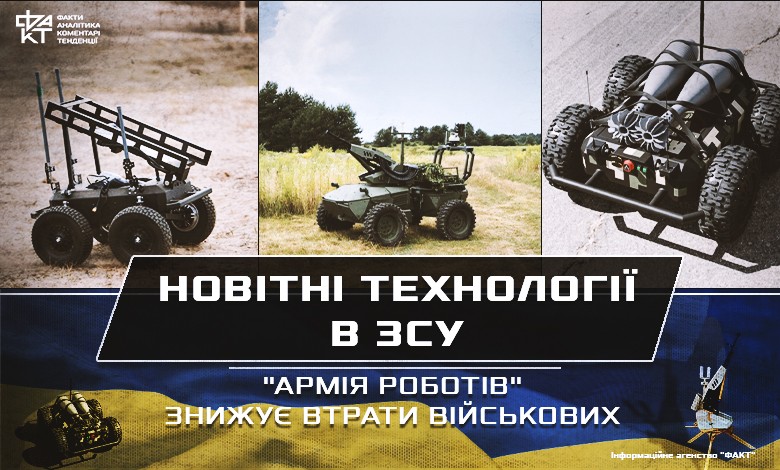
During a full-scale war with the Russian Federation, Ukrainian engineers and scientists are intensively working on the manufacture and improvement of weapons for the Armed Forces. Our country has become a “combat laboratory for finding cheap but effective solutions.” This applies to the use of artillery, drones, robots, household items for the military, equipment and biomaterials for military medicine, etc.
Thus, the National Academy of Sciences of Ukraine introduced a targeted scientific and technical program, within which more than a hundred very important results were obtained. In particular, it created the first domestic samples of transparent armor that meet NATO standards, an X-band radar station and a system for detecting unmanned aerial vehicles, camouflage composite coatings, and developed new elements of radio and optoelectronics for domestic weapons. Many developments are aimed at improving the tactical and technical characteristics of weapons, ammunition, missile systems, increasing the level of ballistic protection, and the survivability of equipment design elements.
In March 2024, the first ever case of a robot battle was recorded in the Bakhmut region – Ukrainian drones destroyed Russian land-based robot platforms. It became a symbol of the new era of military technologies and confirmed the importance of the development of robotics in Ukraine. Ukrainian engineers are actively working on creating their own combat robots, which have already proven their effectiveness on the battlefield. Hundreds of Ukrainian ground drones perform a variety of tasks: conducting reconnaissance, blowing up bridges, demining and demining territories, delivering cargo, evacuating the wounded and even destroying the enemy.
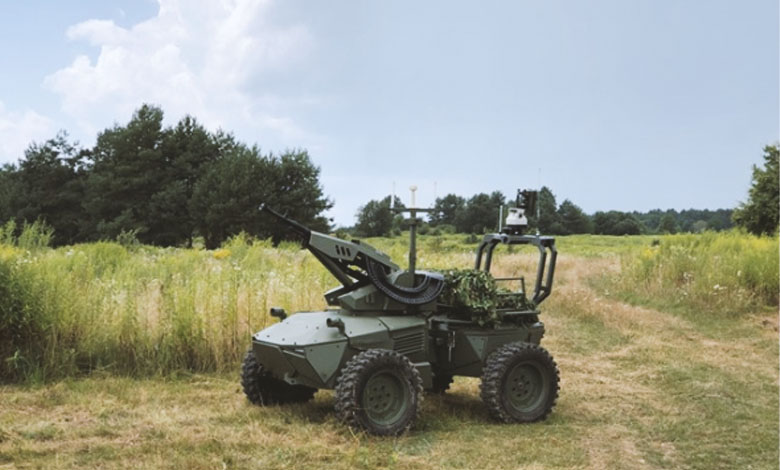
Start of serial production of robot platforms
According to one of the developers, the command’s interest in ground robo-platforms appeared in the spring of 2023, when the commander of the Ground Forces (now the commander-in-chief of the Armed Forces) Oleksandr Syrskyi organized the first tests with a dozen manufacturers. As a result, manufacturing companies began to invest in the creation of ground drones of various types.
“We don’t have orders from the state yet, but we work with military units. We supply up to 100 kamikaze robots and miner robots and four evacuator robots per month. We train 15-20 military operators every week,” said Taras, head of the Ratel robot development department Ostapchuk
The manufacturer of the “Sablia” and “Rys” robots has already signed a contract with the State Special Forces and also supplies dozens of platforms and turrets to the front every month. However, these are isolated cases. Most developers are still undergoing testing or waiting for contracts to be signed. Even after passing the tests, it is difficult to get a government order in Ukraine, because the benefits of the product must be proven to the military on the battlefield. The issue of money is also acute. The Ukrainian military-industrial complex can produce three times more weapons than the state is able to contract. However, arms exports are closed, so some manufacturers are likely to remain without contracts.
Multifunctional robots: versatile soldiers on the battlefield
Ukrainian developers are actively working on the creation of multifunctional robots capable of performing various tasks. One prominent example is the “Ironclad” robot, which can be used for logistics, evacuation, reconnaissance and fire support. Its successful application on the front line confirms the effectiveness of such an approach, but the Ukrainians do not stop there. Back in 2023, Oleksandr Navarenko, who is part of the 3rd Separate Assault Brigade, developed two prototypes of unmanned ground vehicles (UAVs) designed to assist frontline troops in their dangerous assault missions.
The first version dropped anti-tank mines, which, according to Navarenka, wounded Russian soldiers. The second, which has not yet been tested on the battlefield, can silently approach enemy positions in any terrain and fire grenade launchers. Unlike drones, which have already become a ubiquitous and indispensable tool of war on both sides, unmanned ground vehicles have yet to become an integral part of combat operations in the Russian-Ukrainian war.
Kamikaze robots: a new dimension of asymmetric warfare
Kamikaze robots like the Ratel S have become a new dimension of asymmetric warfare. They allow accurate strikes on enemy targets, minimizing the risks for personnel. The use of such robots on the front line has already proven its effectiveness, in particular, in undermining bridges and enemy fortifications. Ukrainian ground robot Ratel S successfully passed field tests. Mass production will now be launched. It is noted that the development was created by Ukrainian specialists as part of the Brave 1 Defense Tech development.
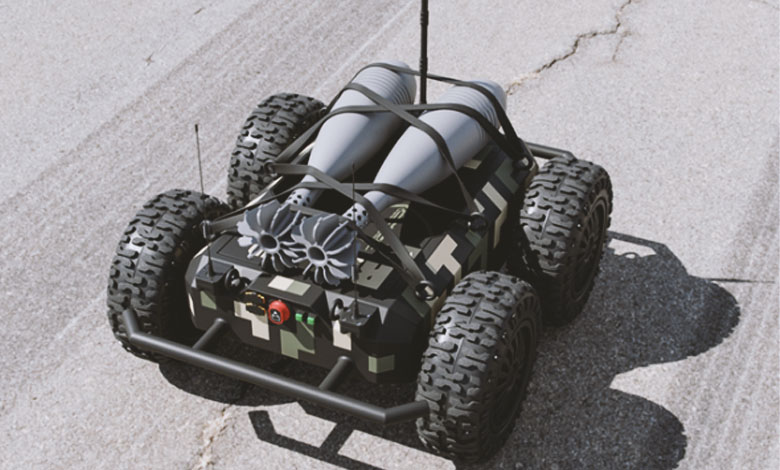
The Ratel S robot, equipped with a special compartment for an anti-tank mine and a combat module that allows the operator to detonate enemy equipment from a safe distance, has already passed field tests in 2023 and has been put into mass production, having proven its effectiveness on the battlefield. This robotic platform, which can accelerate up to 24 km/h and has a range of 6 km, can operate without recharging for up to 2 hours and can also be adapted for use with mortar mines.
Later, the soldiers of the 63rd OMBr showed how they skillfully attacked the Russians with the help of a kamikaze robot. The Ukrainian military saw that the Russians were moving in the trenches between the dugouts and sent a wheeled drone there. Then the robot drove up to their position, stopped above the shelter and exploded. The video shows that the NRK caused considerable damage to the enemy’s fortifications.
Demining robots: increasing the safety of demining
Demining territories has always been one of the most dangerous tasks for the military. On May 3, the State Border Service showed a unique robot sapper. The engineering unit of the border guards, which defuses explosive objects every day, as well as found enemy mines and FPV drones, reconfigures and uses them against the Russian invaders, uses a robot. The robot helps in remote demining and demining of the territory, if necessary, to evacuate the wounded from the battlefield. Its night vision camera allows you to work in the dark.
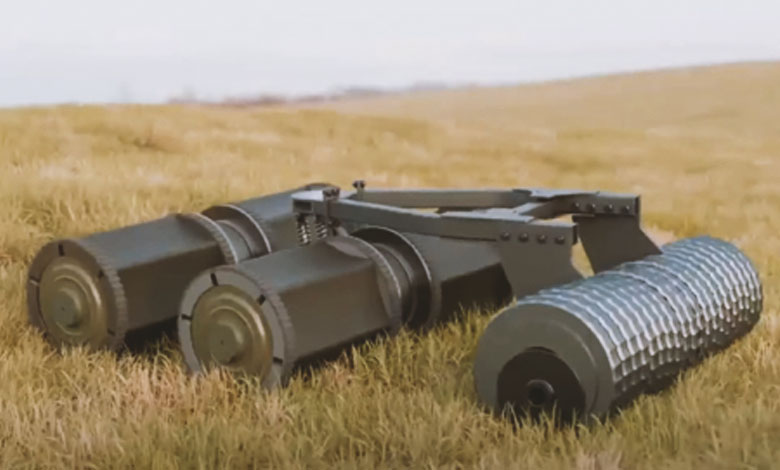
Also in Zaporizhzhya, at the “School of Robotics”, a unique robotic sapper was developed, which is able to significantly facilitate the work of the military and rescuers in dangerous areas. This remote-controlled device can survey mined areas and safely remove explosive objects.
The robot is equipped with a special manipulator capable of lifting loads up to 2 kg, and also has several types of grips for working with various objects. It moves at a distance of up to 300 meters, scanning the area with the help of cameras to detect dangerous objects such as mines, unexploded shells or missile fragments.
A feature of the robot is its ability to work in conditions where the remains of electronics are present, which creates an additional risk of detonation. Thanks to this, the work can be entrusted with the solution of complex tasks with minimal risk to human life.
The creation of the robot became possible thanks to the joint efforts of engineers, teachers and students of the School of Robotics. The cost of the project amounted to about 200 thousand hryvnias, which were collected with the help of caring citizens. Despite the fact that the robot is much cheaper than foreign analogues, its production takes about three months due to the lack of some components. However, the first serial copy has already been successfully transferred to the department of the explosives service of the National Police of the Kherson region.
Development prospects and challenges
Ukrainian military robotics, which is in a stage of active development, with tests of about 50 ground robots and the prospect of their mass implementation, opens up new opportunities on the battlefield, while at the same time giving rise to ethical and legal questions about autonomy and responsibility for the actions of robots.
The introduction of ground robots and other innovations is an important step in the development of military technologies and increasing the effectiveness of the Ukrainian army, because it helps the Armed Forces to increase the accuracy of hitting enemy targets, expand the possibilities of conducting combat operations, and most importantly, it allows to reduce losses among personnel.