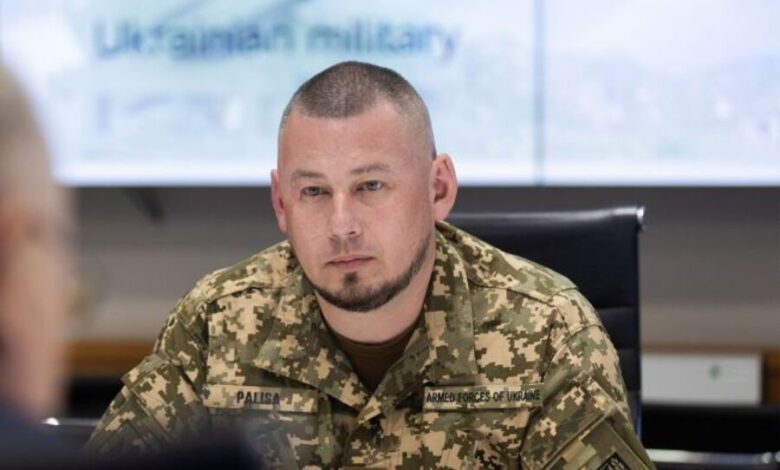
“It is currently impossible to predict how long the war will last”: Pavlo Palisa spoke about the role of the CCC in modern mobilization and the cases of the NWCC

The mobilization process in Ukraine is taking place in the context of a protracted war that has been going on for more than four years, and is a key factor in maintaining the combat capabilities of the Armed Forces. Its main element is the involvement of citizens through territorial recruitment and social support centers (TCS), which provide the majority of recruits to the army. However, the methods of conducting mobilization are increasingly causing public outrage, which is associated with violations of the law, injustice and opacity of the process, as well as aggressive actions of representatives of the CCC.
The role of the CCC in modern mobilization
According to the words of the Deputy Head of the Office of the President, Pavlo Palisa, territorial recruitment centers attract the vast majority of mobilized people. He emphasized that the exact figures are not disclosed for information security reasons, so as not to give the enemy the opportunity to analyze the resources of the Ukrainian army.
“This is the vast majority. I would not like to go into numbers, primarily for reasons of information security. We must not give the enemy the opportunity to analyze our capabilities
The full-scale war with Russia has been going on for four years, and it is currently impossible to predict how long it will last,” — said Palisa.
Palisa noted that in modern conditions, the war has the character of a conflict of attrition, so building up the capabilities of the Armed Forces is becoming a strategically important task. At the same time, the arrival of mobilized through the CCK occurs systematically: citizens undergo an examination, receive the necessary training and are sent to training centers, where they master military skills and prepare to perform combat missions. This structure allows maintaining high recruiting efficiency, and also minimizes the risks of losses in combat units due to uncoordinated actions of recruits.
Cases of the NWCC
Palisa noted that most cases of voluntary abandonment of the unit (NWCC) occur during training in training centers. He explained that the main reason for such cases is evasion of mobilization, and not dissatisfaction with the command or conditions of service.
“Each case here is individual, because each person has their own reasons. But for the most part, we see from statistics that the majority of people who went to the NWCC are not running away from, there, a “bad commander.” A large number of people who have voluntarily left the unit use this as an evasion of mobilization,” he emphasized.
These observations allow us to more accurately assess the effectiveness of the system and develop measures to reduce the number of cases of NWCH. At the same time, the Deputy Head of the President’s Office emphasized that the level of NWCH has remained stable in recent months, and seasonal fluctuations only slightly affect the dynamics of mobilization.
Current dynamics and prospects
According to Palisa, over the past eight months, positive dynamics of mobilization have been observed, which indicates the stable operation of territorial centers and the preservation of the army’s personnel potential. In the conditions of a protracted war, it remains important not only to increase the number of personnel, but also to increase the combat readiness and stability of military formations.
According to Palisa’s statement, the strategic task of the Ukrainian authorities is to strengthen the capabilities of the Armed Forces to solve long-term defense tasks. Against this background, territorial recruitment centers continue to remain a fundamental link in the mobilization system, ensuring not only the replenishment of the army, but also supporting the effectiveness of combat operations in various regions of Ukraine.