JPMorgan Chase CEO on the global threat of the “Axis of Evil”: “This could affect the free and democratic world for the next 100 years”

Recently, the world media has paid considerable attention to economic news and the pre-election race between the candidates from the Republican and Democratic parties of the USA. These topics are undoubtedly important, since the economic situation and political processes in the United States significantly affect the global economy and world order.
However, CEO of JPMorgan Chase Jamie Dimon – one of the most famous bankers in the world – believes, that people should focus less on the latest US economic news and instead worry about Axis of Evil activity.
Why the “Axis of Evil” is currently the greatest evil in the world
Dimon uses the term “axis of evil” to emphasize the seriousness of the threat, which he believes could affect global stability and security. He is referring to Iran, China, North Korea and Russia, which pose a global threat through their aggressive actions and nuclear threats. The authoritative banker believes that these countries can destabilize the world order established after the Second World War and influence the free and democratic world for the next century.
Geopolitical threats from the so-called “axis of evil” are complex and multifaceted. Russia continues military aggression in Ukraine and creates significant instability in Europe. The aggressor country is known for its cyber attacks on other countries, which can disrupt critical infrastructure, as well as the use of energy resources as a tool for political pressure on other countries.
Iran continues to develop its nuclear program, which, of course, causes concern among the international community. The collaborating country supplies Russia with military equipment used in the war against Ukraine. “Land of the Aryans” supports terrorist groups in the Middle East, which destabilizes the region.
At the same time, the reclusive kingdom of Korea continues to develop its nuclear weapons and missile programs, which pose a threat to regional and global security, and maintains an aggressive policy that continues to isolate it from the international community.
China is expanding its economic influence through the Belt and Road Initiative and is developing its technological capabilities, causing concern among Western countries. The Kermanychi of the Middle East do not let the tensions around Taiwan subside, which creates the risk of a military conflict in the region.
What do fluctuations in the financial markets weigh against the war threat to the world
Speaking at the 2024 Financial Markets Quality Conference in Washington on September 17, Dimon focused on Russia’s war against Ukraine, answering questions about the background to the first in four years. decrease in interest by the US central bank and its potential impact on the world economy.
Dimon believes that, other than the two world wars, few military conflicts have had such an impact on the global economy, but noted that the current global instability is having an unprecedented impact on food security, migration and oil supplies, “and it’s getting worse all the time.” An authoritative financier noted: “There were almost a million victims in the war in Ukraine, about 20,000 Ukrainian children were abducted and sent to Russia. Russia has been making constant threats, including nuclear weapons, since the beginning of its full-scale invasion of Ukraine.”
And as discussions between Ukraine and its Western allies have unfolded in recent weeks over possible long-range missile strikes deep inside Russian territory, the Kremlin has stepped up its rhetoric that NATO views such a move as war with Moscow.
Tell me who your friend is, and I’ll tell you who you are
Since launching a full-scale invasion of Ukraine in 2022, Russia has not only deepened but also strengthened its ties with North Korea and Iran, part of its strategy to circumvent international sanctions and seek new allies in global political isolation. One of the main aspects of these relations is active economic cooperation. Russia and North Korea, in particular, exchange goods that help Pyongyang obtain critical technologies to develop its missile and nuclear programs, and Moscow supplies necessary ammunition for its war in Ukraine. Iran, in turn, actively supplies Russia with military equipment, in particular Shahed drones, which Russian troops use to attack Ukrainian infrastructure.
Diplomatic support is also an important element of this cooperation: North Korea and Iran openly support Russia’s actions in the international arena, opposing Western sanctions and condemning the actions of NATO and the United States. In addition, they actively participate in the promotion of anti-Western rhetoric in international organizations, trying to legitimize their aggressive actions. Such cooperation indicates the formation of an unofficial alliance that seeks to change the global balance of power and opposes democratic values and the Western world order.
So, in September 2022, Russia purchased millions of shells and missiles from North Korea to support its aggression in Ukraine. In March, the Ukrainian prosecutor’s office reported that since the start of the full-scale invasion, Russia had fired fifty such missiles to attack six Ukrainian regions. Both Kyiv and Washington have confirmed that Russia used North Korean-made missiles to attack Ukraine. In exchange for ammunition, Russia reportedly provided North Korea with technology to help it deploy reconnaissance satellites, as well as tanks and aircraft.
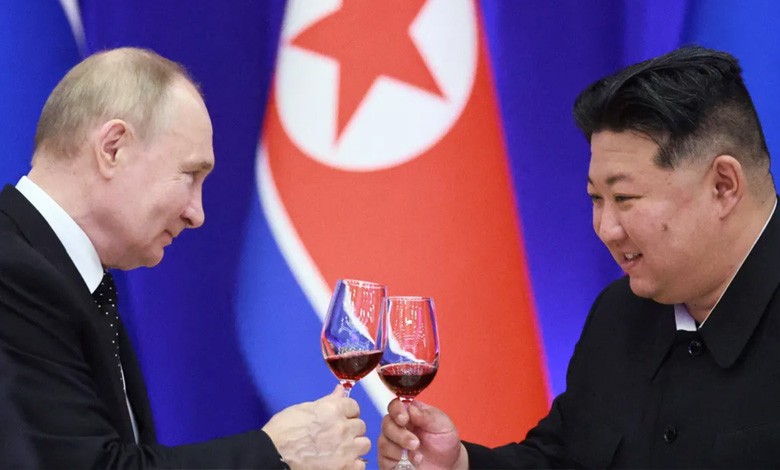
In late June, Putin visited Pyongyang, where he signed a partnership agreement with Kim Jong-un, pledging to help each other if one of them was attacked. The hermit kingdom supported Russia in the international arena, recognizing the independence of two separatist regions in eastern Ukraine. In addition, Kim Jong-un’s patrimony helped Russia to satisfy the manpower shortage caused by the mass mobilization of Russians.
As for Iran, it supplies Russia with drones and other military equipment to continue its war against Ukraine. The US recently confirmed that Iran had supplied Russia with short-range Fath-360 ballistic missiles. Tehran also provided Moscow with thousands of Shahed kamikaze drones. In addition, the countries have concluded a number of agreements in the field of energy, which allows both to bypass international sanctions and support their economies. Finally, the “land of the Aryans” supports Russia in the international arena, opposing Western sanctions and policies.
So the countries that Jamie Dimon refers to as the so-called “Axis of Evil”—Russia, Iran, North Korea, and China—share strategic interests that oppose the Western world order based on democratic values and free markets. Their alliance is based on the desire to limit the influence of the West and support authoritarian regimes, which threatens further global destabilization. Each of these countries has its own specific motivations and tactics: Russia uses military force and energy pressure, Iran uses nuclear ambitions and support for terrorist groups, North Korea develops nuclear weapons, and China uses economic and technological penetration through projects such as the Belt and Road Initiative. one way”. The interaction of these countries poses a threat to global security, deepening regional conflicts, violating international law and threatening the stability of the world economy. The joint activity of these states leads to the polarization of the world into blocs, which can drag out conflicts for long periods and create the risk of large-scale military clashes that will affect the security and economy of the world for decades to come.
Tatyana Morarash