June 26 marks the International Day in Support of Victims of Torture, the International Day Against Drug Abuse and Illicit Trafficking, the World Cold Day, the Day of the Cosmetologist and the Birthday of the Toothbrush. Also, this day in different years witnessed scientific discoveries, cultural breakthroughs, historical decisions and symbolic changes.
International Day in Support of Victims of Torture
It was on this day in 1987 that the UN Convention against Torture and Other Cruel, Inhuman or Degrading Treatment or Punishment entered into force. The Convention was an important step in the fight against impunity and the protection of human dignity. It obliges States Parties to prohibit the use of torture in any form, without exception, even in times of war or in a state of emergency. Not only a ban is provided, but also responsibility: those who have committed torture must be brought to court.
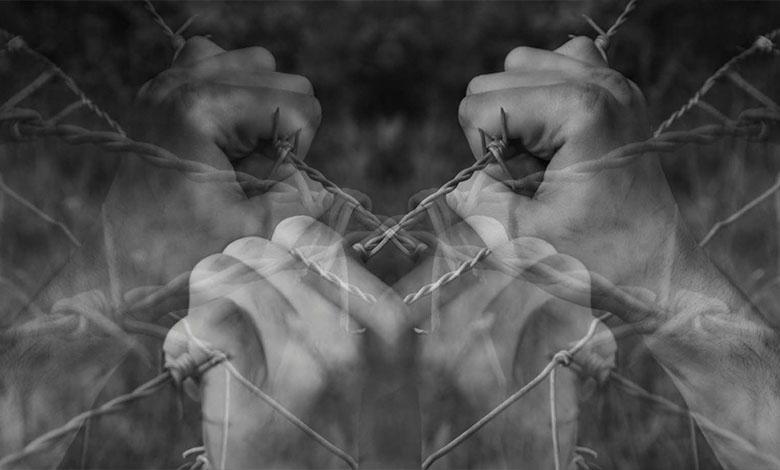
June 26 is a day of solidarity with those who survived torture. It is designed to support victims, strengthen their protection and emphasize the right of every person to the inviolability of the body and dignity.
In many countries, on this day, events dedicated to the rehabilitation of torture victims, advocacy for increased control over law enforcement structures, and the investigation of facts of ill-treatment are held.
Interesting facts
More than 170 countries of the world are parties to the Convention against Torture, but far from all actually ensure its implementation. In many countries, torture remains a systemic practice.
Article 3 of the Convention prohibits the return or extradition of any person to a country where he is at risk of torture, even if that person is suspected of a crime.
After the signing of the Convention, the Committee against Torture was created – a special body that verifies the fulfillment of obligations by states and considers the complaints of victims.
The European Court of Human Rights has issued hundreds of judgments regarding torture, found to be a violation of Article 3 of the European Convention. Ukraine is among the countries for which such decisions were made most often.
In the years 2022–2024, the mass use of torture was recorded in the territories of Ukraine occupied by Russia. Public reports of the UN and human rights organizations have documented systematic cases of beatings, rapes, and mock executions.
In international law, torture is considered a crime that does not have a statute of limitations — a person guilty of such actions can be punished even decades later.
International Day Against Drug Abuse and Illicit Trafficking
This day was established by the UN General Assembly in 1987 to stimulate international cooperation in the fight against drug trafficking and to raise public awareness of this threat.
The global drug problem includes not only a criminal component, but also a crisis in health care, social isolation, infectious diseases, the rise of addiction among young people, the breakdown of families and threats to security. The focus of this day is not only the restriction of access to drugs, but also prevention, treatment, reintegration and protection of human rights.
Every year, the United Nations Office on Drugs and Crime (UNODC) publishes a report on the state of affairs in the world – the World Drug Report. It contains analytics on new substances, markets, number of consumers and challenges for states.
Against the background of global conflicts, economic instability and the development of synthetic substances, drug risks are increasing. The governments of many countries, including Ukraine, are adopting national strategies aimed at reducing demand, humanizing politics and international coordination.
Interesting facts
According to UNODC, only one in five drug addicts in the world receives proper treatment.
In 2024, more than a thousand new psychoactive substances were recorded, which are not officially classified as drugs, but have similar effects. This creates difficulties for the regulatory authorities.
In Afghanistan, after the Taliban came to power in 2021, the opium poppy cultivation area decreased by 95%, but during the same time, the production of methamphetamine increased rapidly.
In some West African countries, drug trafficking is so integrated into the economy that it has become a source of funding for rebel groups and political elites.
In Ukraine, according to the Ministry of Health, more than 300,000 people have disorders related to drug use. During the war, the number of attempts at self-medication increased, particularly among military personnel and displaced persons.
Despite the high level of criminalization, many European countries are moving away from repressive methods. Portugal, for example, decriminalized the possession of small doses back in 2001 and significantly reduced the death rate.
In 2023, UNODC officially acknowledged for the first time that the war in Ukraine had created new routes for drug trafficking, including through the war zone and occupied territories.
World Cold Day
This day was first celebrated on June 26, 2019 at the initiative of the International Institute of Refrigeration (IIR) and specialized organizations from more than 50 countries. Its goal is to raise awareness of the importance of cold technologies in today’s world, particularly in medicine, food, logistics, energy and climate protection.
The date was chosen in honor of Lord Kelvin’s birthday, William Thomson, a British physicist and engineer who in the 19th century laid the foundations of thermodynamics and proposed an absolute temperature scale known as the Kelvin scale.
Refrigeration systems are critical, because without them it is impossible to imagine the storage of vaccines, the transportation of products, the operation of server centers or the climate control of airplanes. World Cold Day is designed to show that “cold” is not only about comfort, but also about safety, efficiency and science.
Interesting facts
More than 1.5 billion people in the world depend on the cold supply chains of food and medicine. Without them, most vaccines lose their effectiveness within hours.
In agriculture, product losses due to lack of proper cooling reach 30–40% in countries with a hot climate.
For the first time, the effect of cooling to preserve food was recorded in ancient China over 3,000 years ago, when ice from mountain caves was used.
Refrigerators are one of the biggest energy consumers in everyday life. In developed countries, up to 20% of all household electricity is used for cooling.
Modern “green” refrigeration equipment is actively switching to new refrigerants that do not destroy the ozone layer and have a low greenhouse potential.
Day of cosmetologist
Initially, this date was a professional holiday of cosmetologists in the USA, but over time it acquired an international character. Today, it is informally recognized in many countries of the world as a day of appreciation for specialists in skin care, appearance and aesthetic health.
Cosmetology combines knowledge of medicine, dermatology, chemistry and psychology. It covers both basic skin care and complex hardware procedures, injections and rehabilitation programs after dermatological diseases or operations.
This day does not have an official status in the calendar of the UN or the Ministry of Health, but it is widely used in the professional community to raise awareness of the role of the cosmetologist, share experiences and remind about the standards of ethics and safety in working with the face and human body.
Interesting facts
The term “cosmetology” was first recorded in France in the 18th century, and the first cosmetology schools began to work in Paris already in the middle of the 19th century.
In some countries, such as Germany or Japan, cosmetologists are required to have medical education or a doctor’s license if they perform invasive procedures.
Modern injectable cosmetology, which includes Botox and fillers, became popular only in the 2000s, although the first attempts at injectable rejuvenation were made as far back as the 1930s.
According to the International Association of Aesthetic Medicine, more than 80% of cosmetologists’ clients are women aged 25 to 55, but the demand among men is growing every year.
During the COVID-19 pandemic, the cosmetology industry lost millions of dollars due to quarantines, but already in 2023 the market exceeded pre-war volumes.
Toothbrush birthday
On this day in 1780, the Englishman William Edis started the mass production of a toothbrush. It is believed that he created the first serial model of a brush with a handle made of bone and bristles from the jaw of a pig, which was fixed in drilled holes with the help of wire.
Despite the fact that prototypes of toothbrushes existed in Ancient Egypt, China and India, Edis’s invention became the prototype of the modern design, which was later improved taking into account hygienic and ergonomic requirements.
Today, the toothbrush is a personal hygiene staple that comes in a variety of shapes, hardnesses, materials, and even digital functions. It remains a key tool in the prevention of caries, periodontitis and other diseases of the oral cavity.
Interesting facts
The first toothbrush with nylon bristles was invented in the USA in 1938 after the appearance of nylon. Before that, natural animal bristles were used.
William Edis invented the toothbrush while in prison — after watching the guards clean their weapons, he decided to apply a similar principle to dental care.
In medieval Europe, instead of brushes, pieces of cloth or fingers soaked in wine, vinegar or ash were used.
According to the WHO, regular brushing with a fluoridated paste reduces the risk of caries by 30-50%.
Toothbrushes are one of the most “migrating” objects in design: from monoblocks to modular heads, from classics to ultrasonic options with Bluetooth connection.
Historical events on this day
1886 — the French chemist Henri Moissant isolated pure fluorine, one of the most chemically active elements, for the first time in history. His achievement was a breakthrough in the field of inorganic chemistry, because fluorine had long remained “elusive” due to its extreme reactivity.
1925 — the premiere of one of Charlie Chaplin’s most famous silent films — “The Gold Rush” — took place in Hollywood. This film became a milestone for the development of cinematography and confirmed Chaplin’s status as one of the most influential artists of the era.
1940 — the leadership of the USSR introduced a seven-day work week without days off and established criminal liability for being late for work.
1945 — in the city of San Francisco, representatives of 50 countries of the world signed the Charter of the United Nations. This marked the legal birth of the United Nations, a key international body designed to maintain peace, security, and cooperation among nations after World War II.
1960 — Madagascar announced independence from France. The island state in the Indian Ocean thus joined the wave of decolonization that swept Africa in the middle of the 20th century.
1974 — in the USA, for the first time in history, a product with a barcode was sold. It was the packaging of Wrigley chewing gum that became a symbol of the beginning of a new era in commerce, automation and logistics.
1997 — Joan Rowling’s first book about a boy wizard — “Harry Potter and the Philosopher’s Stone” — was published in Great Britain. She opened one of the most successful literary franchises of our time, which later grew into a global cultural phenomenon.
2003 — The US Supreme Court ruled that laws prohibiting homosexual relations violate the Constitution. This decision became an important step in the fight for the rights of LGBT people in the United States.
2006 — the national football team of Ukraine, which participated in the World Cup for the first time, defeated Switzerland in the 1/8 finals in a penalty shootout and entered the quarterfinals. It was a historic success for Ukrainian football.
2012 – Astronomer Mark Showalter from the SETI Institute discovered the smallest satellite of Pluto at the time – Styx. The discovery added to the knowledge of the peripheral regions of the Solar System.
2015 — The US Supreme Court ruled that all 50 states are required to issue marriage licenses to same-sex couples. This became the final legal recognition of marriage equality in the country.