Legal consequences of the lack of registration of the place of residence: lawyers explain

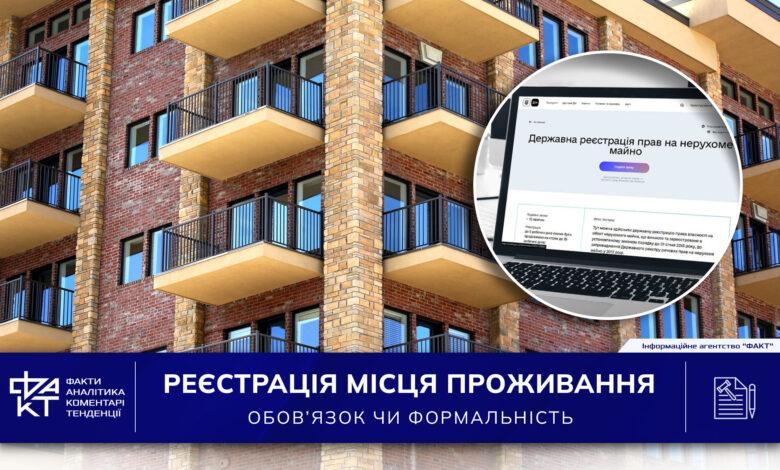
Registration of the place of residence is a mandatory procedure for every Ukrainian. It is well known to most people since the past years under the name “registration” and still raises many questions: does registration really have a legal meaning, what rights and obligations does it create, and what does a person really risk if he lives without it? In Ukrainian legislation, ownership does not always arise simultaneously with registration. Although registration in the State Register of Rights to Real Estate is mandatory, registration in itself does not always protect against risks. However, in many life situations, it becomes the key factor for realizing human rights and legitimate interests. Obtaining medical services, social benefits, processing documents, participating in elections, even the possibility of enrolling a child in kindergarten or school — all this is tied to the place of registration.
Lawyers of the “Repeshko and Partners” Bar Association explained how the system of registration of the place of residence in Ukraine works, what legal consequences its presence or absence has, and in which cases its absence can turn into a serious problem.
According to statistics, before the start of hostilities on the territory of Ukraine in February 2022, approximately 15% of the country’s population actually lived outside their place of registration, which was more than three million citizens. Now, due to the long active hostilities, this number is much higher. However, a significant territory of Ukraine continues to live a fairly peaceful life, accepting internally displaced persons – those who came both for temporary residence and those who decided to connect their fate with a new place in the future and acquired real estate. However, now not only IDPs are becoming the owners of new real estate, but some, taking advantage of sufficiently low prices, buy real estate for rent, some simply decide to move to live in another region, some buy for their children in the future. But the very next step after signing the contract of sale of an apartment or house at a notary, many people have the question of registration in the purchased residential property.
It should be noted that there is currently no such term as “registration” legally. The term “registration of place of residence” has been used at the legislative level for many years. However, in essence it is one and the same institution, and therefore ordinary citizens continue to use the term “registration” quite often.
Article 5 of the Law of Ukraine “On the Provision of Public (Electronic Public) Services Regarding the Declaration and Registration of Residence in Ukraine” states that a citizen of Ukraine who lives on its territory, as well as a foreigner or a stateless person who legally resides permanently or temporarily on the territory of Ukraine, must declare or register it within 30 calendar days after arriving at a new place of residence (stay).
What is the penalty for violating the specified deadline? According to the provisions of Article 197 of the Code of Ukraine on Administrative Offenses, the residence of citizens without a passport or with an invalid passport, as well as the lack of registration of the place of residence, is an administrative offense. A warning is provided for such actions. If a person repeatedly violates these requirements within a year — that is, lives again without a passport, with an invalid document or without registration of the place of residence — this already entails the imposition of a fine in the amount of one to three tax-free minimum incomes of citizens. Therefore, the law directly defines the duty of a citizen to have a valid passport and take care of the registration of the place of residence, and also establishes responsibility for ignoring these norms.
As you can see, the sanctions are not terrible warnings or fines from 17 to 51 hryvnias. And so it is possible endlessly…. The thing is that they can find out that you lived somewhere without registration only when you yourself apply for registration at the National Social Security Administration at a new address. Cases on administrative offenses provided for by Article 197 of the Code of Administrative Offenses of Ukraine should be considered by the executive committees (executive bodies) of village, settlement, and city councils, not by courts. Therefore, on the spot, you will either be scolded or offered to pay a fine in case of repeated violation.
There are rare cases when the purchased residential property is not the only one owned by a citizen. In this case, the question arises about the feasibility of changing the place of registration from the old to the new. Currently, the current legislation of Ukraine does not contain any norm that obligates someone to register in an apartment or house. Therefore, a person cannot not have a place of registration, but an apartment or a house can exist without citizens registered in them. At the same time, the issue of charging for utility services is solved quite simply – it goes as if for one registered person, and if there are meters, payment is made for what is actually consumed.
It is possible to register a place of residence by contacting: the executive body of village, settlement, city councils for the location of real estate; Center for the provision of administrative services at the location of the real estate or State Enterprise “Diya” (via the Diya mobile application).
The following documents must be submitted for registration:
- an application for registration of the place of residence of the established model;
- a document confirming the payment of the administrative fee, which amounts to UAH 45.42.
- military registration document (for citizens of Ukraine who are subject to military registration or are on military registration).
- documents confirming ownership of real estate;
- passport data, RNOKPP code.
We would like to note that the second part of Article 6 of the Law of Ukraine “On Freedom of Movement and Free Choice of Residence in Ukraine” stipulates that if a person cannot apply to the registration body on his own, registration can be carried out at the request of his legal representative or a representative on the basis of a power of attorney certified in accordance with the procedure established by law.
And now to the main thing – is it necessary that the registration of a citizen’s place of residence coincides with his actual place of residence? Yes, it is better to be registered exactly where you actually live, especially if we are talking about the territories of different territorial communities. Yes, now many services provided by the state or local authorities are not tied to the place of residence. It is possible to make a declaration with a doctor with anyone at your discretion. But it’s easier to refer a doctor for tests and specialized specialists exactly where you actually are and live. Another aspect is recruitment. Attention is drawn to the registration of the place of residence, when an employee is allowed access to material assets, banking secrets, and confidential information during employment. If the choice will be between a local employee and an employee with registration thousands of kilometers away, then the choice under such conditions will be obvious.
But the most important point among all is the consideration of cases by the courts. Some court cases are tied to a person’s place of residence, for example, establishing the fact of family relations. However, this is not more important. Many court cases are considered according to the principle – according to the place of registration of the defendant. At the same time, the courts carefully check the address of registration, which is indicated in the statement of claim or directly in the register of the territorial community, or by sending a corresponding request to the territorial community. All subpoenas will be sent to the registered address.
By ignorantly ignoring a court case, it is possible to get such a court decision, which will then be quite difficult to appeal. According to the same principle, at the debtor’s place of registration, an appeal is made to the state executive service, which implements a court decision that has already entered into force. And you will be very pleased if someone from your relatives lives at the registration address where you do not actually live, who will inform you about a court summons or the fact that the state bailiff came, and not the other way around, will hide these facts.
Registration at the place of residence is currently relevant for men of conscription age, because all summonses and notices are sent by the TCC and SP to the place of citizen’s registration, taking data from the register of the territorial community. Binding to the TCC and JV at the place of registration obliges the man to turn to his TCC and JV for the resolution of any military issues. It should not be forgotten that if the summons from the TCC and JV did not find its addressee, the next step is the imposition of a fine in the amount of up to UAH 17,000. A message from the executive service about such a fine, which was missed in the mail, already doubles the amount to 34,000 hryvnias.
However, registration is important not only for military matters. Registration of pension and many social benefits and payments is carried out precisely at the address of the place of registration, while the state authorities are very meticulous about this issue. But if it is still more convenient for you to remain registered under the old residence, there are no obstacles to this.
As for housing that was purchased for rental. We have repeatedly come across the opinion that in such a case it is not at all necessary for someone to be registered in such a room. We consider this approach very controversial. The fact is that the tenants are different and they pay honestly, the apartment is kept in good condition and there are no problems with them at all. Then yes, this approach is correct. But sometimes, at first glance, a decent person turns out to be not quite like that over time. In the event that the tenant refuses to pay for housing, citing a lack of funds, and refuses to move out of the premises, citing the fact that they and their child have nowhere to go, your registration and your child at this address can be the lever that will allow you to resolve such issues quickly and painlessly.
It is at this stage that a legal myth is mentioned, which circulates among ordinary citizens – how to live in a house or apartment for many years, and even more so, being registered (registered) in it, you get the right of ownership in such real estate.
As a general rule, this is not true, but there is one exception. According to Article 344 of the Civil Code of Ukraine, a person who in good faith has taken possession of someone else’s property and continues to openly and continuously own immovable property for ten years or movable property for five years, acquires the right of ownership of this property (acquisitive statute of limitations), unless otherwise established by this Code. In accordance with part 2 of this article, a person who declares the time limit of possession can add to the time of his possession all the time during which the person, whose heir (successor) he is, owned this property.
This is a very complex issue and is resolved through the court. So that no one has a reason to even talk about such a thing, let alone go to court, make it a rule for yourself:
- always pay utility bills in person and keep receipts;
- do not allow anyone to do repair work on your real estate;
- if you carry out repair work at the request of the residents of the housing, also keep all checks and receipts;
- if necessary, only personally communicate with representatives of state and communal bodies regarding your real estate;
- get to know your neighbors, leave them your contact details, ask them to add you to the house/driveway/street chat;
- keep receipts and receipts for appliances and furniture purchased for housing.
The mentioned steps can save you not only your nerves, but also your property, because we know of cases when state bailiffs came to the tenant who had large credit debts at the place of actual residence, described the property, without understanding whose it is, and then confiscated it.
So, ideal situations do not exist. Each case has its pros and cons. Therefore, before deciding on any legally significant step, we advise you to calculate everything carefully yourself, or to seek the advice of a specialist. Sometimes it is much easier to prevent a problem than to solve it later.