Liquidation of Legal Programs: Hidden Consequences of the Reform in Law Enforcement Institutions

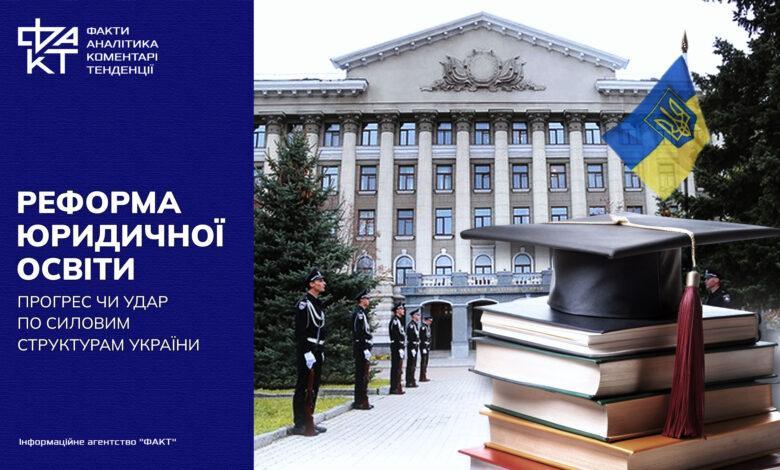
The Verkhovna Rada gave the “green light” to the concept of legal education reform, which can fundamentally change the approach to the training of lawyers in Ukraine. The initiative envisages radical steps – banning legal programs in higher education institutions of the Ministry of Internal Affairs, the Security Service of Ukraine, military and other departmental educational institutions, eliminating the correspondence form of education, as well as reducing the number of law higher education institutions. The official goal of this concept is to improve the quality of legal education and the formation of competitive specialists. However, won’t this reform lead to the creation of new problems, in particular, the narrowing of access to the profession and the monopolization of legal education? How realistic are the proposed changes, and do they take into account the specifics of legal training in Ukraine?
What the new concept entails
The working group formed on the basis of the Verkhovna Rada committees on legal policy and education approved the concept of reforming higher legal education and primary access to the legal profession, which marks the beginning of large-scale changes in the system of training lawyers in Ukraine. The next stage will be the development and registration of the draft law based on this concept.
One of the key provisions of the concept is the ban on the training of lawyers in higher educational institutions of the Ministry of Internal Affairs, the Security Service of Ukraine, as well as in higher military and other departmental educational institutions. In particular, the training of lawyers will be allowed only in a specialty that meets the international standard 0421 Law (ISCED-F 2013), and will be carried out exclusively in higher education institutions subordinate to the Ministry of Education and Science or in private universities. At the same time, higher educational institutions with specific training conditions, such as academies of the Ministry of Internal Affairs or the Security Service of Ukraine, will focus on the training of specialists specializing in “Law enforcement” and not “Law”, which should contribute to the retention of personnel in the relevant bodies. That is, graduates of departmental universities will not be able to work as lawyers or legal advisers. The authors of the reform are convinced that this will reduce the need to constantly replenish the personnel of the law enforcement agencies and, accordingly, reduce the costs of their training.
Another innovation is the reduction in the number of law schools in Ukraine. The authors of the concept believe that the current number of law faculties is excessive and does not meet the needs of the market. In terms of the number of educational institutions training lawyers in the “Law” and “International Law” specialties, Ukraine significantly exceeds the average indicators of the European Union states. The concentration of training of lawyers in smaller but higher quality educational centers should improve the level of graduates and meet international standards.
Another important aspect of the reform is the rejection of correspondence education for legal specialties. Instead, it is proposed to introduce a mixed form – a combination of face-to-face and remote formats, where at least half of the classes and practical training will be conducted in classrooms. This approach, according to the developers, will increase the quality of education, because the correspondence form is often criticized for the low level of knowledge control and insufficient practical training. In addition, the concept provides for the abolition of the training of lawyers at the levels of professional preliminary education, junior bachelor’s and bachelor’s degrees – obtaining a master’s degree will be possible only on the basis of a complete general secondary education.
The reform will also affect the admission process and assessment of the quality of education. For admission to the master’s degree in law, it is planned to introduce testing of general educational competencies, which will be conducted using the technologies of external independent assessment. This will become an alternative to the external examination in mathematics, which will potentially expand access to the profession for applicants with a humanitarian mindset. At the same time, the Unified State Qualification Examination will receive greater weight in the evaluation of the quality of legal education programs, which should stimulate higher education institutions to raise the standards of education. Therefore, future lawyers are expected to undergo a more thorough selection at the admission stage.
The concept also provides for the involvement of teachers from foreign law schools, which should contribute to the integration of Ukrainian legal education into the international space, the introduction of advanced educational methods and the increase of the competitiveness of graduates. It should be noted that the need to reform legal education was mentioned in the reports of the State Judicial Administration based on the results of the implementation of the USAID donor program “Justice for All”.
The authors of the concept believe that the introduction of an end-to-end master’s program in the field of legal education will significantly reduce state costs. One of the key savings factors is reducing the duration of education to five years, while the current system provides for 5.5 or even 6 years for a full legal education. This means that education seekers will be able to enter the labor market faster, and the state will spend less resources on their training. Also, the implementation of the proposed changes will contribute to reducing the number of educational programs in law. This will lead to cost savings, as the need to finance scientific-pedagogical and administrative personnel will decrease. In addition, reducing the number of programs will allow to reduce the costs of accreditation procedures, which also require significant financial investments.
According to the reformers, an important aspect of the concept is the optimization of costs for the training of specialists in educational institutions with specific training conditions. Refusal to train lawyers in such institutions will significantly reduce budget expenditures. This applies to both direct costs of training students and indirect costs, for example, paying for utility services or maintaining libraries for students who study at their own expense or with the financial support of legal entities.
The authors of the concept draw attention to the fact that a number of educational institutions are under the management of departments such as the Ministry of Internal Affairs, the Ministry of Justice, the Security Service of Ukraine and other state bodies. Such institutions have a special status and separate conditions for recruiting students, which involves significant amounts of state funding. According to the initiators of the concept, this contradicts the principle of equal access to legal education and creates unequal conditions for applicants.
Possible consequences of the proposed concept
The concept of reforming legal education causes an ambiguous reaction, as it affects not only it, but also the personnel policy of law enforcement and other law enforcement agencies. The official motivation for such a reform is the need to improve the quality of legal education and ensure targeted training of personnel for law enforcement agencies. This solution has its advantages, but the possible consequences of such an innovation should be considered. First, the reduction of educational institutions that train lawyers may lead to a shortage of personnel in the future. Official educational institutions traditionally provided law enforcement agencies and other power structures with qualified lawyers who received knowledge taking into account the specifics of their future service. The elimination of many training programs calls into question the possibility of high-quality training of security forces.
Secondly, the concept provides for the elimination of correspondence education in legal specialties. This limits access to legal education for many citizens, including those already working in the field of law and seeking to upgrade their qualifications.
The third important aspect is the personnel policy of the security forces. The authors of the reform claim that eliminating the training of lawyers in the institutions of the Ministry of Internal Affairs and other departmental institutions will reduce the outflow of personnel. This statement seems contradictory, because many graduates of such institutions remain to work in the relevant structures anyway. On the other hand, the limitation of opportunities to receive classical legal education within law enforcement agencies may negatively affect the level of professionalism of future employees of the law enforcement system, as well as the number of those wishing to study in such institutions. In addition, a narrower legal training will lead to the fact that any lawyer will be able to easily “break down” a criminal proceeding opened by less qualified law enforcement investigators.
Another debatable point is the intention to reduce the number of law schools in Ukraine. Indeed, law faculties in non-specialized educational institutions are often opened without the proper scientific base and personnel support. This is a separate issue, and it does not relate to departmental education. However, a mechanical reduction in the number of such institutions without assessing their quality can lead to undesirable consequences, in particular, increasing competition for admission and reducing the availability of legal education for the general population.
Ultimately, the reform envisages strengthening the influence of the Unified State Qualification Exam on the quality assessment of educational programs. This appears to be a logical step as it raises the standards for the assessment of graduate knowledge, but the risks of over-centralizing assessment should be considered. For example, the introduction of additional testing of general academic competencies instead of external independent assessment in mathematics raises questions about the objectivity and effectiveness of such an approach.
No less controversial is the point of the concept of attracting foreign teachers from leading law schools. This can be an important step towards the integration of Ukrainian legal education into the international space, but it will require significant financial resources and the creation of favorable conditions for such specialists. In the context of budget restrictions, which the authors of the reform refer to, the implementation of this provision remains under great question.
Currently, there is an extensive system of educational institutions in Ukraine that are engaged in the training of future lawyers. It covers 168 institutions of higher education and 117 institutions of professional pre-higher education, which allows providing the labor market with a large number of qualified lawyers. Among these institutions are both classical universities and academies, as well as specialized educational institutions subordinated to various state bodies.
A significant part of this system is made up of institutions under the control of the Ministry of Internal Affairs, the Ministry of Defense, and the Security Service of Ukraine. It is these educational institutions that have a special status and training conditions, focusing not only on academic knowledge, but also on specific practical skills necessary for service in the armed forces. Thus, the system of military education in Ukraine includes 12 higher military educational institutions and military units in civilian universities. They include two universities, four academies and six military institutes. At the same time, three military institutions have the status of national, which emphasizes their high level of training.
A special place in the system of departmental institutions of higher education is occupied by the higher systems of the Ministry of Internal Affairs. Among them are the National Academy of Internal Affairs, Kharkiv National University of Internal Affairs, Dnipro State University of Internal Affairs, Lviv State University of Internal Affairs and others. They train specialists for law enforcement agencies, combining theoretical knowledge with practical classes and internships.
The National Academy of the Security Service of Ukraine is the only higher military educational institution in the country that trains counterintelligence officers. Here, future employees of the SBU also receive the necessary specialized training, in particular in the field of law and law enforcement. In addition to the needs of the Security Service of Ukraine, the Institute of the Security Service of Ukraine at the National Law University named after Yaroslav the Wise operates, which provides training for bachelors and masters in the field of law and law enforcement.
So, in our country there is a powerful system of legal training, which covers both civilian and departmental educational institutions. At the same time, the developers of the concept believe that there are differences in the admission procedures for legal specialties depending on the type of educational institution – for departmental educational institutions, separate admission rules are applied, which differ from the general procedure approved by the Ministry of Education and Science (MES). This creates unequal conditions for applicants and contradicts the constitutional principle of equal rights to higher education.
This position of the developers of the concept is incompetent, because this principle does not mean that all applicants have identical admission conditions, regardless of the specifics of the future profession. Departmental educational institutions have a special status related to the training of personnel for service in law enforcement agencies. Their graduates do not just receive a legal education, but undergo education and training in specialized programs that involve military or law enforcement service, which significantly distinguishes them from civilian lawyers. Accordingly, admission procedures to such institutions should take into account specific requirements for future specialists, including physical training, special and psychological testing, level of discipline and readiness to work in conditions that are not typical for the civilian legal environment.
The system of training lawyers in Ukraine is quite balanced, because it covers both civilian universities and specialized departmental institutions, which allows to provide law enforcement agencies, the judicial system and law enforcement structures with highly qualified specialists. If you follow the logic of the authors of the concept, you can also question the special selection procedures that are in place for admission to diplomatic institutions or educational institutions in the field of art with their creative competitions. It is important to understand that different conditions of admission are not a violation of the principle of equality, but rather reflect the specifics of training and future professional activities of graduates.
In addition, the developers of the concept claim that the volume of state orders for the training of lawyers in general remains unreasonably large and is unevenly distributed among state customers. Thus, in 2024, the Ministry of Internal Affairs received more places in the state order for the training of bachelors of law than the Ministry of Education and Culture. However, this statement is also not objective. The assessment of the volume of the state order for the training of lawyers cannot be separated from the real needs of the state, in particular its law enforcement system. Claiming that the total amount of training of lawyers is “unreasonably large” without a detailed analysis of the personnel deficit in various state bodies is a superficial approach that does not take into account the real situation on the labor market and the needs of law enforcement agencies.
The distribution of public order places between the Ministry of Internal Affairs and the Ministry of Education and Science cannot be carried out according to the principle of mechanical equal distribution, since these departments have completely different tasks and personnel requests. Unlike the Ministry of Internal Affairs, the Ministry of Internal Affairs not only trains lawyers in the classical sense, but also provides personnel for the national police and other law enforcement units, where the shortage of personnel is particularly acute. Lawyers who study under the state order at the Ministry of Internal Affairs are actually already part of the force structure and immediately go to work in their specialty after graduation, which is radically different from the situation in educational institutions subordinate to the Ministry of Education and Culture, where many graduates may not find employment in their specialty.
In addition, the thesis about “uneven distribution of state orders” goes against the logic of the functioning of the state apparatus. Different departments have different staffing needs, and they cannot be artificially unified. For example, in a certain year, there may be a need to strengthen the composition of the police or the border service, which fully justifies the increase in state orders for departmental institutions. At the same time, reducing the funding of such programs in favor of civilian higher education institutions may lead to a critical shortage of personnel, for example, in law enforcement agencies, which will directly affect the level of security in the country.
Therefore, the statement about the “unfounded” amount of the state contract and its “uneven” distribution does not take into account key factors: the specifics of the work of various departments, the real needs for personnel, and the fact that lawyers trained as part of the state contract for departmental educational institutions perform specific official tasks, and not just receive an education.
Also, the concept creates a new barrier for those who want to get a legal education, but cannot study full-time at a limited number of universities. This will affect not only school graduates, but also adult learners who want to change professions or work and study at the same time. Under such a reformation, legal education in departmental educational institutions risks losing its attractiveness for applicants, and therefore the future shortage of personnel. Strict restrictions, the elimination of legal programs, the destruction of correspondence education and the reduction of the number of educational institutions will not improve the quality of the training of lawyers, but will only narrow the circle of those who want to enroll.
As a result, we will get a reduction in competition among applicants, a decrease in the number of truly motivated applicants and an outflow of future lawyers to related professions or even outside the country. And those who remain will study in conditions of destroyed competition and rising costs of education due to a limited number of places. This is not a reform, but a blow to legal education!
The developers of the concept, proposing to prohibit the training of lawyers in higher educational institutions of law enforcement agencies and to limit the possibility of their graduates to work outside the system, demonstrate a superficial approach to the problem. The focus should not be on the mechanical reduction of learning opportunities, but on ensuring high quality training of lawyers regardless of the form of education. In particular, the question arises: is it really appropriate to limit training in military universities, if these institutions train specialists for specific professions that require not only knowledge of law, but also the ability to act in real operational conditions?
Distance education for lawyers, especially for future investigators, operatives or military, or state security agencies, generally looks absurd. How, for example, can a police officer be remotely trained in methods of detention, conducting investigative actions, or operative-search activities? This is not a theoretical science where you can simply study codes and regulations, but a field that requires active practice, physical training, and work in real conditions. Attempts to artificially “equalize” training in law enforcement structures with traditional university education will only lead to a drop in the level of personnel training and, ultimately, to a deterioration in the quality of the work of law enforcement officers.
However, the problem of ineffective personnel policy in educational institutions should be recognized. The excessive number of positions in law enforcement universities, where yesterday’s graduates are hired to teach law enforcement disciplines without any work experience, really looks ridiculous. How can someone who has never worked in a police station teach criminal procedure? How can you teach operative investigative activity if the teacher himself has not conducted any real operation? Without the involvement of practitioners in teaching activities, legal education turns into a set of outdated lectures without real application.
Legal education in Ukraine is on the verge of serious changes – either qualitative renewal or an even deeper crisis. Without strong lawyers, no stable legal system can exist, but the current state of legal training is increasingly distant from real needs. Higher education institutions continue to produce specialists who know the theory, but do not know how to work with real cases, make quick decisions and adapt to the challenges of the modern world.
The main problem is not in the formal number of graduates, as the reformers believe, but in who educates them and how. Qualified scientific and teaching staff, practicing teachers are the things without which the reform is doomed to failure. Today, education is too disconnected from reality: practical training remains weak, and control over the quality of teaching and the level of knowledge of graduates is almost formal. Teaching is often based on outdated methods that do not meet the modern challenges of the profession. All this does not require cosmetic changes, but radical changes, which should begin with updating approaches to education and revising personnel policy in educational institutions. The reform that will really change the situation must begin with clearing away formalities and filling legal education with real content. Without it, all changes will remain at the level of beautiful concepts that exist only on paper.
In addition, it is necessary to solve the problem of shortage of personnel in law enforcement agencies not by forcing graduates to stay in the system, as the developers of the concept believe, but by creating conditions that will motivate young specialists to work in them. People should not go to the police or other structures by order – they should want to work there because of decent salary and conditions, career prospects and opportunities for professional growth.
Therefore, the approved concept of the reform of higher legal education is an ambitious attempt to bring the Ukrainian system of legal training into compliance with modern requirements and international standards. However, it is ambiguous and requires an in-depth analysis of its implementation and consequences. And this is already a question not only of the reform of legal education, but also of the general transformation of the entire system of state bodies.
Without a single strategic vision, no single concept will solve the problem, it will only create new ones. Reforming legal education separately from law enforcement is an illusion of change. Without their comprehensive transformation, no changes in the training of lawyers will yield results, because after graduating from educational institutions, graduates will fall into the old structure with the same problems. Under such conditions, any desire to work in a profession disappears – those who entered university with burning eyes and a desire to work, quickly lose motivation already in the first year of work.
Oksana Ishchenko