Living control system: little-known facts about the brain that change the way we think about ourselves

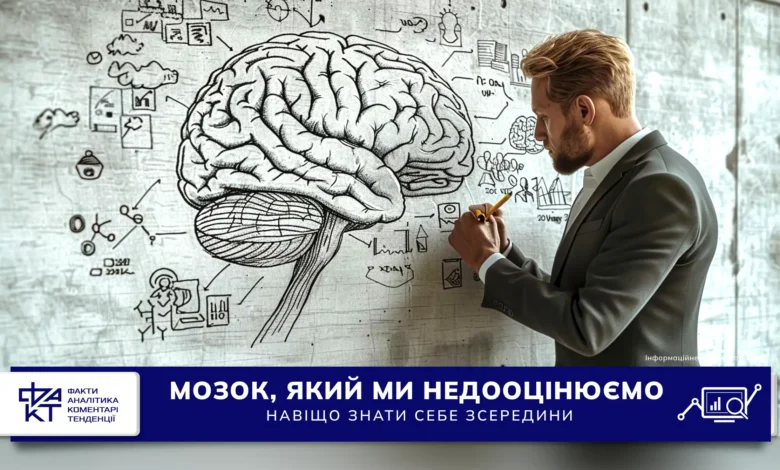
Have you ever wondered what a quantum computer and our brain have in common? Both are amazingly complex systems, only one is still in development and the other we carry with us every day. But while artificial intelligence is only trying to catch up with the human mind, we often neglect the most valuable resource we have. On July 22, on World Brain Day, the world remembers that this gray matter is not just a control center of the body, but also the basis of thinking, memory, emotions, creativity, decisions and even burnout. Unfortunately, as life shows, for some people, even obvious things remain beyond understanding, regardless of position or access to information. So taking care of the brain must become a condition of survival in a reality that does not allow time for a pause.
How and why World Brain Day came about
Every year on July 22, the world celebrates World Brain Day, an initiative with an ambitious but vital goal: to draw attention to the health of the most important organ in the human body. The day was an attempt by the global neuroscience community to stem the tide of ignoring problems that are slowly but inexorably destroying the lives of millions of people.
The holiday was initiated by the World Federation of Neurology in 2014. The date was not chosen by chance, because it was on this day in 1957 that the Federation itself was founded. Since then, each year has been devoted to a separate theme highlighting one of the current threats to brain health: stroke, dementia, multiple sclerosis, Parkinson’s disease, depression, migraines and other neurological conditions that are often neglected even in developed countries.
In our time, when digital overload, chronic stress, information overload and sleep disturbances have become the norm, World Brain Day sounds like a warning signal. But this date also tries to draw attention to the way of life. After all, we are talking not only about the prevention of diseases, but about preserving the cognitive resource, without which neither strategic thinking nor the banal feeling of “being yourself” is possible.
In a global context, the day also serves to unite doctors, scientists, patients, educators and ordinary people around the same idea that the brain needs systemic care, just like the heart or the lungs. Its ailments are often invisible, but the consequences can be deep, long-lasting and sometimes irreversible. So ignoring them is like ignoring your own future.
In our information-overloaded reality, the brain works at the limit of what is possible without days off, upgrades, sometimes even without a good night’s sleep. And if we are still used to “pumping up” the body in the gym, then most often for the brain lately the endless scrolling of social networks has become an exercise machine. However, such dubious gymnastics is unlikely to benefit him without reading books that develop critical thinking. In the pursuit of technology and the speed of the modern world, attention to one’s own brain often recedes into the background. But it is he who controls our every decision, emotion and forward movement. Ignoring his needs isn’t just exhausting, it’s gradually eroding his ability to think clearly, feel deeply, and act confidently.
How the world “turns on the brain”: traditions and initiatives of World Brain Day in different countries
But don’t expect World Brain Day to be marked by a parade with balloons and a red carpet for neurosurgeons. This is the day when information campaigns, lectures, exhibitions, flash mobs and even marathons for the mind are launched in different parts of the planet. Each country interprets it in its own way, but the main goal is to remind that the brain needs attention, training and prevention no less than the body.
In the USA, this date is actively used by medical clinics and universities. They host open online workshops on brain disease prevention, diet for cognitive health, the effects of sleep and digital hygiene. Special emphasis is placed on mood disorders, stress and neuroplasticity. Major platforms even post “non-multitasking days” as a challenge to audiences: slow down and let your brain focus.
Street events in the form of interactive scientific picnics are popular in Germany, where you can take an express memory test, learn how an electroencephalograph works, or practice logic on special mini-platforms. There are also popular “brain coffee shops”, which are held in the format of open discussions between doctors, psychologists and ordinary people.
In Japan, a country where longevity has long been a national trend, World Brain Day often focuses on preventing dementia among the elderly. In addition to lectures, joint training for the brain is practiced here: crosswords, shoji (Japanese chess – ed.), attention exercises and even group dances, which activate the body and mind at the same time.
In Kenya and elsewhere in Africa, the day is often associated with the fight against epilepsy and access to basic neurological care. Here, this date also has an educational purpose to break social stigmas surrounding neurological disorders, which in some regions are still considered “mystical” or shameful.
And in India you can even see “yoga for the brain”, which is special exercises that combine breathing techniques, balancing and meditation. Here, this day is increasingly associated not with the hospital, but with the philosophy of mindfulness, because keeping the brain healthy means learning to live in harmony with thoughts.
As you can see, regardless of geography, World Brain Day makes knowledge accessible. His goal is to make taking care of your brain as common as your morning coffee or fitness. And as more people begin to “turn on their heads” not only in a direct, but also in a preventive sense, there are fewer chances that our future will lose its cognitive support.
Life editor-in-chief: interesting facts about the brain
Interestingly, the main conductor of our body is not the heart, lungs, or even the stomach with morning coffee, but rather the brain. It shapes our thoughts, decisions, memories, fears and dreams. But despite the fact that it controls everything, we know less about it than about the new iPhone. So it’s time to look inside, not literally, but intellectually, and find out what this mysterious organ is really capable of. Despite all the technological breakthroughs of the 21st century, we still know less about it than about the surface of Mars. Over the past 15 years, science has made a number of discoveries that are not just amazing, but change the way we should treat ourselves.
Our brain is often thought of as a supercomputer that can do several things at the same time. In fact, this is an illusion, because he quickly switches from one task to another, but this “speed” has to be paid for by mistakes, distraction and fatigue. What we think of as multitasking is actually the brain’s ability to constantly turn different areas on and off. The popular belief that we only use 10% of our brain has long been debunked. The brain works continuously, it’s just that different parts of it are active at different times. Even when it seems that we are not thinking about anything, it is running thousands of background processes.
Although the adult brain weighs only 2% of the body weight, it consumes about 20% of the body’s oxygen and energy. Its activity begins as early as the 16th day of embryonic development, and the peak of neural connections occurs in early childhood. By the age of 25, the brain finally “ripens”, after which it begins a gradual struggle to preserve its functions. Interestingly, 60% of the brain’s weight is fat, which is why it needs omega-3 fatty acids. Without them, memory deteriorates, the ability to learn is lost, and the risk of emotional burnout increases.
Our brain is 75% water and has the consistency of jelly, which makes it very vulnerable to dehydration. Loss of just 2% of fluid impairs concentration, and lack of sleep leads to cell death. Although the brain controls all sensations, it itself has no pain receptors. A headache signals us about a disorder in blood vessels, muscles, or even a hormonal imbalance.
Inside the head is a complex network of approximately 86 billion neurons, which transmit signals at speeds of up to 400 km/h, as if on a branched freeway. However, this network is very fragile: stress, alcohol and smoking gradually destroy the connections, disrupting the brain. The brain can also be safely compared to a real power plant, which produces up to 25 watts of energy, which is enough for a small light bulb. But if there is chaos in the head, this “light bulb” flickers or goes out. So, in the age of the Internet, the brain “decided” not to keep everything in memory, but remembers where to find the necessary information. Actually, this is how the Google-ing effect appeared.
It is worth noting that every day the brain generates about 70 thousand thoughts, most of which, unfortunately, are negative. But this is not an accident, but an evolutionary mechanism aimed at finding threats. If you do not learn to control this flow, it can have a bad effect on the psyche. After all, under the influence of stress and depression, even the very structure of the brain changes: important areas responsible for memory and emotions are reduced. This is scientifically proven and shows how sensitive the brain is to our mental state.
It is important to remember that even in a dream, the brain does not stop, but sorts memories, starts important chemical reactions. Lack of sleep leads to “exhaustion” of neurons and deterioration of functions. The brain suffers not only from diseases, but also from lifestyle: lack of sleep, chronic stress, excessive sitting, hypodynamia, lack of sensory stimuli, alcohol, infections and constant multitasking undermine neural connections. Due to poor sleep hygiene and stress hormones, the brain literally loses its ability to be plastic, that is, to learn, adapt and recover from injuries.
The brain has no pain receptors, which is why brain surgery can be performed without anesthesia, and the patient will be conscious. During sleep, the brain is cleared of metabolic waste through the glymphatic system — this is important for the prevention of Alzheimer’s disease. A single neuron can form up to 10,000 synaptic connections with other cells — trillions of contacts in total.
It is interesting to know that in newborns, the brain forms new neural connections at a rate of up to 1 million per second. During dehydration, the volume of the brain decreases, which affects attention, speed of thought and mood. Even at the age of 80, the brain is able to form new neural connections if a person learns new things, moves and communicates. The brain begins to lose the speed of information processing already after 25 years, but compensates for this with experience and accumulated knowledge.
In adults, new neurons are formed in the hippocampus every day, a process of neurogenesis that is activated by physical activity. Women’s brains have more connections between hemispheres, while men’s brains have more connections within each hemisphere, which affects information processing styles. One second of delayed sleep (for example, after watching a movie at night) changes the level of attention in the same way as drinking alcohol.
And finally, physical activity can be one of the best investments in the brain. Exercise stimulates the production of neurotransmitters, promotes the birth of new neurons and reduces the risk of dementia. After all, it is not for nothing that they say that a healthy mind resides in a healthy body. Sports literally help the brain to stay young and work more efficiently.
Of course, the list of such curiosities can be continued indefinitely, as well as the number of amazing things that our brain is capable of doing every second. He acts simultaneously as the architect of our personality, the editor of our memories, the conductor of all bodily functions and the master of filtering reality. And if you’ve been treating it as a background program until now, it might be time to reevaluate your priorities.
Neuroreboot: How the brain prepares for motherhood
Scientists too brought, that during pregnancy in the female body, not only the appearance changes, but even the brain is rebuilt. And we are not talking about a metaphorical “maternal sense”, but about completely measurable changes in its structure and work. New research has shown that during this period, the volume of some areas of the brain can decrease by several percent. This is especially true of the gray matter and cortex, which are responsible for perception, emotional processing, and interpersonal relationships.
American neurobiologist Elizabeth Hrastil, who herself became a participant in the study, underwent MRI throughout pregnancy: before, during and after the birth of the child. The results showed that by the ninth week, her brain had lost up to 4% of its volume in hundreds of areas. This phenomenon persisted until almost two years after childbirth. But scientists assure that this is not a sign of degradation, but on the contrary, of effective neuroreconstruction. The brain, as in adolescence, is simply being rebuilt for a new stage of life. Interestingly, despite the reduction in volume, white matter fibers, which are responsible for communication between neurons, worked better. Their structure became similar to a well-laid highway, along which signals raced faster and more clearly. This allows the brain to process information more efficiently, even though the volume is physically reduced. Such changes were not observed in people who were not pregnant. And what’s more, the artificial intelligence algorithm, after analyzing the scans, could accurately determine which of the participants was in a state of pregnancy based only on brain images.
Scientists suggest that a deeper understanding of these changes will help better explain postpartum depression or the complex consequences associated with preeclampsia. Research has also confirmed the fact that pregnancy is a serious neurobiological process that affects the deepest levels of brain activity.
The brain in the future: between biology and technology
Today we already know that the brain acts as a so-called platform capable of adaptation, learning and self-repair, but science goes further. What seemed like a fantasy until recently is gradually becoming a reality: neuroimplants. These devices are implanted into the brain or nervous system to restore vision, hearing, or even partially replace damaged functions after injuries. But the predictions do not end there. Researchers are convinced that in the future neurointerfaces will give people new opportunities: faster language learning, improved perception, real-time reactions, access to information directly through consciousness.
Neuroimplants are microscopic devices that are implanted in the brain and allow it to interact with computers, artificial intelligence, or even other brains. Already today, thanks to such implants, people who have lost the ability to move or speak can control a computer with the power of thought. These technologies promise much more than just treatment: to restore sight, hearing and even discover new abilities. For example, instantly translate languages, increase the amount of memory or control gadgets without a single touch. Brain signals become a new interface, faster and more accurate than any finger on a touchscreen.
However, while some see this as a breakthrough, others warn of risks. The closer technology is to consciousness, the more difficult it is to tell whether a person is driving a car or vice versa. And if the brain can be “tuned”, then there is a fear in which hands the right to choose what the brain should be can fall into. However, it is quite clear that neuroimplants are becoming a new field of human development. But whether we remain in control or become part of a larger operating system ourselves depends on how we use these opportunities.
Such a future opens up unprecedented perspectives and at the same time poses complex ethical and philosophical questions. Will a person remain autonomous if his brain begins to work in tandem with a machine? There are no answers yet. But one thing is clear: the brain has long since ceased to be only a “thinking organ”. Every day, it becomes a training ground of the technological revolution.
So it’s worth remembering that the brain provides control of our inner world station, which, unfortunately, we all too often ignore. In the pursuit of an external upgrade in the form of new knowledge and achievements, we forget that the main device is already in our head. It forms a personality, reacts to stress, adapts to new conditions, is rebuilt during pregnancy and is even ready to cooperate with the technologies of the future. But no implant can compensate for exhaustion or indifference to one’s own resources. So while scientists are designing neurointerfaces, it is worth starting with something simpler and turning on attention to yourself – to develop your brain and critical thinking, because without this, even the most advanced technologies cannot compensate for the basic inability to distinguish between facts, logic and manipulation.