
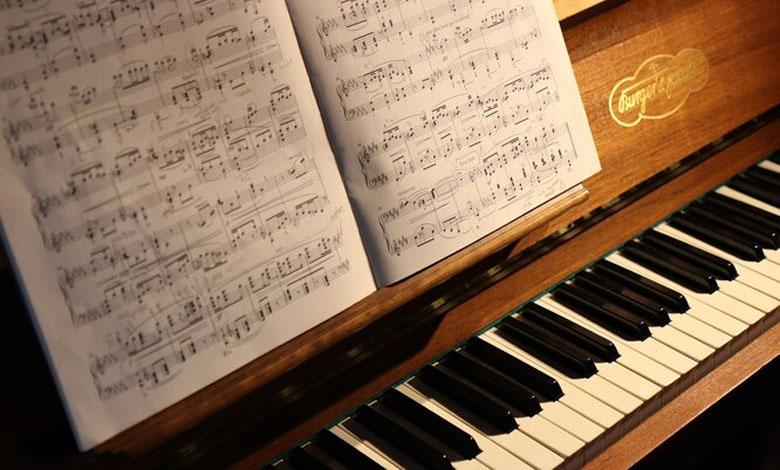
March 29th is World Piano Day, Magician’s Day and Coca-Cola’s Birthday. Important historical events spanning centuries, from medieval conquests to modern shifts in politics, culture, and science, also took place on this day.
World Piano Day
This is an international holiday dedicated to one of the greatest tools of human culture. It is celebrated on the 88th day of the year, which symbolically corresponds to the number of keys on a standard concert grand piano. It is usually March 28, but in a leap year the holiday falls on March 29.
This day was started by the German pianist and composer Niels Frahm in 2015. The purpose of the holiday was the desire to unite all people who play the piano, love this instrument or simply appreciate music, around one day, which honors the role of the piano in culture, history and life.
The piano is not just a musical instrument, but a source of inspiration, a platform for creativity, deep emotions and self-expression. For centuries it has been heard in palaces, churches, concert halls and small homes, enabling people to convey what cannot be expressed in words. From Bach and Beethoven to Elton John and the modern neoclassicists, the piano has always been at the center of musical evolution.
Interesting facts
The idea of celebrating the piano on the 88th day of the year arose due to the number of keys in the classical instrument — 52 white and 36 black, for a total of 88.
The founder of the festival, Nils Frahm, creates music that combines academic piano with electronics, and believes that the piano is not only about the classics, but about endless possibilities.
The very first piano was created in Italy around 1700 by master Bartolomeo Cristofori. It was he who invented the mechanism that allowed the volume of the sound to change depending on the force of pressing the keys – something that its predecessors, clavichords and harpsichords, could not do.
The most expensive concert grand piano in the world is Heintzman’s Crystal Piano, made of glass. It was played by the Chinese pianist Lan Lan at the opening of the 2008 Olympic Games in Beijing. Its value reached more than 3 million dollars.
In the 20th century, the piano became one of the symbols of jazz, blues and popular music. It has gone through several transformations — from parlor instruments to digital keyboard machines.
Many airports around the world have public pianos where anyone can sit down and play. Such initiatives are designed to show that music is a common language for all people.
This day is actively supported not only by classical musicians, but also by representatives of the alternative scene, indie bands, as well as film composers, because the piano is a universal instrument that awakens emotions in any genre.
Magician’s Day
This day became symbolic for all those who devoted themselves to the art of illusions, manipulations, sleight of hand and mysterious tricks that make the viewer hold their breath.
The holiday was started by magicians and illusionists from different countries of the world to honor the memory of Harry Houdini and at the same time to popularize magic tricks as part of world culture. Today, on this day, performances by illusionists, master classes for children, open shows on the streets, as well as closed demonstrations of the most virtuosic tricks in theaters are held all over the world.
A magician is not just an artist, but a master of illusion, a person who creates a miracle without any magic, only thanks to skill, psychology and accurate calculation. His stage is a place where logic collides with the impossible. That is why the art of magic tricks never loses its popularity, and on the contrary, it fascinates new generations of viewers again and again.
Interesting facts
Harry Houdini (real name Eric Weiss) was not only an illusionist, but also a researcher of quackery. He exposed pseudo-mediums and proved that the “otherworld” is often just a well-planned trick. Houdini became famous for escaping from locked cells, shackles, boxes filled with water. His tricks remained a mystery even to his colleagues.
One of the oldest descriptions of focus dates back to Egypt in the 15th century BC. A tomb wall shows a man playing with bowls, a precursor to the “disappearing balls” trick.
In medieval Europe, magicians often performed at fairs and bazaars, but sometimes came under the suspicion of the Inquisition – their tricks were considered diabolical.
In the 20th century, focal art turned into show business. Thanks to television, trick-or-treating has become a popular entertainment genre, particularly in the United States, Japan, and Europe.
Modern illusionists, such as David Copperfield, Dynamo, Derren Brown or Pen and Teller, not only continue the Houdini tradition, but also combine tricks with theater, cinematography and even psychology.
In Ukraine, there is an Association of Illusionists, which unites specialists of this scene.
Coca-Cola’s birthday
Every year on March 29, the unofficial birthday of one of the most famous and recognizable brands on the planet — Coca-Cola — is celebrated. It was on this day in 1886 that the American pharmacist from Atlanta, John Stith Pemberton, prepared the first version of the drink, which would later become a global symbol of consumer culture, advertising and sweet soda.
At first, Pemberton created the drink not as entertainment, but as medicine – a mixture of coca leaf extract and the African kola nut, which had an analgesic and stimulating effect. The original formula also included alcohol and was called “Pemberton’s French Wine Coca”. However, because of the ban on alcohol in Atlanta, he was forced to change the recipe: instead of wine, he added sugar syrup and carbon dioxide, which gave rise to a new non-alcoholic version.
Interesting facts
The name “Coca-Cola” was proposed by Pemberton’s accountant, Frank Robinson, who also designed the well-known calligraphic logo himself. Pemberton himself did not live to see the world fame of his creation – he sold the rights to the formula before his death. The company that emerged from this recipe eventually became not only a giant of the food industry, but also a global brand that shaped the perception of lifestyle, holidays and even politics.
The first serving of Coca-Cola was sold on May 8, 1886 at Jacobs’ Pharmacy in Atlanta for 5 cents. In the first year, they sold an average of 9 servings per day.
The drink contained coca leaf extract until the beginning of the 20th century. After the anti-cocaine campaign grew, the company kept only “de-cocaineized” leaves—that is, without the narcotic component.
Coca-Cola’s secret formula (“Merchandise 7X”) is kept in a bank vault in Atlanta, and only a few people in the world know it in full.
In the 20th century, Coca-Cola became an unofficial symbol of the American way of life. During the Second World War, the company supplied the front with a drink for US soldiers, which helped popularize the brand in Europe.
It is believed that the modern image of Santa Claus as a fat, jolly grandfather in a red suit was established thanks to Coca-Cola advertising campaigns in the 1930s.
In 1985, the company changed the recipe and introduced “New Coke”, but due to consumer protests, quickly returned the classic version, which was called “Coca-Cola Classic”.
Coca-Cola is sold in almost every country in the world, except for North Korea and Cuba. It is one of the most globalized products in history.
Scientists still debate the health effects of the drink, but Coca-Cola has undoubtedly remained one of the world’s most powerful marketing phenomena, shaping consumer habits for over 130 years.
Historical events on this day
845 – The Vikings, led by the leader Ragnar Lodbrok, raided Paris. They penetrated deep into the Frankish kingdom by the Seine River, captured the city and forced the Frankish king Charles the Bald to pay a large ransom to avoid its devastation.
1798 – The French revolutionary army, having captured the territory of Switzerland, proclaimed the creation of the Helvetian Republic. It was a puppet state modeled after the French Republic and under the full control of Paris, which was one of the first attempts to import revolutionary ideas abroad.
1848 – A unique natural phenomenon: as a result of severe frosts that blocked the Niagara River, the Niagara Falls stopped for more than 30 hours. This is one of the few documented cases where one of the world’s most powerful waterfalls has stopped its fall.
1864 – In Lviv, in the premises of the People’s House, the first performance of the first professional Ukrainian theater in Galicia, founded by the “Ruska Besida” society, took place. This event marked the beginning of the organized theatrical life of the Ukrainians of Galicia and an important milestone in the development of Ukrainian culture.
1886 – In Atlanta, American pharmacist John Pemberton created a new medicinal drink based on the extract of coca leaves and kola nut. At first, the product was intended to relieve headaches, but later it was called Coca-Cola and became the most famous carbonated drink in the world.
1910 – French aviator Albert Fabre took to the sky the world’s first hydroplane – an aircraft capable of taking off and landing on water. The flight took place in Marseille and became a significant breakthrough in the development of aviation.
1933 – Welsh journalist Gareth Jones, despite the ban and surveillance by the Soviet authorities, made a trip to Ukraine and became one of the first to publicly announce the Holodomor disaster. His press release about the famine in the Ukrainian SSR gained great publicity in the Western press.
1951 – In the USA, the couple Ethel and Julius Rosenberg, who were accused of passing secrets about nuclear weapons to Soviet intelligence, were sentenced to death. It became one of the most high-profile espionage cases of the Cold War. They were executed in 1953.
1967 – The Soviet authorities arrested the leading figures of the underground organization “Ukrainian National Front”: Dmytro Kvetsk, Zenoviya Krasivskyi, Mykhailo Dyak, Yaroslav Lesiv. They were condemned for anti-Soviet activities — in fact, for fighting for the rights of the Ukrainian people.
1973 – The withdrawal of American troops from South Vietnam has been completed. The government of the Democratic Republic of Vietnam handed over to the United States all American military and civilian prisoners. This event formally ended American involvement in the Vietnam War.
1982 – The Parliament of Great Britain officially relinquished legislative jurisdiction over Canada by passing the Canada Act. This became the final legal confirmation of Canada’s independence from the British crown in matters of internal governance.
1991 – In Kyiv, the first public performance of the literary group “Boo-Ba-Boo” took place, which included Yuriy Andruhovych, Oleksandr Irvanets and Viktor Neborak. Their poetry started a new wave in Ukrainian literature — ironic, bold, postmodern.
1998 – Parliamentary elections were held in Ukraine, where a mixed electoral system was used for the first time in the country’s history. These elections determined the political configuration of the Verkhovna Rada of the third convocation.
2004 – In Ukraine, the civil campaign “It’s time!” began its activities, which became an important factor in the preparation for the Orange Revolution. Its activists spoke against election fraud and for democratic changes.
2004 – seven Eastern European countries — Bulgaria, Estonia, Latvia, Lithuania, Romania, Slovakia and Slovenia — became members of NATO. This was an important step towards strengthening security in the region and bringing these countries closer to the Western world.
2014 – Same-sex marriage was registered for the first time in Great Britain (England and Wales). The law allowing such unions came into force and became a landmark for human rights and equality in Europe.
Birthday of the inventor mercury thermometer and heart rate monitor
On March 29, 1561, the Italian doctor Santorio Sanctorius was born – an innovator who went down in history as the first to systematically use a mercury thermometer and pulse meter for clinical practice. His contribution to science was not only in technical inventions – he first introduced a quantitative approach in physiology, trying to measure what seemed elusive to him: temperature, pulse, changes in body weight, even perspiration.
Before the advent of the thermometer, it was possible to estimate the body temperature only approximately – by touching the skin, comparing it with one’s own, and concluding whether it is hot or cold. Some doctors tried to determine the temperature by the rate of breathing, pulse, general appearance of the patient. There have been attempts to use liquids that change volume or density when heated. For example, alcohol in a glass layer: it was thrown into the patient’s mouth, and by the degree of expansion they tried to assess the heat.
Sanctorius was the first to say: without accurate numbers, there is no accurate medicine. And his approach has been working for over 400 years. By the way, the most effective place for measuring the pulse is not the wrist, but the throat, where the carotid artery passes.
The first consolidation of an important principle of human rights protection
On March 29, 1628, the House of Commons of the British Parliament for the first time officially established the principle that would later become the basis of the protection of human rights: “no person shall be arrested or otherwise deprived of his liberty except for a lawful cause set forth in a written order.”
This wording became a forerunner of one of the most important legal acts in the history of English law — the Habeas Corpus Act, passed by Parliament in 1679. This law has become an integral part of the British constitutional system.
According to the act, every person who believes that his detention is illegal, or someone on his behalf, has the right to apply to the court. The judge is obliged to demand as soon as possible that the detainee be brought to court to check the legality of the arrest. Arrest is not allowed without a legal resolution with a specific wording of the reason for keeping a person in custody.
Habeas corpus is the legal principle that no person can be deprived of his liberty without judicial supervision. The law required judges to issue a writ of habeas corpus in all cases, except for those where the detention is related to an accusation of treason or a particularly serious crime.
The effect of the act could be suspended only in extraordinary circumstances — and only by a decision of both houses of the parliament, for a period of no more than one year. This exception was used for the last time in the 18th century – since 1818, the mechanism of termination of the act has not been used once.
This law became the first example in history of normative-legal consolidation of judicial control over the restriction of human freedom. It was of fundamental importance not only for the British system, but also for the formation of the entire modern legal civilization, laying the foundation for the practice of protecting individual rights in Europe and the world.
The modern application of the principle of habeas corpus in Great Britain provides that after an arrest, the police are obliged to bring a person to court within an hour. The court, in turn, makes a decision on a possible extension of detention — for a period of 72 hours to four days. The police can limit a person’s rights only within the limits of the law, but all further actions must be approved by the court. It is the court that issues procedural documents that can legitimately limit human rights, with a clear indication of the grounds and terms.
Withdrawal of US troops from Vietnam
On March 29, 1973, two months after the signing of the Paris ceasefire agreement, the last American soldier left Vietnam.
Deprived of American support, the South Vietnamese army was in a state of deep demoralization. More and more territories of the country actually came under the control of the North. Convinced that the United States was not going to resume participation in the war, already in early March 1975, North Vietnamese troops launched a large-scale offensive. During the two-month campaign, they captured a large part of South Vietnam. On April 30, 1975, the communists raised a red flag over the Presidential Palace in Saigon — the war ended with a complete victory for the North.
Thus ended the eight-year war in Vietnam, during which the United States dropped 14 million tons of bombs and shells on the country—the equivalent of more than 700 atomic bombs like the one that destroyed Hiroshima. American losses, according to various estimates, amounted to 56,000 to 58,000 people. If we do not take into account approximately 129 thousand veterans who died already after the war – as a result of psychological injuries, post-traumatic disorders and suicides. According to various estimates, the losses of the Vietnamese were from two to three million people.
In the United States, March 29 is officially commemorated as Vietnam Veterans Day. In the Socialist Republic of Vietnam itself, this war is still officially considered a national struggle for independence against American aggression. At the same time, the paradox is that today communist Vietnam is one of the key partners of the US in the Asia-Pacific region, and the General Secretary of the Central Committee of the Communist Party of Vietnam even called the relations between the countries “a model of international cooperation.”


