May 12 marks International Nurses Day, International Plant Health Day, and International Day for the Spread of Information on Chronic Immunological and Neurological Diseases. This day brings together events that show how the world has changed – from the consecration of the first stone church of Kyivan Rus and the medieval Inquisition trials to the first television broadcasts, flights over the North Pole, space missions, and important international decisions.
International Nurses Day
This day falls on May 12 each year, the birthday of Florence Nightingale, a British reformer who laid the foundations of modern nursing. She changed the way we think about caring for patients: she insisted on cleanliness, patient records, staff training, and responsible organization of hospitals.
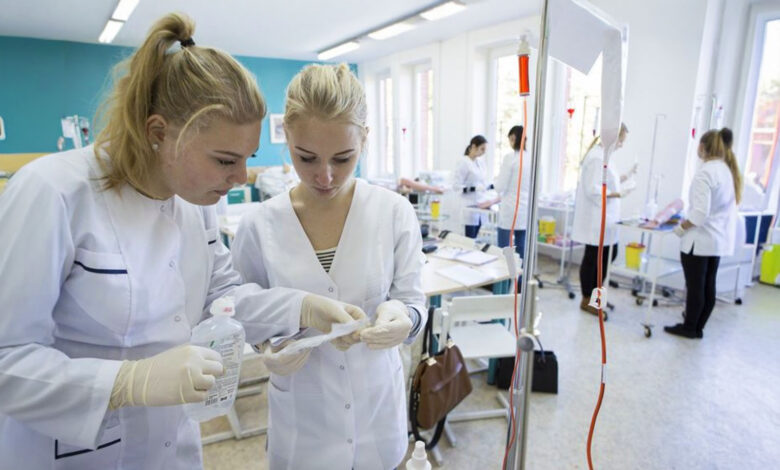
Nurses perform work that is essential to the treatment of patients: they monitor the condition of patients, carry out doctors’ prescriptions, perform procedures, support people in difficult moments, work in hospitals, outpatient clinics, intensive care units, evacuation teams and stabilization centers.
Interesting facts
Florence Nightingale became famous during the Crimean War of 1853–1856, which took place partly in the territory of modern Ukraine, in particular in the Sevastopol area. It was the experience of military hospitals in this war that showed that poor sanitation, dirty water, lack of ventilation and chaos in care killed more soldiers than combat injuries.
Before Nightingale’s reforms, the wounded in British military hospitals often lay in crowded rooms without clean linen, normal food and basic hygiene. She organized the cleaning of wards, washing of clothes, ventilation, organization of the kitchen and registration of patients, after which the mortality rate in the hospital in Scutari decreased dramatically.
Florence Nightingale was one of the first women to influence public health policy through statistics. She used charts to prove to officials that soldiers were killed not only by bullets, but also by dirt, infections and administrative indifference.
During World War I, British nurse Edith Cavell secretly helped Allied soldiers escape from occupied Belgium. German authorities exposed her, arrested her and shot her in 1915. Her death caused an international scandal and became one of the most famous cases of the execution of a medical worker during wartime.
In the 1850s, in military hospitals in the Ottoman Empire, nurses and orderlies often slept directly between the beds of the wounded, because there were not enough wards. Some women were infected with cholera and typhus faster than the soldiers themselves.
During the American Civil War, nurses first began to use anesthesia on a large scale during field operations. Before that, many wounded were operated on with virtually no anesthesia.
In the 19th century, nurses were forbidden to sit during shifts in many European hospitals. It was believed that a “good nurse” should be on her feet all the time near patients. Violations could result in fines or dismissal.
During World War II, nurses sometimes gave their own bread to the wounded. Diaries of the time mentioned cases when medical personnel died of exhaustion simply at their workplace.
During the Korean War, American military nurses worked in mobile surgical hospitals MASH. Due to their proximity to the front, the wounded were often brought in alive after serious injuries, and this dramatically increased the number of soldiers saved.
In the 19th century, the Sisters of Charity sometimes accompanied the stages of prisoners and convicts due to the shortage of doctors. They treated people in prisons, barracks, and transit points, where typhus and tuberculosis were rampant.
During the 1918 Spanish flu epidemic, many cities in Europe and the United States even lacked student nurses. Due to the mass mortality, hospitals turned schools, churches, and barracks into temporary wards, and nurses worked 20-hour days without proper rest.
In Nazi concentration camps, nurses were among the prisoners who secretly helped the sick and hid medicines. Some of them kept records of medical experiments on people, and these documents were later used at the Nuremberg Trials.
During the full-scale war in Ukraine, nurses at stabilization points sometimes had only a few minutes to triage the wounded after massive shelling. Their decisions determine who will be taken to surgery first and who will have a chance to survive.
International Day for Plant Health
This day was established by the UN General Assembly to draw attention to the protection of plants from pests, diseases, fungi, and the effects of climate change. Productivity, food quality, the state of ecosystems, and the preservation of biodiversity depend on plant health.
Plant diseases and dangerous pests destroy a significant part of the world’s harvest every year. Because of this, countries are strengthening phytosanitary control, monitoring the transportation of seeds, fruits, wood, and soil, and scientists are developing new methods of crop protection. For Ukraine, the issue of plant health is of particular importance due to the large areas of agricultural land and the important role of the agricultural sector.
Interesting facts
In the 19th century, a fungal disease of potatoes caused the Great Famine in Ireland. The massive crop destruction killed about a million people, and millions more were forced to emigrate.
The most dangerous plant diseases can be spread through ordinary shoes, soil on the wheels of machinery, or wooden boxes. That is why in many countries even seedlings and seeds in tourists’ luggage are checked at the borders.
In the 20th century, a fungus almost completely destroyed the American chestnut forests in the United States. Before the epidemic, the chestnut was one of the main trees in the eastern part of the country, but in a few decades billions of trees died.
The bananas that are sold in the world today are different from those that were popular a hundred years ago. The old variety “Gro-Michel” almost disappeared due to a fungal disease, and world trade switched to another variety — “Cavendish”, which is now also under threat.
During the Middle Ages, people did not understand the causes of plant diseases and often explained the death of crops by “curses” or bad omens. Only the development of microbiology has allowed us to identify fungi, bacteria, and viruses that infect crops.
In Ukraine, the western corn borer is considered one of the most dangerous quarantine pests. Its larvae damage the roots of corn, causing the plants to fall and sharply reducing yields.
There are parasitic plants that literally “suck out” nutrients from other crops. For example, the sunflower weevil can seriously reduce sunflower yields in the southern regions of Ukraine.
Some quarantine pests can live unnoticed for years. Because of this, in some countries, trees are massively cut down even when suspected of infection in order to save entire forests or gardens.
International Day for the Spread of Information on Chronic Immunological and Neurological Diseases
This day is dedicated to raising awareness about diseases that often remain unnoticed by those around them, but significantly affect people’s lives. These include fibromyalgia, chronic fatigue syndrome, myalgic encephalomyelitis, and some autoimmune and neurological disorders.
These conditions can cause persistent pain, fatigue, sleep disturbances, memory loss, concentration problems, and nervous system dysfunction. In many cases, diagnosis takes years because symptoms are similar to those of other illnesses, and some patients go undiagnosed for years because they don’t receive proper treatment or support.
Interesting facts
For decades, fibromyalgia was considered a “fictional” disease because standard tests often showed no obvious changes. Only later did studies confirm that patients’ nervous system processes pain signals differently.
Chronic fatigue syndrome has long been nicknamed the “yuppie disease,” which led many patients to view it as a lazy or psychological disorder rather than a serious condition.
In some people with chronic fatigue syndrome, even minor physical or mental exertion can cause a sharp deterioration in their condition for several days. This phenomenon is considered one of the main features of the disease.
Fibromyalgia is more common in women, but men are less likely to be diagnosed with this disease due to stereotypes and the difficulty of recognizing symptoms.
After the COVID-19 pandemic, attention to chronic fatigue and neurological disorders has sharply increased worldwide, as some people have experienced prolonged fatigue, memory problems, concentration problems, and muscle pain after infection.
In the 20th century, patients with unexplained chronic pain or fatigue were often referred not to neurologists, but to psychiatric hospitals, because medicine could not explain their condition.
Some people with fibromyalgia have such a high sensitivity to pain that even the light touch of clothing or pressure on the skin can cause discomfort.
In many countries, patients with chronic fatigue syndrome have struggled for years to have their illness officially recognized. Due to the lack of clear tests, they were often denied insurance, social assistance, and disability benefits.
During the war in Ukraine, doctors drew attention to the increasing number of people with long-term sleep disorders, exhaustion, nervous disorders, and chronic pain, which were exacerbated by stress, constant anxiety, and the consequences of traumatic events.
Historical events on this day
996 – The Tithe Church, the first known stone temple of Kyivan Rus, was consecrated in Kyiv. Its construction is associated with Prince Volodymyr the Great, who allocated a tenth of the princely income for the maintenance of the temple, which is where its name comes from.
1311 – In France, the Inquisition publicly executed 54 Knights Templar. They were accused of heresy after a long persecution of the order, which was not only religious, but also political and financial in nature.
1364 – The Jagiellonian University, one of the oldest universities in Central Europe, was founded in Kraków. It became an important center of education, science and intellectual life in Poland and the entire region.
1497 – The Pope excommunicated the Florentine monk Girolamo Savonarola, accusing him of heresy and disobedience to church authority. Savonarola was a harsh critic of luxury, corruption and moral decay in Florence.
1551 – The University of San Marcos was founded in Lima on the basis of a monastic school of the Dominican Order. It became the first university on the American continent and one of the most important educational centers of the colonial era.
1881 – France established a protectorate over Tunisia. This decision limited the independence of local authorities and became part of French colonial expansion in North Africa.
1926 – The May Coup, organized by supporters of Józef Piłsudski, began in Poland. After several days of armed resistance, power passed to the Sanation camp, and the country’s political system became significantly more authoritarian.
1926 – Roald Amundsen and Umberto Nobile flew in an airship over the North Pole. The expedition became one of the most famous pages in the history of polar research and the development of aeronautics.
1937 – The BBC conducted one of the first major television broadcasts in world history, showing the coronation ceremony of the British King George VI. The event was an important step in the development of television as a mass medium.
1949 – The USSR officially lifted the blockade of West Berlin. The blockade lasted almost a year and became one of the first major crises of the Cold War, during which the Western Allies provided the city with an airlift.
1954 – The Ukrainian SSR became a permanent member of UNESCO. This gave it a separate representation in the international organization dealing with education, science, culture and heritage preservation.
1965 – The Soviet automatic interplanetary station Luna-5 reached the surface of the Moon in the Sea of Clouds area. The device was unable to make a soft landing, but the mission became part of the USSR’s early attempts to explore the Moon with automatic stations.
1993 – Estonia was admitted to the Council of Europe. This was an important stage in its return to European political institutions after the restoration of independence.
1994 – Azerbaijan and the Nagorno-Karabakh Republic ceased active hostilities under the Bishkek Protocol. The document established a ceasefire after the difficult phase of the first Karabakh war.
2004 – The Anglican Church created the position of web priest for an online parish. This was one of the early examples of religious communities beginning to move part of their lives online.