April 6th is the International Day of Sport for Peace and Development, International Day of Asexuality and International Day of the Sarajevo Rose. Throughout history, April 6th has repeatedly become a day of decisions, discoveries and events that influenced the course of wars, the development of technologies and the fate of entire states.
International Day of Sport for Peace and Development
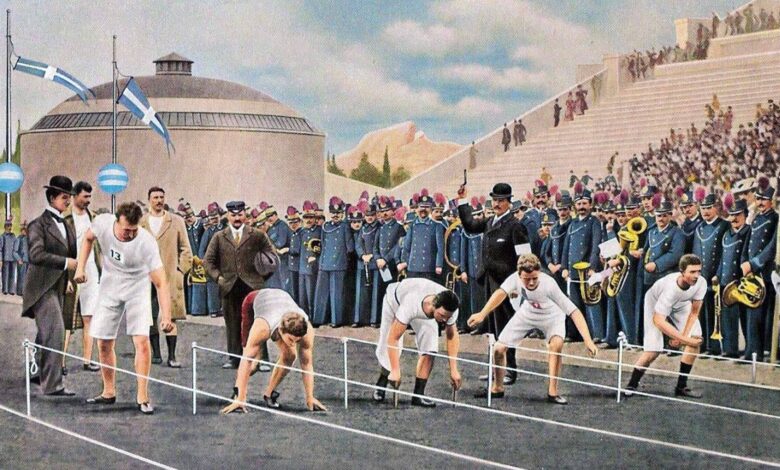
This day was established by the UN in 2013 in connection with the opening of the first modern Olympic Games in 1896 in Athens. The idea of the day is to recognize the role of physical activity as a tool for improving health, social integration and mutual understanding between people of different cultures and countries.
Sport in this context is seen as a practical mechanism for interaction that reduces tension between communities, creates a common space for cooperation and forms skills of respect for rules and opponents. Participation in sporting events helps to overcome barriers of language, origin and status, and also promotes the development of discipline and responsibility at the individual level.
Interesting facts
During the Olympic Games in ancient Greece, a sacred truce was declared, which allowed athletes and spectators to travel safely even during periods of civil war.
In the 1990s, a football match in Côte d’Ivoire helped temporarily stop a civil conflict when the national team called for reconciliation after qualifying for the World Cup.
Ukrainian boxer Vitali Klitschko became the mayor of Kyiv after completing his sports career, using the authority of an athlete for political activities and international contacts.
In South Africa, after the abolition of apartheid, rugby became a symbol of unity when the country’s national team won the 1995 World Cup with the support of different racial groups.
There are initiatives in the UN program where sport is used to rehabilitate children who have survived war, in particular through team games and physical activity to restore their psycho-emotional state.
During the First World War, an unofficial Christmas truce took place in 1914, when soldiers from opposing sides played football on a neutral zone.
The Ukrainian football club Shakhtar Donetsk was forced to move after the war in eastern Ukraine began, but kept its team and continued to perform at the international level, becoming an example of resilience through sport.
In Japan, school sports festivals are of great importance for fostering collectivism, where participation is more important than results and involve almost all students.
Marathons in major cities around the world are often used for charity events, where participants raise money for medical or social projects through their participation in the race.
International Asexuality Day
This day is celebrated annually to raise awareness of asexuality as a form of sexual orientation and support for people who do not feel sexual attraction. This date was launched in 2021 at the initiative of international communities working on the visibility and acceptance of asexual people in different countries.
Asexuality covers a wide range of experiences and does not exclude emotional intimacy, romantic feelings or building relationships. It often remains invisible in society due to stereotypes and lack of awareness, so this day contributes to a better understanding of the diversity of human experience and the reduction of prejudice.
Interesting Facts
The term “asexuality” in its modern sense began to be actively used in the early 2000s after the creation of online communities where people were able to describe their experiences and find like-minded people.
According to research, approximately 1% of the population identifies as asexual, although exact numbers are difficult to determine due to different approaches to surveys.
There is a division into romantic orientations among asexual people, including those who can feel romantic attraction and those who do not, which forms separate identities within the community.
In the 2010s, asexuality began to appear in popular TV series and books, which gradually increased its visibility in popular culture.
The asexuality flag consists of black, gray, white, and purple, each symbolizing a different aspect of the spectrum and community.
In Ukraine, the topic of asexuality remains underrepresented in public discourse, but online communities are gradually creating an environment for discussion and support.
Some asexual people may enter into relationships or marriages based on emotional intimacy, shared values, and a partnership without a sexual component.
Scientific research considers asexuality to be a stable orientation, rather than a temporary condition or medical problem.
In many countries, asexual people are included in the broader LGBTQ+ community, although the issue of their visibility and representation is still being debated.
International Sarajevo Rose Day
This is a day of remembrance for the victims of the war in Bosnia and Herzegovina from 1992 to 1995. The date is associated with the beginning of the siege of Sarajevo in 1992, which became one of the longest in the history of modern wars. “Roses of Sarajevo” are traces of mortar explosions in concrete, filled with red resin, marking the places where civilians died.
These marks arose as a way to preserve the memory of the dead in an urban space without traditional monuments. They remain a part of the city and the daily life of its inhabitants, reminding us of the losses among the civilian population. The day focuses on the consequences of war for people and the importance of preserving the memory of tragedies.
Interesting facts
The name “roses” arose because of the shape of the traces of explosions, which, when filled with red resin, resemble flowers on the asphalt.
The siege of Sarajevo lasted almost four years and is considered the longest siege of a capital in modern European history.
The roses mark only those places where people died in the explosion, so each of them has a specific story.
Some of these markers disappear due to road repairs, but local residents often insist on their preservation.
During the war in Bosnia and Herzegovina, more than 100,000 people died, many of whom were civilians.
Similar symbolic markings of the sites of tragedies began to appear in other countries that have experienced armed conflicts.
In Ukraine, after the war began, spontaneous memorials have also appeared at the sites of shelling in various cities.
Local tours of Sarajevo often include these sites, telling the stories of the people who died.
The red color in these markers symbolizes the blood shed and the preservation of the memory of the victims.
Historical events on this day
1327 — Italian poet Francesco Petrarch first met Laura, a woman who became the central figure of his lyrics and inspired the creation of numerous sonnets that influenced the development of European poetry.
1384 — Portuguese troops defeated the Castilians at the Battle of Atoleirú, using defensive tactics that allowed them to stop the advance of superior enemy forces.
1453 — The Ottoman army under Mehmed II began the siege of Constantinople, which ended with the fall of the Byzantine Empire and a change in the balance of power in the region.
1722 — Peter I introduced a tax on beards, trying to change the appearance of the population in accordance with European standards and emphasize the modernization course of the state.
1748 — The ruins of Pompeii were discovered in Italy, which became one of the most important archaeological discoveries and made it possible to study the life of the ancient Roman city destroyed by the eruption of Vesuvius.
1814 — Napoleon abdicated after defeats in the wars, which ended his rule in France and led to exile to the island of Elba.
1818 — In Paris, Karl Drais introduced a two-wheeled means of transport without pedals, which became the prototype of the modern bicycle.
1869 — Celluloid, one of the first plastics, was patented, which opened up new possibilities in the production of various goods and the development of the film industry.
1893 — The longest boxing match in gloves took place in New Orleans, lasting 110 rounds and over seven hours, exhausting both athletes to the limit.
1896 — The first modern Olympic Games began in Athens, reviving the ancient tradition of international sports competitions and ushering in a new era for the Olympic movement.
1909 — Robert Peary and Matthew Henson announced their achievement of the North Pole, which became an important stage in the exploration of the Arctic, although the accuracy of this achievement later caused debate.
1917 — The All-Ukrainian National Congress began its work, which played a significant role in the formation of the Ukrainian political movement during the period of revolutionary changes.
1917 — The United States declared war on Germany, officially entering World War I and changing the balance of power on the side of the Entente.
1919 — Ataman Grigoriev entered Odessa, which became part of a complex struggle for control of the city during the civil war.
1920 — The Bolsheviks created the Far Eastern Republic as a buffer state between the RSFSR and Japan to reduce direct military confrontation.
1941 — German and Italian troops launched an offensive against Yugoslavia and Greece, opening a new phase of hostilities in the Balkans within the framework of World War II.
1943 — A riot of the Ukrainian auxiliary police took place in Kovel, during which German soldiers were killed and prisoners were released.
1945 — the Ukrainian population of the village of Gorajec was exterminated by units of the Polish security forces, which became one of the tragic episodes of interethnic violence of that period.
1945 — Yugoslav partisans liberated Sarajevo from Nazi troops, ending the occupation of the city.
1946 — part of East Prussia was incorporated into the USSR as the Kaliningrad Oblast, changing the post-war map of Europe.
1950 — the Soviet authorities adopted a decision according to which special settlers received the status of life exiles without the right to return.
1968 — Syd Barrett left the Pink Floyd band, which influenced the further musical style and development of the group.
1970 — Led Zeppelin members were made honorary citizens of Memphis during their tour of the United States, which was a testament to their popularity.
1992 — Fighting broke out in Sarajevo, which marked the beginning of the Bosnian War and led to a long siege of the city.
1992 — Foreign ministers of several countries signed a declaration of a ceasefire in Transnistria, trying to resolve the conflict.
1992 — Microsoft introduced the Windows 3.1 operating system, which was an important stage in the development of personal computers.
1993 — The Prague Stock Exchange opened as part of economic reforms after the collapse of the socialist system.
1994 — the shooting down of a plane carrying the presidents of Rwanda and Burundi sparked the Rwandan genocide, which resulted in mass casualties.
2005 — Jalal Talabani became president of Iraq, leading the country in the period after the change of political regime.
2008 — a general strike began in Egypt due to socio-economic problems, which escalated into large-scale protests.
2009 — a major earthquake occurred in the Italian province of Abruzzo, causing significant destruction and numerous casualties.
2010 — mass unrest began in Kyrgyzstan, leading to a change of government in the country.
2012 — Azawad declared independence from Mali, which became an episode in a long-running conflict in the region.
2014 — Ukrainian officer Stanislav Karachevsky was killed by Russian soldiers in Crimea, which was one of the first fatalities among the Armed Forces of Ukraine during the occupation.
2014 — Pro-Russian forces seized the Donetsk regional administration building, which was one of the key moments in the beginning of the conflict in eastern Ukraine.
2014 — Panama opened a metro, which was the first in Central America.
2016 — The Netherlands did not support the Association Agreement between Ukraine and the European Union in a referendum, which affected further political processes.