May 18 is the Day of the Reservist of Ukraine, the Day of the Struggle for the Rights of the Crimean Tatar People and the Day of Remembrance of the Victims of the Crimean Tatar Genocide, as well as the International Museum Day. This day in history combines events that changed maps, power, technology and people’s ideas about the possibilities of their time: from medieval battles and the founding of Montreal to the emergence of aviation records, high-speed trains, museum discoveries and decisions that affected international security.
Day of the Reservist of Ukraine
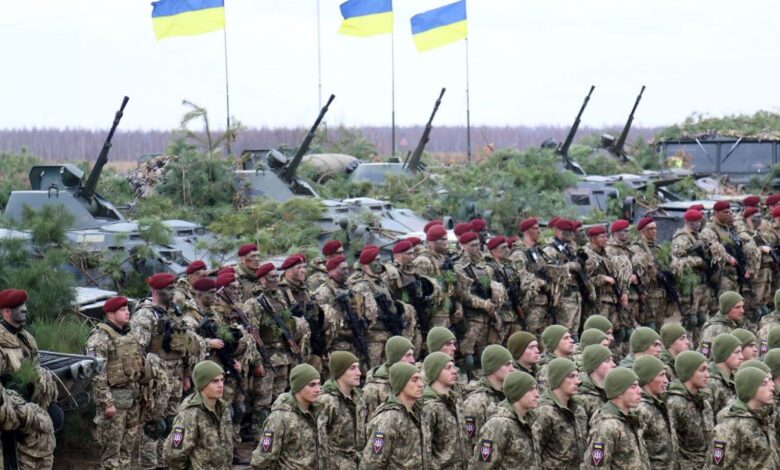
This day was established by Decree No. 154/2019 by President Petro Poroshenko on April 19, 2019 to recognize the role of citizens who are in the military reserve and can be quickly involved in the defense of the state.
Reservists have military experience, are undergoing training or are registered after service. After the start of the Russian-Ukrainian war, their role increased significantly, because it is the trained reserve that allows you to quickly replenish combat units without lengthy training from scratch.
Interesting facts
In February 2022, even before the start of the full-scale invasion, Ukraine announced a call-up for reservists during a special period. It was about citizens aged 18 to 60 who already had military experience and were enrolled in the operational reserve.
Reservists of the first-tier operational reserve were to be sent to those military units and specialties where they had previously served. This approach saved time, because people already knew the unit, commanders, weapons, and order of service.
After February 24, 2022, many reservists arrived at their units in the first hours and days of the great war. This was of practical importance for the army, because the units received not newcomers, but people with previous combat or service experience.
In 2022, hundreds of thousands of people with service experience, including reservists, were mobilized into the army. Some of them had already been through the ATO/JFO, so they became the backbone of the units during the most difficult period of defending Kyiv, Kharkiv, Chernihiv, Sumy, and southern Ukraine.
The operational reserve in Ukraine began to be actively formed after 2014, when it became clear that the country needed not only a regular army, but also trained people who could quickly return to service.
A reservist differs from a regular conscript in that he usually has military experience, is assigned to a unit or specialty, and can be called up for service more quickly.
The territorial defense forces, which were massively deployed at the beginning of a full-scale invasion, relied to a large extent on people with previous military experience. Among them were many reservists, ATO/JFO veterans, and former servicemen.
The first Reservist Day of Ukraine was celebrated in the context of the war in Donbas, when the importance of the trained reserve was not theoretical, but related to the real combat experience of the Ukrainian army.
Day of the Struggle for the Rights of the Crimean Tatar People
This day was established in 2014 after the beginning of the Russian occupation of Crimea, when the issue of the rights of the Crimean Tatars again became particularly acute due to persecution, bans on gatherings, searches, arrests and pressure on the Mejlis.
Today’s day is associated with the long-standing struggle of the Crimean Tatars for the return to their homeland, political representation, the right to language, culture, religion and life in Crimea without coercion and persecution. After 2014, it acquired a modern meaning due to the repression of the occupation authorities against the Crimean Tatar community.
Interesting facts
After the 1944 deportation, Crimean Tatars were not allowed to return en masse to Crimea for decades. People wrote appeals, created initiative groups, organized peaceful actions and demanded the right to return despite constant pressure from the Soviet authorities.
The mass return of Crimean Tatars to Crimea began in the late 1980s. Many families arrived without housing, work and state support, built houses on their own and spent years obtaining land and documents.
In 2014, after the occupation of Crimea, the Russian authorities effectively banned large mourning gatherings on May 18 in Simferopol. For Crimean Tatars, this was one of the first clear signals that the occupation administration would limit their political and public activity.
In 2016, Russia banned the Mejlis of the Crimean Tatar People, declaring it an “extremist organization”. The Mejlis was previously the main representative body of the Crimean Tatars and did not openly recognize the occupation of Crimea.
After 2014, many political prisoners appeared among the Crimean Tatars. Human rights activists link some of the cases to pressure for their civic position, religious affiliation, or support for the territorial integrity of Ukraine.
Day of Remembrance of the Victims of the Genocide of the Crimean Tatar People
This day is associated with the deportation of Crimean Tatars from Crimea in 1944, which the Soviet authorities carried out on the orders of Stalin. In 2015, the Verkhovna Rada of Ukraine recognized the deportation as genocide of the Crimean Tatar people.
During the deportation, Crimean Tatars were forcibly taken from their homes to Central Asia and other regions of the USSR. People were transported in freight cars, without proper conditions, food, or medical care. A significant part of the deportees died on the way or in the first years after the deportation.
Interesting facts
The deportation began in the early morning of May 18, 1944. Families were often given very little time to gather, so people did not have time to take documents, food, clothing, or family belongings.
According to various estimates by historians and researchers, as a result of the deportation and difficult living conditions in special settlements in the first years after the deportation, tens of thousands of Crimean Tatars died – from about a quarter to almost half of the entire population. People died in freight cars on the way to places of exile, from hunger, outbreaks of disease, exhaustion, lack of water, and hard forced labor in Uzbekistan, the Urals, and other regions of the USSR.
The main place of exile was Uzbekistan, but Crimean Tatars were also taken to the Urals, Russia, and other regions of the USSR. In their new places, they lived under the regime of special settlements and were not allowed to freely leave the designated territory.
After the eviction of the Crimean Tatars, the Soviet authorities massively renamed Crimean Tatar villages, destroyed mosques, cemeteries and other traces of their presence in Crimea. The goal was not only to evict people, but also to erase the memory of them on the peninsula.
For decades, Crimean Tatars were accused of “treason”, although many representatives of the people fought in the Red Army, had combat awards and were not involved in the actions that the Soviet authorities used as a pretext for collective punishment.
After arriving at the places of exile, many Crimean Tatars lived in dugouts, barracks or unfinished buildings. There was often a shortage of food, clean water and medicine, which led to mass deaths of children and the elderly in the first years after the deportation.
The Soviet authorities forbade Crimean Tatars to leave the special settlements without permission. For violating the regime, people could be arrested and sent to camps.
Even World War II veterans among the Crimean Tatars often learned after returning from the front that their families had already been deported. Some of the military were also sent into exile after demobilization.
During the Soviet years, Crimean Tatars were actually forbidden to officially mention deportation as a crime. In documents and publications, the topic was either hushed up or presented as “resettlement.”
Many Crimean Tatar families still keep keys to houses in Crimea, photographs, and documents that they managed to take with them during deportation or save after returning to their homeland.
International Museum Day
This holiday was established in 1977 at a meeting of the International Council of Museums to draw attention to the role of museums in preserving history, culture, art, and the memory of important events and people.
On this day, museums in different countries hold special programs, open new exhibitions, and organize events for visitors. For Ukraine, the topic of museums became especially acute during the full-scale war, when some cultural institutions were under threat of shelling, looting, or destruction.
Interesting facts
One of the most famous museum projects in the world — “Museum Night” — appeared in Europe and later spread to dozens of countries. In many cities, museums at this time work until night or accept visitors free of charge.
After the start of the full-scale invasion, Ukrainian museums began to urgently evacuate collections, hide exhibits in storage and cover windows with protective structures to save cultural heritage from blows.
In 2022, Russian troops stole part of the collection of the Kherson Regional Art Museum. Museum employees reported that the occupiers were taking out paintings and other valuables before retreating from the city.
During the occupation of Mariupol, the Mariupol Museum of Local Lore and the Arkhip Kuindzhi Art Museum were seriously damaged. Some of the exhibits disappeared or were taken out.
In Ukraine, there is the Mykola Syadrysty Museum of Microminiatures, where some exhibits can only be viewed through a microscope. Among the works are a caravan of camels in the eye of a needle and the smallest book in the world.
In Lviv, there is a museum-pharmacy created in the premises of an old 18th-century pharmacy. Old medical instruments, medicine containers, and recipes from past centuries are stored there.
After the deoccupation of some territories, Ukrainian museum workers found damaged funds, looted premises, and destroyed archives. Some exhibits were saved literally in the last days before the occupation.
There are museums in the world with very narrow themes: museums of noodles, failed relationships, espionage, snow, bananas, and even a museum of broken hearts in Croatia, where people leave things after breaking up.
One of the oldest museums in Ukraine is the Lviv Historical Museum, founded in the 19th century. Its collection includes hundreds of thousands of exhibits, including ancient weapons, watches, manuscripts, and household items from different eras.
Historical events on this day
1152 – In Poitiers, Eleanor of Aquitaine, one of the most influential and wealthy women in medieval Europe, was announced as the bride of Henry Plantagenet, Duke of Normandy. Their marriage soon changed the political balance in Western Europe, as Aquitaine came under the influence of the future English king.
1268 – The Egyptian Mamluks captured Antioch, one of the most important Crusader cities in the Middle East. The fall of the city was a severe blow to the Christian states in the region and strengthened the position of Muslim rulers.
1274 – The Second Council of Lyons proclaimed a new crusade. European church and political leaders tried to restore Crusader influence in the Holy Land, but these plans never yielded the expected results.
1291 – The Egyptian Mamluks capture Acre, the last major Crusader stronghold in the Holy Land. With the fall of the city, the era of the Crusader states in Palestine effectively ended.
1593 – The English Privy Council orders the arrest of playwright Christopher Marlowe. The writer was one of the most prominent figures in English literature during the reign of Elizabeth I, and the circumstances of his persecution and death are still controversial.
1642 – The settlement of Ville-Marie was founded on the island of Montreal, from which modern Montreal later grew. The city became one of the most important centers of French culture in North America.
1781 – The Spanish colonial authorities executed Túpac Amaru II, the leader of a major uprising of the indigenous population of Peru. His speech against colonial oppression became one of the most notable anti-Spanish movements in 18th-century South America.
1792 – Russian troops entered the territory of the Polish-Lithuanian Commonwealth to destroy the political changes introduced by the “Constitution of May 3”. Thus began the Polish-Russian War, which became part of the struggle for the future of the Polish-Lithuanian Commonwealth.
1804 – Napoleon Bonaparte was proclaimed Emperor of France. This decision ended the period of republican experiments after the French Revolution and opened the era of the First Empire.
1830 – The first lawn mowers were industrially produced in the United States. The new device gradually changed the care of parks, sports fields and private gardens.
1848 – The first all-German parliament opened in Frankfurt am Main. It became an important attempt to unite the German lands on the basis of constitutional principles and representative power.
1888 – The gramophone record was publicly demonstrated for the first time in the USA. This invention was an important step in the development of sound recording and the mass distribution of music.
1899 – The first peace conference began in The Hague. Representatives of the states discussed the rules of warfare, international arbitration, and the possibility of arms restrictions.
1915 – The All-terrain vehicle, sometimes called one of the early tank designs, was tested near Riga. The development did not become serial, but it showed the military’s interest in a new type of armored vehicle.
1917 – The First All-Ukrainian Military Congress began in Kyiv. It united the Ukrainian military of the Russian Army and became an important stage in the formation of the Ukrainian military movement after the February Revolution.
1918 – A powerful TNT explosion occurred at a chemical plant in Oakdale, Pennsylvania. The disaster claimed the lives of about 200 people and was one of the worst industrial accidents of that time in the United States.
1920 – The All-Ukrainian Orthodox Church Council declared the Ukrainian Orthodox Church autocephalous. This decision was related to the desire of Ukrainians to have an independent church life after the revolutionary events and the struggle for statehood.
1927 – American actress Norma Talmadge accidentally left a footprint on the unfrozen pavement near a Hollywood movie theater. This incident became one of the stories associated with the emergence of the tradition of movie star footprints.
1928 – The “Shakhtyn case” against Donbas engineers, whom the Soviet authorities accused of an anti-Soviet conspiracy, began. The trial became one of the first high-profile show trials of the Stalin era.
1935 – The largest Soviet aircraft, the Maxim Gorky, crashed in the USSR. The crash killed 49 people, and the accident was a serious blow to Soviet aviation propaganda.
1940 – Marshal Henri Philippe Pétain, a hero of World War I, became the Minister of Defense of France. Shortly after France’s defeat, he headed the Vichy regime, which collaborated with Nazi Germany.
1941 – Italian Prince Aimone di Torino, Duke of Spoleto, was proclaimed King of Croatia under the name Tomislav II. In reality, he had almost no real power, and the state was under the strong influence of Nazi Germany and Fascist Italy.
1942 – German troops completed the destruction of the remnants of Soviet forces on the Kerch Peninsula. The defeat of the Red Army opened the way for a further Wehrmacht offensive in Crimea.
1943 – A Japanese submarine torpedoed the Australian hospital ship Centaur. 299 people died, and the attack on the medical ship caused a wide international resonance.
1944 – A state of emergency was introduced in Turkey after a series of pro-fascist demonstrations. The authorities tried to contain internal tensions in the context of World War II and a difficult international situation.
1944 – After heavy fighting, soldiers of the 2nd Polish Corps captured the monastery of Monte Cassino in Italy. The victory opened the way for the Allies to Rome and became one of the most famous battles of the Polish military in World War II.
1945 – German Admiral Karl Dönitz issued a decree in which he tried to distance the German army from the crimes in the concentration camps. This statement was an attempt to reduce the responsibility of the military leadership after the collapse of Nazi Germany.
1949 – The first helipad was opened in New York. This reflected the post-war interest in the use of helicopters in urban transport, medicine and emergency services.
1951 – The UN imposed economic sanctions on China due to its support for North Korea in the Korean War. The decision was one of the manifestations of the escalation of the Cold War in Asia.
1953 – American pilot Jacqueline Cochran became the first woman to break the sound barrier in an airplane. She proved that women can achieve the highest results in military and experimental aviation.
1965 – Eli Cohen, an Israeli intelligence agent who operated in Syria, was executed in Damascus. His activities became one of the most famous stories of espionage in the Middle East.
1974 – India conducted its first nuclear test and became the sixth state to receive nuclear weapons. This event changed the strategic balance in South Asia.
1980 – An art museum was opened in Ivano-Frankivsk. It was placed in the historic building of the former church, and the collection became an important part of the cultural life of the Carpathian region.
1980 – A powerful eruption of the St. Helena volcano occurred in Washington state. 57 people died, and the landscape around the volcano was radically changed by the explosion, ash, and mudflows.
1981 – In Zurich, American athlete Ronaldo Nehemia became the first in history to run the 110-meter hurdles in less than 13 seconds. His result became an important milestone in the development of athletics.
1990 – A train speed record was set in France — 515.3 km/h. The achievement confirmed the leading role of the French TGV high-speed trains in the development of rail transport.
1991 – Helen Sherman became the first British woman in space. She flew with a Soviet crew in a program that became a landmark for British science and space exploration.
1992 – Armenian forces took control of the Lachin Corridor between Armenia and Nagorno-Karabakh. This route was of strategic importance during the Karabakh conflict.
1992 – Turkmenistan adopted a constitution. The document established the foundations of the state system after gaining independence from the USSR.
1994 – The withdrawal of Israeli troops from the Gaza Strip was completed. This became part of the agreements related to the Middle East peace process of the 1990s.
1996 – A pyramid of toy blocks measuring 25.05 meters high was created in Taiwan. The construction became a record example of mass play and engineering precision.
1997 – Irishwoman Bridget Dirren received a diploma with honors from the National University at the age of 102. Her case became a world record and an example that education has no age limits.
1998 – Thousands of students occupied the Indonesian parliament building in Jakarta. The protests became an important part of the events that led to the fall of the 32-year Suharto regime.
1999 – There was a failed assassination attempt on the mayor of Sak, Vladimir Shevtsov, in Crimea. The event drew attention to the criminal and political tension in the region in the late 1990s.
1999 – After lengthy discussions, the Canadian government announced that it would not regulate and control the Internet in the country. This decision supported the development of an open digital space.
2001 – The technical part of the operation to raise the Russian submarine Kursk began. The submarine sank in 2000, and the disaster became one of the most painful tragedies of the Russian fleet.
2005 – Ukraine ratified the Ottawa Convention and finally committed to getting rid of one of the world’s largest arsenals of anti-personnel mines. This decision was of great importance for international disarmament policy.