On May 25, Ukraine celebrates the Day of the State Service for Special Communications and Information Protection, and in the world – the International Day of Missing Children, the International Day of Heroes of the Fight against Totalitarianism, World Surgery Day and World Football Day. On this day, events took place that covered the history of politics, the church, the Cossacks, national movements, sports and social changes.
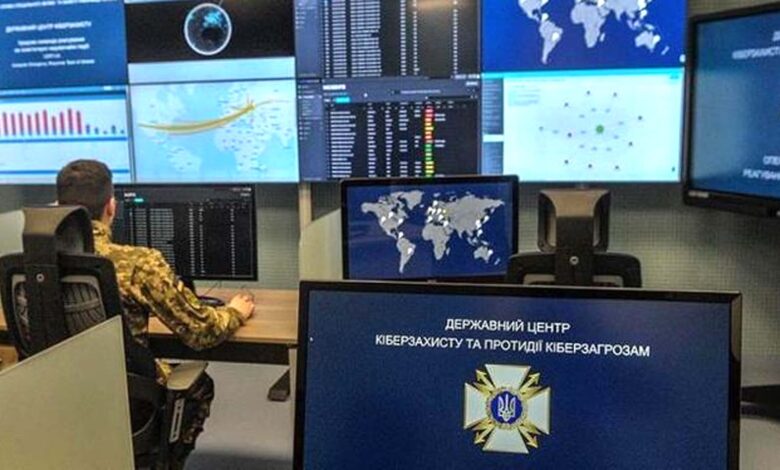
Day of the State Service for Special Communications and Information Protection
This is a professional holiday for specialists responsible for government communications, cyber defense, the security of state information systems and the protection of critical data. The work of the service is especially important during wartime, when cyberattacks, attempts to hack state resources and information threats have become a constant part of the confrontation.
The State Service for Special Communications and Information Protection of Ukraine was established in 2006. Its specialists provide secure communications for government agencies, coordinate cyber incident response, and help protect state registries, energy infrastructure, and the country’s digital systems. After the start of a full-scale war, Ukrainian cybersecurity specialists became one of the key players in defending the state.
Interesting facts
Ukraine is among the countries that, during a full-scale war, faced one of the largest waves of cyber attacks in modern history.
One of the most famous cyber attacks against Ukraine was the NotPetya virus in 2017. It affected banks, government agencies, and enterprises and spread far beyond the country’s borders.
Specialists of the State Service for Special Communications participate in the work of government computer incident response teams and cooperate with international partners in the field of cyber defense.
After 2022, Ukrainian state systems repeatedly became targets of massive hacker attacks, but a significant part of the attempts were repelled thanks to multi-layered protection and rapid response of specialists.
In modern warfare, cyberspace has become a separate direction of confrontation along with combat operations on land, in the air and at sea.
Secure government communications exist in most countries of the world and use special encryption systems inaccessible to conventional networks.
Ukrainian cybersecurity specialists have gained significant international experience since the start of the great war through constant confrontation with complex attacks on state infrastructure.
Some large-scale cyberattacks can cause billions of dollars in damage, disrupting the operation of transport, energy, banking and communication systems in several countries at once.
International Day of Missing and Exploited Children
This day was established by the International Center for Missing and Exploited Children in 2002. It is dedicated to children who have gone missing and the families who continue to search for them. Its goal is to support international cooperation, develop alert systems, help countries exchange information and remind society that the disappearance of a child requires quick and accurate action. Today’s day reminds us of the need for a quick response, adult attention, cooperation between the police, social services, schools, media and citizens, because the first hours after a child disappears are often crucial.
For Ukraine, this topic is especially painful due to the war, occupation of territories, forced removal of children and the difficulty of finding families who have lost contact with their children. The search for children often lasts for months and years, and modern technologies, international information exchange and DNA identification help to establish the whereabouts of the missing.
Interesting facts
The impetus for the emergence of this day was the story of six-year-old Ethan Patz from the USA, who disappeared on May 25, 1979 on the way to the school bus. His case became one of the most famous in the world and changed the approach to searching for children.
It was after the disappearance of Ethan Patz that the USA began to print photos of missing children on milk packages. In the 1980s, this method became one of the most famous methods of disseminating information about the search for children.
According to official data from the state portal “Children of War”, as of May 2026, 2,317 children are considered missing in Ukraine. In total, since the beginning of the full-scale invasion of the Russian Federation, law enforcement officers have processed thousands of reports of the disappearance of minors.
The vast majority of children can be found on hot pursuit: 53,677 children were found by the juvenile police and other departments
After 2022, Ukraine began to use digital databases and international mechanisms to search for children who were deported or relocated from occupied territories much more actively.
The symbol of this day in many countries is the forget-me-not flower. Its name is associated with the idea of remembering every child who went missing.
Ukraine cooperates with international organizations to return children illegally taken away during the war, and some of such cases are considered violations of international law and war crimes.
International Day of Heroes of the Struggle Against Totalitarianism
Today, the world honors people who opposed totalitarian regimes, political repression, dictatorship, and persecution for their beliefs. For Ukraine, this day is of particular importance due to the tragic experience of Soviet totalitarianism, mass arrests, the Holodomor, deportations, the activities of punitive bodies, and the long-term struggle of Ukrainians for the right to freedom and independence.
This day commemorates participants in liberation movements, dissidents, underground activists, human rights activists, and all those who risked their lives for freedom of speech, culture, and the right of peoples to self-determination. Ukraine preserves the memory of people who went through Soviet camps, exile, and persecution because of their civic position, as well as those who continued the struggle even after many years of imprisonment.
Interesting facts
One of the most famous symbols of the struggle against totalitarianism in Europe was the fall of the Berlin Wall in 1989. For over 28 years, it divided not only the city, but also two political systems.
Ukrainian poet Vasyl Stus spent most of his life under Soviet surveillance, was convicted for his stance, and died in a camp in the Perm region in 1985.
In Soviet times, possession of Ukrainian books, distribution of samizdat, or performance of Ukrainian patriotic songs could result in loss of job, imprisonment, or imprisonment in psychiatric hospitals.
The term “iron curtain” became one of the main symbols of the totalitarian division of Europe after World War II. It meant severe restrictions on freedom of movement and access to information.
Ukrainian dissidents often transmitted banned texts by hand, rewriting them on typewriters in multiple copies using carbon paper. The KGB conducted searches and arrests for such activities.
In Soviet camps, there were separate areas for political prisoners, where writers, historians, priests, scientists, and human rights activists from different republics of the USSR were held.
One of the methods of pressure in totalitarian states was the forced “treatment” of dissidents in psychiatric hospitals. Such practices were used against people who openly criticized the authorities.
After the restoration of Ukraine’s independence, many archives of Soviet special services were gradually opened to researchers, which made it possible to learn about the scale of repression, surveillance and activities of agents.
World Surgery Day
This day is dedicated to surgeons, operating teams and the development of accessible medical care. It draws attention to the importance of timely operations, modern equipment, training of doctors and access of patients to quality treatment regardless of country or income level. For Ukraine, the topic of surgery is of particular importance due to the war, the large number of wounded and the constant burden on the medical system.
Modern surgery covers dozens of areas – from organ transplantation and neurosurgery to minimally invasive operations, which allow for faster recovery after treatment. Ukrainian surgeons during a full-scale war perform complex operations in front-line hospitals, save people after serious injuries, and introduce new methods of reconstructive medicine and prosthetics.
Interesting facts
The first successful operation using general anesthesia was performed in the USA in 1846. Before that, patients were held by force or tried to reduce pain with alcohol and herbs.
In medieval Europe, barbers were often surgeons. They not only cut hair, but also removed teeth, performed amputations, and treated wounds.
One of the most complex operations of our time is a face transplant. The first partial face transplant was performed in France in 2005.
Ukrainian surgeon Mykola Amosov became world famous thanks to the development of cardiac surgery. He was one of the first in the USSR to perform complex heart surgeries and create his own models of artificial valves.
Robotic surgery is actively used in the world for operations with maximum precision. The surgeon controls a special system via a console, and the robot repeats the movements of the instruments.
During the First World War, the development of military surgery accelerated significantly due to the huge number of wounded. It was then that doctors began to actively improve methods of blood transfusion and trauma treatment.
In Ukraine, after 2022, doctors performed thousands of complex reconstructive surgeries on military and civilians who were seriously injured as a result of hostilities.
The longest operations in the world can last more than 24 hours. Large teams of surgeons are involved in such interventions, and doctors replace each other during work.
World Football Day
This is a new international holiday proclaimed by the UN General Assembly in 2024. It was created in recognition of the influence of football on world culture, sports and society. Football remains the most popular game on the planet, uniting millions of people regardless of country, language or age. Football is also of special importance for Ukraine, as Ukrainian clubs and the national team have been representing the country on the international stage for many years, even in times of war.
The idea of creating this day is connected with the 100th anniversary of the first international football tournament with the participation of teams from different continents, which took place as part of the 1924 Olympic Games in Paris. Modern football has long become a part of global culture, and major tournaments gather audiences of billions of spectators. In Ukraine, football remains one of the most popular sports, and national team matches often become events that unite people in different cities and countries.
Interesting facts
The first rules of modern football were officially approved in England in 1863. It was then that the game was finally separated from rugby.
The oldest football club in the world is considered to be the English Sheffield, founded in 1857. The club still exists today.
The 2018 FIFA World Cup final was watched by over a billion people around the world, making it one of the most popular sports broadcasts in history.
Ukraine achieved one of the most resounding victories in its football history in 2006, when the national team reached the quarter-finals of the World Cup.
The fastest goal in the history of professional football was scored less than two seconds after the starting whistle. To do this, the player immediately kicked the goal from the center of the field.
Legendary Ukrainian football player Andriy Shevchenko in 2004 received the “Golden Ball” – the most prestigious individual award in world football.
During World War I, in December 1914, British and German soldiers on certain sections of the front temporarily stopped fighting and played football on neutral territory.
The world’s largest football stadium, Rungrado in North Korea, can accommodate over 100,000 spectators.
Historical events on this day
996 — The Tithe Church, known as the Church of the Assumption of the Blessed Virgin Mary, was consecrated in Kyiv. It became the first stone Christian shrine in Rus’ and an important symbol of the establishment of Christianity after the state’s baptism under Prince Volodymyr.
1502 — Portuguese navigators discovered the island on St. Helena’s Day and named it in her honor. Later, the island of St. Helena became famous in world history as the place of exile of Napoleon Bonaparte.
1521 — Emperor Charles V issued the Edict of Worms, declaring Martin Luther a heretic. The document forbade printing, distributing, and reading his works, but the ideas of the Reformation had already spread throughout Europe.
1630 — Cossack chieftain Taras Tryasylo defeated the Polish army led by crown hetman Stanislav Konetspolsky near Pereyaslav. The victory was an important event in the Cossack uprising against the oppression of the Polish-Lithuanian Commonwealth.
1666 — the schism in the Moscow Church deepened, associated with the reforms of Patriarch Nikon. Archpriest Avvakum, one of the main ideologists of the Old Believers, was stripped of his rank, anathemaed, and exiled to a monastery.
1709 — the Moscow army destroyed the Zaporozhian Sich after part of the Zaporozhians defected to the side of hetman Ivan Mazepa. The punitive action was aimed at breaking support for the Ukrainian resistance and punishing the Sichkovites for their alliance with the Swedish King Charles XII.
1771 – a government decree was issued in St. Petersburg, allowing thousands of Cossacks to settle near Azov. Such decisions were part of the policy of using the Cossack population to protect the border territories of the empire.
1810 – the May Revolution took place in Buenos Aires, which marked the beginning of the process of creating an independent Argentina. The events led to the formation of a local government and the weakening of Spanish power in the region.
1926 – Symon Petliura, head of the UNR Directory and one of the key figures in the Ukrainian struggle for independence, was assassinated in Paris. His death became a high-profile political event for the Ukrainian emigration.
1996 — in the city of Jena, Czech athlete Jan Železny set a world record in javelin throwing — 98 meters 48 centimeters. This achievement remains one of the most outstanding results in the history of athletics.
1996 — in the Slovak city of Košice, J. Barbarić pulled a 327-ton train on himself for 8.2 meters. The record became an example of extraordinary physical endurance and strength.
1996 — in Kyiv, the monument to Princess Olga, destroyed in 1919, was restored. The monument was returned to Mikhailovskaya Square as an important part of the city’s historical memory.
1997 — Sri Lankan A. Joakim set a world record by standing on one leg for 76 hours and 40 minutes. This achievement was included in the list of unusual records of human endurance.
1999 — American boxer Mike Tyson was released from prison after a three-month sentence for attacking two drivers. The event once again drew attention to his complex sports and personal biography.
2001 — a new type of automotive fuel called fruit gasoline was introduced in San Francisco. The development was related to the search for alternative energy sources for transport.
2014 — presidential elections were held in Ukraine, which were won by Petro Poroshenko. The vote took place after the Revolution of Dignity, the annexation of Crimea and the beginning of Russian aggression in eastern Ukraine.
2020 — George Floyd died in Minneapolis during police detention. His death sparked massive protests in the US and many other countries against racial discrimination and police violence.