On May 26, Ukraine celebrates the Anniversary of the Battle of Korsun, and in the world – World Redhead Day, World Lindy Hop Day and World Dracula Day. At different times, events took place on this day that changed the course of wars, state life, church history, technical development and the struggle for independence.
Anniversary of the Battle of Korsun
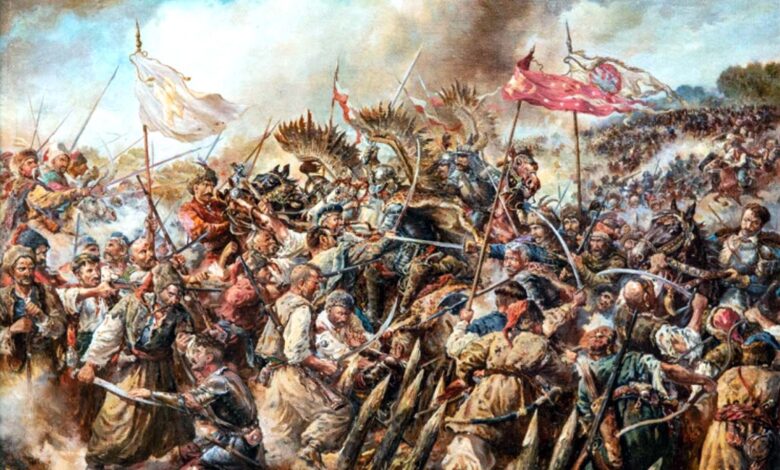
This day is dedicated to one of the key victories of the Ukrainian army during the uprising of Bohdan Khmelnytsky in the mid-17th century. In May 1648, Cossack-Tatar forces inflicted a crushing defeat on the army of the Polish-Lithuanian Commonwealth near Korsun. The victory was a continuation of the successful campaign after the Battle of Zhovty Vody and significantly changed the course of events on Ukrainian lands.
The Polish army under the command of Mykola Potocki and Marcin Kalynowski fell into a pre-prepared trap in rough terrain. The Cossacks blocked the retreat route, used fortifications and flank attacks, which caused the Polish army to lose a significant part of its forces, convoys and command. After the Battle of Korsun, Bohdan Khmelnytsky’s authority increased dramatically, and the uprising turned into a large-scale war of liberation.
Interesting facts
The Battle of Korsun lasted only a few hours, but its consequences were catastrophic for the Polish-Lithuanian Commonwealth. The Polish army lost not only thousands of soldiers, but also practically the entire leadership of the campaign.
For the trap, the Cossacks chose a narrow pass with swampy terrain, which was later called Gorokhova Dibrova. It was there that the Polish army lost the opportunity to quickly maneuver and retreat.
After the victory, Bohdan Khmelnytsky captured a huge convoy with cannons, weapons, horses and supplies. Some of the trophies significantly strengthened the Cossack army in subsequent campaigns.
Mykola Potocki and Marcin Kalynowski were captured by the Crimean Tatars. Their release later cost a huge ransom, which was collected by the Polish magnates and nobility.
The Korsun victory caused a powerful resonance in Europe. News of the defeat of the Polish army quickly spread through diplomatic channels and caused concern in neighboring states.
Bohdan Khmelnytsky actively used intelligence and disinformation. Some Polish commanders managed to convince that the Cossack army had much greater forces than it actually did.
The cavalry of the Crimean Khan Islam III Geray played an important role in the battle. It was the alliance of the Cossacks and Tatars in the first years of the uprising that allowed Khmelnytsky to win several major victories in a row.
After the Battle of Korsun, a significant part of Ukrainian cities and villages began to massively switch to the side of the rebels. The defeat of the Polish army signaled that the authorities of the Polish-Lithuanian Commonwealth had lost control over a large territory.
World Redhead Day
This day is dedicated to people with natural red hair, which is one of the rarest human traits. There are few such people in the world, because the red color is associated with variants of the MC1R gene and usually appears when both parents pass on the corresponding hereditary trait.
On May 26, red-haired people are remembered not as an exception or a curiosity, but as part of human diversity. Red hair has many shades: from copper and chestnut-red to light strawberry blonde, and next to it are often found fair skin, freckles and increased sensitivity to the sun.
Interesting facts
Natural red hair has less than 2% of the world’s population, so red-haired people are much less common than blondes or brunettes. They are most common in the countries of Northwestern Europe, especially in Ireland, Scotland and parts of Great Britain.
Red hair color is associated with an increased content of the pigment pheomelanin and a lower level of eumelanin. It is because of this ratio that hair acquires copper, golden-red or reddish-chestnut shades.
In ancient Egypt, red hair was associated with the god Set, who was associated with the desert, storms and strength. The mummy of Pharaoh Ramses II preserved a reddish shade of hair, which made him one of the most famous red-haired rulers of antiquity.
In medieval Europe, attitudes toward redheads were often ambivalent: they could be considered special, suspicious, or endowed with an unusual character. Due to superstition, red hair was sometimes associated with witchcraft, betrayal, or a dangerous disposition.
In Norse mythology, the god Thor was often depicted as having red hair and a red beard. Later popular depictions made him blond, but ancient descriptions often emphasized the fiery color of his hair and beard.
Red hair may not appear in a child even when both parents have the corresponding gene. Due to the recessive nature of inheritance, this trait sometimes “skips” generations and appears in grandchildren or great-grandchildren.
People with red hair often react differently to the sun, because their skin produces less of the dark protective pigment. That is why redheads burn faster, but in conditions of weak sunlight they can synthesize vitamin D more effectively.
At various times, red hair has been used in art as a noticeable sign of a character’s character. Artists and writers often gave red-haired heroes traits of passion, independence, rebellion or mystery.
World Lindy Hop Day
This day is dedicated to one of the most famous swing dance styles, which originated in Harlem, New York, during the heyday of jazz culture. Lindy hop combined elements of African-American dance traditions, improvisation, fast movements and complex interaction of partners. The dance quickly became popular in clubs and ballrooms in the United States, and later spread far beyond America.
The name “lindy hop” is associated with the flight of aviator Charles Lindbergh across the Atlantic Ocean in 1927. The dance is characterized by dynamic supports, turns and rhythmic steps, performed to jazz and swing music. Even after decades, Lindy Hop remains a recognizable style that is danced in many countries around the world.
Interesting facts
Lindy Hop was born in the famous Savoy Ballroom in Harlem – one of the few dance halls in New York where, during the times of racial segregation, people of different skin colors could dance together.
One of the main popularizers of the style was the dancer Frankie Manning, who is called one of the creators of modern Lindy Hop. It was he who began to actively use aerial supports and acrobatic elements.
The name of the dance appeared by chance. According to a popular version, one of the dancers joked during an impromptu interview that he was performing “Lindy’s Hop” in honor of Charles Lindbergh’s flight across the Atlantic, and the name quickly stuck.
In the 1930s, Lindy Hop was so popular that dance marathons lasted all night, and the best couples became real celebrities of the jazz scene.
Improvisation is of great importance in classic Lindy Hop. Partners often change movements just during the dance, responding to the rhythm, musical accents and mood of the composition.
After World War II, Lindy Hop’s popularity declined sharply due to the emergence of new musical styles. At the end of the 20th century, the dance experienced a large-scale revival, when young people in Europe and the United States became interested in swing culture again.
In old Hollywood films, Lindy Hop dancers often performed such complex supports and jumps that some of the numbers were considered dangerous for unprepared people.
Lindy Hop influenced the emergence of many modern couple dances. Some elements of this style later passed into rock and roll, boogie-woogie and other directions of social dances.
World Dracula Day
This holiday is dedicated to one of the most famous characters in world literature and horror culture. It is celebrated in honor of the release of Bram Stoker’s novel “Dracula”, which became the basis of the modern image of a vampire – a mysterious aristocrat who lives in a dark castle and hunts people at night. After its publication, the book quickly gained popularity and influenced literature, theater, cinema and popular culture.
The image of Count Dracula is partly associated with a real historical figure – the Wallachian prince Vlad III Tepes, who lived in the 15th century. His nickname came from the word “Dracul”, which meant “dragon”. Despite this, the literary Dracula is significantly different from the historical ruler, and most of the famous features of the vampire were created by Bram Stoker.
Interesting facts
Bram Stoker never visited Transylvania, although this region became the main location of the novel. He created a description of the area with the help of books, maps and stories of travelers.
The first novel “Dracula” was published in 1897 and at first did not have a stunning success. Real world fame came much later – after theatrical productions and the appearance of the first film adaptations.
In the book, Count Dracula almost does not have the characteristic fangs, which are today considered the main feature of a vampire. This image became popular thanks to the cinema of the 20th century.
One of the most famous film adaptations – the film “Nosferatu” in 1922 – was created without the official permission of Bram Stoker’s widow. Due to the court, some copies of the tape were ordered to be destroyed, but several copies survived, and the film became a classic of the horror genre.
The historical Vlad Tepes was nicknamed “The Impaler” because of the cruel way he executed his enemies – impalement. In European chronicles, he was described as an extremely strict ruler who maintained order through fear.
Bram Stoker worked as a theater manager and personally knew many famous actors of his time. He created some of Dracula’s mannerisms and appearance under the influence of stage images of the British theater.
In Romania, Bran Castle is often called “Dracula’s Castle”, although there is no evidence that Vlad Tepes lived there permanently. The place gained popularity mainly due to tourist legends and association with Stoker’s novel.
The image of a vampire existed in European folklore long before the appearance of the novel “Dracula”. In different countries, people believed in creatures that, after death, return at night and suck the life force or blood of living people.
Historical events on this day
1093 – On the Stugna River, the Polovtsy defeated the army of the Kievan prince Svyatopolk Izyaslavych. The defeat had serious consequences for Kievan Rus, and the prince himself was later forced to make peace and marry the daughter of Khan Tugorkan.
1620 – The Kiev Epiphany Brotherhood received the rights of stauropegia from the Patriarch of Jerusalem Theophanes III. This strengthened its ecclesiastical independence and importance in the defense of the Orthodox tradition in Ukrainian lands.
1644 – During the War for the Restoration of Portugal, the Battle of Montijo took place. Both the Portuguese and Spanish sides declared themselves winners, which made this battle one of the most controversial in that conflict.
1821 – Greek rebels established the Peloponnesian Senate. The body was to coordinate the fight against the Ottoman Empire and was an important stage in the formation of Greek institutions during the War of Independence.
1822 – A fire broke out in the Gru Church in Norway, killing at least 113 people. The tragedy is considered the largest fire in the country’s history in terms of the number of victims.
1879 – The Treaty of Gandamak was signed between the British Empire and the Afghan Emir Yakub Khan. The document limited the foreign policy independence of Afghanistan and consolidated significant British influence in the region.
1895 – During the bishop’s visit to the White Stone, Metropolitan Sylvester Sembratowicz consecrated the cornerstone for the construction of a new brick church. The completed temple was consecrated in 1901 by Metropolitan Andrei Sheptytsky.
1896 – The Dow Jones Index was first published. It later became one of the most famous indicators of the state of the American stock market and an important reference point for investors around the world.
1918 – Georgia declared independence after the collapse of the Russian Empire. This marked the beginning of the existence of the Georgian Democratic Republic, which existed until the Soviet occupation.
1927 – The last Ford Model T rolled off the assembly line. In total, more than 15 million of these cars were produced, and it was this model that made passenger cars more accessible to the mass buyer.
1938 – In Wolfsburg, Adolf Hitler laid the first stone for the construction of the Volkswagen plant. The enterprise was to become the center of production of the “people’s car”, but soon its work was closely connected with the war economy of Nazi Germany.
1940 – During World War II, the siege of Calais ended. The British and French garrisons capitulated after a fierce defense, which helped buy time for the evacuation of the Allies from Dunkirk.
1953 – The Norilsk uprising of political prisoners began in Gorlag. A significant part of the participants were Ukrainians, and the uprising itself became one of the largest acts of resistance in the Soviet camp system.
1966 – British Guiana gained independence and became the state of Guyana. The new country retained ties with the British Commonwealth, but received its own authorities and international subjectivity.
1972 – The Soviet-American Strategic Arms Limitation Treaty, known as “OSO-1” or “OSV-1”, was signed in Moscow. The agreement became one of the key documents of the period of détente in relations between the USSR and the USA.
2014 – The first battle for Donetsk airport took place. Ukrainian military forces drove pro-Russian militants out of both terminals, and this event marked the beginning of a long defense that later went down in history as the modern Russian-Ukrainian war.