NASA releases new footage from Artemis II mission: eclipse and far side of the Moon

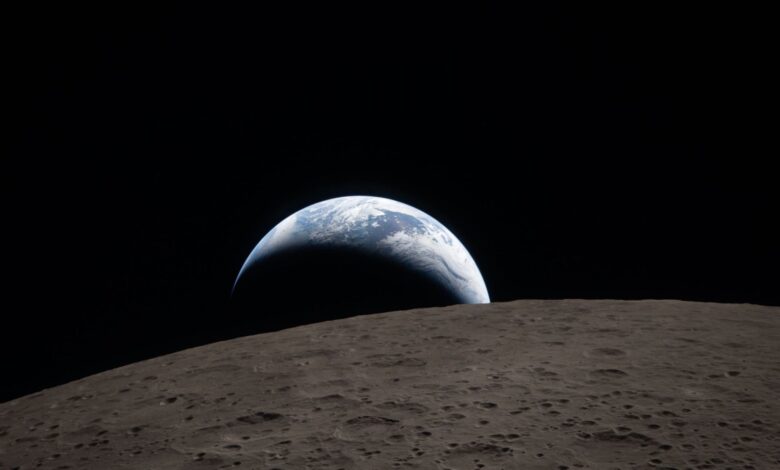
NASA astronauts, who are flying around the Moon for the first time since 1972, have shown new photos of the Earth’s satellite, including its far side. This was reported by CNN and NBS News.
During the flyby past the far side of the Moon, the crew members of the historic mission – Reed Weissman, Victor Glover, Christina Koch and Jeremy Hansen – moved away from Earth to a maximum distance of 406,773 km. It was at this point that communication with the astronauts was interrupted for about 40 minutes, as direct radio visibility with Earth was lost. Contact with scientists on the planet was restored after the ship returned to the illuminated side of the satellite.
During this phase of the flight, the crew observed a phenomenon in which the Earth seemed to go behind the Moon – similar to what the astronauts saw back in 1968. This moment was captured in a photo that resembles the famous shot taken by the Apollo 8 crew 58 years ago. At the same time, in the new image, the Earth does not disappear completely, but returns to the astronauts’ field of view again.
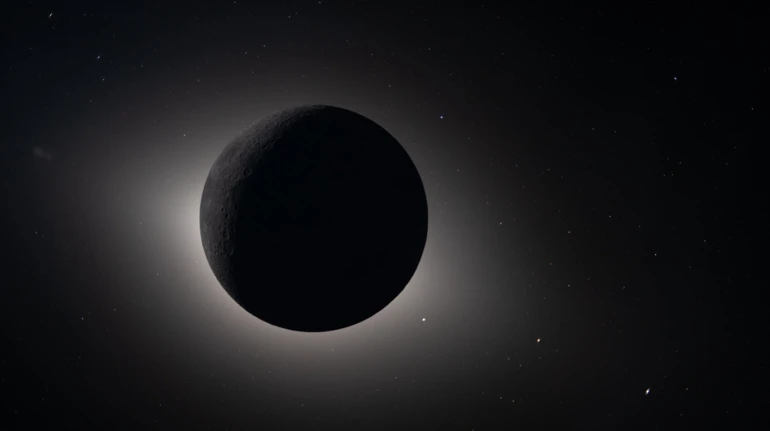
NASA also released a new photo of a solar eclipse from space, which occurred when the Moon covered the central star of the Solar System.
For about seven hours, Weissman, Glover, Koch and Hansen photographed the Moon and noted the features of its surface during the flyby. In addition, they were able to see in the new light the entire back side of the satellite – that part of it that always faces the opposite side from the Earth. Due to different flight paths and a different angle of observation, the crews of the Apollo missions did not have this opportunity.
The first grainy image of the far side of the Moon was obtained in 1959 thanks to the Soviet spacecraft Luna 3. Astronauts could now observe the lunar surface for hours and relay vivid descriptions in real time to mission controllers in Houston.
The crew members reported seeing visual effects that made the far side of the moon appear brownish and greenish in places. They also noted small new craters, likely the result of recent meteorite impacts.