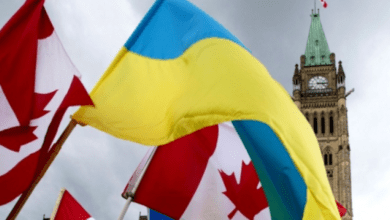
With the beginning of the full-scale war, Ukrainians left en masse to the countries of the European Union, where the majority found themselves in the status of temporarily protected persons. Against the background of humanitarian aid, there was an immediate practical need to get a job. In the vast majority of cases, it was about short-term contracts, seasonal agreements, episodic employment in the agricultural, logistics, hotel and restaurant sectors. This form of employment did not provide guarantees, the end of the contract did not mean the continuation of work. In many cases, this also meant the loss of social status, the right to assistance, and the ability to stay in the country. That is why the decision of the European Commission to update the rules of fixed-term contracts in 2025 became one of the most fundamental changes in the EU’s labor market policy.
The essence of the changes: contract formats and coding
In 2025, the European Union updated the rules governing fixed-term employment contracts. This decision was taken at the level of the European Commission in cooperation with the governments of individual member states. It has a direct impact on hundreds of thousands of Ukrainians who are on the territory of the EU with temporary protection or the status of seasonal workers and perform work on a temporary or short-term basis. The new model contracts and related codes aim to strengthen the protection of workers and prevent abuse by employers.
The key tool of the reform was the unified system of codes, which allows for the precise identification of each type of labor contract. In the state employment and social insurance systems, such codes reflect not only the duration of the contract, but also its nature, the level of employee protection, rights to social benefits. This provides transparency and control that was previously lacking.
Several new types of employment contracts have been introduced:
- short-term;
- renewable;
- seasonal;
- with the right to re-hire.
Emphasized: Each type of contract now has a clearly defined code. This allows the social security system to correctly calculate social contributions, calculate entitlements to benefits in case of unemployment, as well as track whether there has been a violation in terms of the duration or nature of the employment relationship.
The note of the European Commission states: for Ukrainian workers who mainly work in agriculture, logistics, the hotel and restaurant sector and in seasonal jobs in Germany, Poland, Italy and Spain, the new rules are of crucial importance. They provide guarantees even if the employee himself refuses to extend the contract.
Losing a contract is not a loss of rights
Until 2025, the typical situation for Ukrainian seasonal workers looked like this: the contract ended, the employer did not renew it without explaining the reasons, and the worker found himself without a job, without unemployment benefits and without guarantees. This caused serious social vulnerability.
Now it is fixed by law: even if the employee decides not to sign a new contract, he does not lose the right to social benefits, including unemployment benefits. This is a key element of protection that concerns thousands of Ukrainians who are forced to change their field of employment, place of residence or return to Ukraine after several months of seasonal work.
In the event of termination of the contract or transfer to another form of employment, social rights must remain with the employee – this is now controlled through the codification of the contract. It also prevents situations where the employer manipulates the terms of the contract by specifying a different type of employment or hiding its term.
What are contract codes for?
Each employment contract must now be registered with the appropriate code in the databases of state authorities. This allows:
– transparently monitor working conditions, in particular the duration, nature and place of work;
– correctly calculate social contributions and ensure continuity of insurance experience;
– ensure access to unemployment benefits without the need to go through additional procedures or prove the fact of termination of employment;
– prevent abuse by employers who used to change wording in contracts to avoid liability.
This is especially important for people who have to work intermittently, return home, change the country or type of activity. The code system ensures that their rights will not be lost simply because of a change in the formal status of the contract.
What should the employee do?
The updated rules impose responsibility not only on the employer, but also provide for the awareness of the employee himself. It is important for Ukrainians working in Europe on a temporary basis to:
– clarify the type of your contract — request a written copy with an exact indication of the conditions, validity period and code;
– keep copies of contracts and salary information (payroll) – they may be needed for a tax return, registration of assistance or consultation with a lawyer;
– in case of doubt, consult a lawyer or a trade union, especially if the contract has vague wording or conflicts with new regulations.
These actions are important not only to protect your rights, but also to ensure full access to benefits and services guaranteed by EU legislation.
Who needs these changes the most?
The new system has the greatest impact on several categories of Ukrainian workers:
– seasonal workers in the agricultural sector — in particular in Poland, Germany, Italy;
– workers in the field of logistics, delivery, hotel and restaurant service;
– citizens with temporary protection who work under short contracts;
– Ukrainians who intend to change their country of residence or field of work, but do not want to lose social guarantees.
For them, the identification of the type of contract and the preservation of rights in case of refusal of re-employment is not only a legal but also a social instrument of stability.
Against the background of the protracted war in Ukraine, the growing number of Ukrainian refugees and seasonal workers in Europe, these changes are a response to social challenges. The EU, while not abolishing the flexibility of the labor market, at the same time strengthens its transparency and fairness. And for Ukrainians, this means protection at the moment when they need it most — in transitional, temporary or unstable conditions.