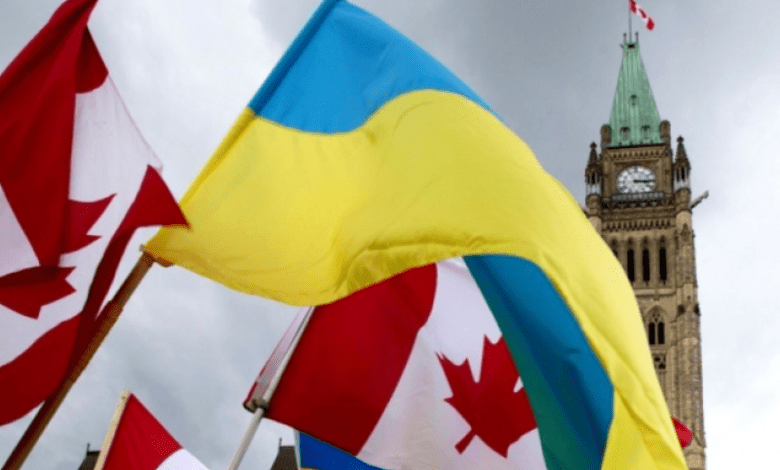
Three years after the start of a full-scale war, Ukrainian refugees continue to seek a safe life abroad. However, the year 2025 brought them new challenges: the USA and Canada significantly changed their migration policy, which made the process of legalization, access to social programs, and opportunities to stay in these countries more difficult. If earlier humanitarian initiatives were aimed at providing temporary shelter and integration, now the political course is returning to stricter rules for the reception of foreigners.
According to official data, as of 2025, more than 6.8 million Ukrainians remain refugees. Of them, more than 300,000 live in Canada, and 270,000 live in the USA. However, changes in legislation threaten their legal status, forcing thousands of people to seek alternative ways of legalization or even return to Ukraine, despite the ongoing war and economic instability.
The situation in Canada
Canada, which was initially one of the leaders in accepting Ukrainian refugees, announced the end of the CUAET (Canada-Ukraine Authorization for Emergency Travel) program in March 2024. Those who entered the country before this date can stay until March 31, 2025, but for further stay they must submit documents under general conditions. This greatly complicates the procedure for obtaining work or student visas, because Ukrainians will have to compete with representatives of other nationalities who also seek to legally live and work in Canada.
Another important change was the reduction of immigration quotas. If in 2024 Canada accepted 485 thousand permanent residents, then in 2025 this figure will decrease to 395 thousand. About 40% of places will be reserved for those already temporarily resident in the country, but priority will be given to professionals in the health care and technical professions. At the same time, mass granting of permanent resident status to 300,000 Ukrainians is not foreseen. This means that tens of thousands of Ukrainians may face the threat of losing their legal status after 2025.
The situation in the USA
In the USA, the situation has also become more complicated. On January 28, 2025, the administration of President Donald Trump announced the suspension of the Uniting for Ukraine (U4U) program, which allowed Ukrainians to receive temporary asylum through the sponsorship of American citizens. The decision was part of the administration’s overall strategy to tighten immigration controls. At the same time, the Temporary Protection Program (TPS) was extended until 2026, but it only applies to those already in the US. New Ukrainian refugees are forced to apply through general immigration programs such as work and student visas, which have become much more difficult to obtain due to stricter quotas and restrictions.
Such innovations create serious problems for Ukrainian refugees in the United States. About 20,000 Ukrainian families found themselves in legal uncertainty, not knowing whether they would be able to stay in the country. Many of them are considering the possibility of moving to other countries or even returning to Ukraine, because without the appropriate status they cannot legally work, receive social benefits and use health insurance.
From there, the tightening of regulations in the USA and Canada led to a significant reduction in social support for Ukrainian refugees. Many programs that used to provide financial assistance, food stamps, and health insurance have either been eliminated or greatly reduced. This makes it difficult for many families to survive, especially those who have not yet been able to find a stable source of income.
General trend
At the same time, the migration strategy of Ukrainians is also changing. According to the UN, only 65% of Ukrainian refugees currently plan to return home, which is 12% less than in 2023. Economic instability, lack of housing and ongoing hostilities remain the main reasons for reluctance to return. In Canada, the integration process is more successful than in most European countries: 45% of Ukrainians have already found a permanent job, and 30% have applied for permanent resident status. For comparison, in Germany and Poland these figures are only 20-25%.
The National Bank of Ukraine predicts that only 400,000 refugees will return to their homeland by 2026. This threatens to deepen the demographic crisis, as the loss of the working-age population can cause GDP to shrink by 3.9-6.3% every year. Shortages of personnel in key sectors of the economy may hamper the country’s post-war recovery.
The current challenges faced by Ukrainian refugees require quick and effective solutions. If the states that accepted them do not provide clear ways of legalization and integration, and Ukraine does not create conditions for return, the situation will only worsen. Ukrainians found themselves between two realities – an uncertain future abroad and the difficult prospect of returning to their homeland.